Britannia Told To Drop “100% Whole Wheat Bread” Claim: CCPA Says Atta Is Only 62% Of Loaf
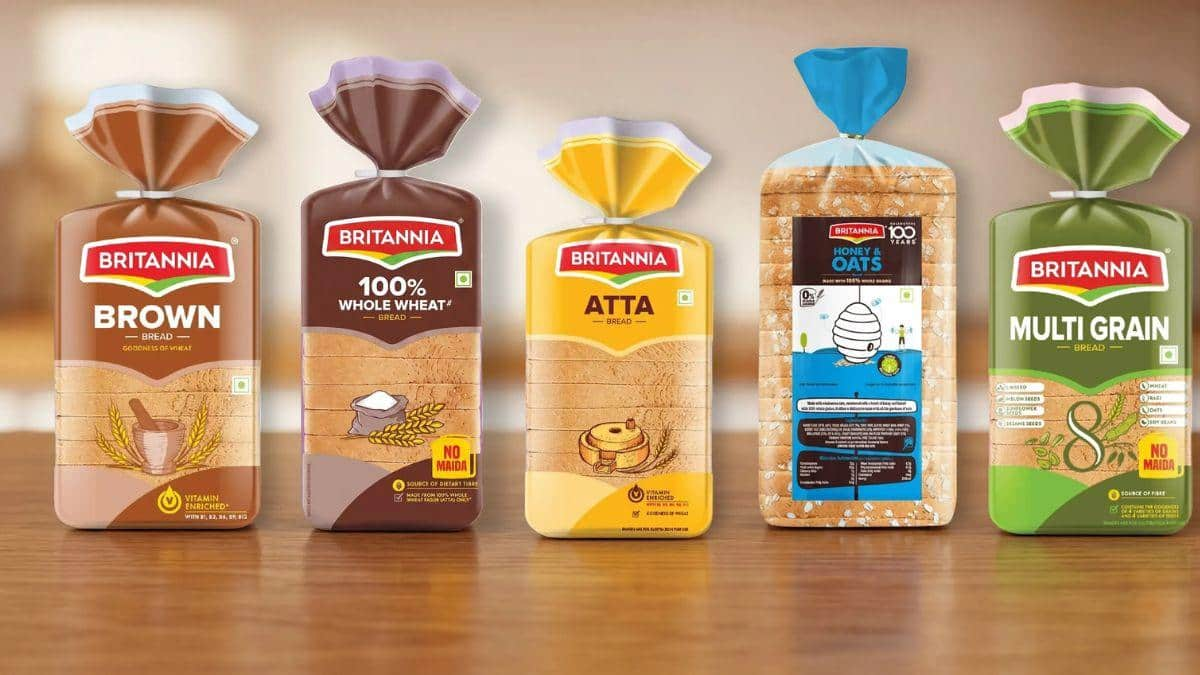
Anyone reaching for a loaf marked "100% Whole Wheat Bread" is likely to assume that is exactly what is inside. India's consumer regulator has now ruled that, in Britannia Industries' case, the label gave the wrong impression.
The Central Consumer Protection Authority (CCPA) has directed the company to stop running advertisements describing its bread as "100% Whole Wheat Bread", finding the claim misleading. In an order dated October 22, 2026, the authority noted that whole wheat flour accounts for only around 62% of the finished product, reported Economic Times.
62% Atta vs “100% Whole Wheat”: What CCPA Found
The authority examined Britannia's product packaging, website and social media promotions. Its investigation found that wheat flour (atta) made up roughly 62% to 62.5% of the finished bread, with the rest comprising water, yeast, wheat bran and other permitted ingredients.
The CCPA said an ordinary consumer could reasonably read "100% Whole Wheat Bread" as meaning the finished product was made entirely from whole wheat, and that the ingredient list elsewhere on the pack did not adequately correct that impression.
The packaging did carry a qualifier, "Made From 100% Whole Wheat Flour. On Flour Basis", linked to the headline claim by a symbol. But the CCPA found it was printed in a substantially smaller font and was not prominent enough to clarify the main claim. A bold claim on the front of a pack, the authority held, cannot be put right by a qualification in small, hard-to-read text.
Also Read : Digital Gold Vs Gold Coins Vs Jewellery: Which Is Smarter To Buy This Dhanteras?
Britannia Says Claim Signalled “No Maida”
Britannia told the CCPA that its bread used whole wheat flour as its only flour ingredient and contained no other flour, including refined wheat flour, commonly known as maida. The company argued that "100%" described the flour component rather than every ingredient in the loaf, which, it said, made the claim justified when calculated on a flour basis.
At a hearing on 12 October 2026, Britannia reiterated that the wording was meant to convey the absence of maida. It also argued that an advisory from the Food Safety and Standards Authority of India (FSSAI) against using "100%" on food labels was advisory rather than mandatory.
The company also cited nutritional information, declaring 0.6g of saturated fat and 4.4g of dietary fibre per 100g of bread, in support of its claims on low saturated fat and dietary fibre.
CCPA Rejects Britannia’s “Flour Basis” Argument
The authority was not persuaded. It said what a manufacturer intends a claim to mean cannot override how an ordinary consumer would understand it.
The order referred to Regulation 2.6 of the Food Safety and Standards (Labelling and Display) framework, which sets a minimum whole wheat flour content of 75% for a product to be labelled "Whole Wheat Bread". The CCPA said that threshold did not justify an absolute 100% claim without clear substantiation.
It also turned down Britannia's view that the claim could be measured only within the flour component. By that logic, the authority said, even a product with a small proportion of atta could be promoted as "100% atta bread" simply because it contained no maida. The CCPA further observed that placing "100% Whole Wheat" next to "No Maida" strengthened the impression that the product was entirely whole wheat flour.
FSSAI Advisory of May 2025, Improvement Notice of July 2026
The investigation report drew on FSSAI's observations that the claim was misleading, ambiguous and open to misinterpretation. FSSAI issued an advisory on 28 May 2025 asking food business operators to stop using "100%" on labels, packaging and promotional material. An improvement notice followed on 30 July 2026, directing Britannia to remove descriptions such as "100% Atta" and "100% Whole Wheat".
Britannia said it had begun removing the claim, but the investigation found the wording still appearing on its website and other promotional channels. The CCPA acknowledged that the company had started renaming the product "Zero Maida Whole Wheat Bread" in some places, but said partial changes did not remove liability for the period during which the disputed claims stayed in use.
CCPA Also Scrutinises “Healthy Diet” Claim
The authority also looked at the claim that the bread "pairs perfectly well with a healthy diet", saying it could create an impression about the product's nutritional attributes and dietary suitability, particularly when set alongside comparisons with roti.
Overall, the CCPA concluded that Britannia's representations breached provisions of the Consumer Protection Act, 2019, covering misleading advertisements, unfair trade practices and consumers' right to accurate information.
Also Read : New Driving Licence Rules Proposed: Free Aadhaar-Based Services, 75% Pass Mark, QR Code Card
Britannia Gets 15 Days to File Compliance Report
The CCPA directed the company to withdraw the advertisements immediately across print, electronic and social media, pay a penalty and submit a compliance report within 15 days of the order.
The order does not specify the penalty amount. Under Section 21 of the Consumer Protection Act, 2019, the CCPA can impose a penalty of up to Rs 10 lakh for a first contravention and up to Rs 50 lakh for subsequent ones.
The authority said food labels and advertisements must give clear, accurate information so consumers can make informed purchasing decisions.
This content is published by ABP Live - Business and has not been created or edited by Hello Headlines. View original