Light of Diwali should not leave behind toxic air
Diwali, the festival of lights, occupies a special place in India’s cultural and social life. It represents hope, happiness, prosperity and the triumph of good over evil. Families come together, homes and streets are illuminated, and people celebrate with traditional lamps, prayers, sweets and festivities.
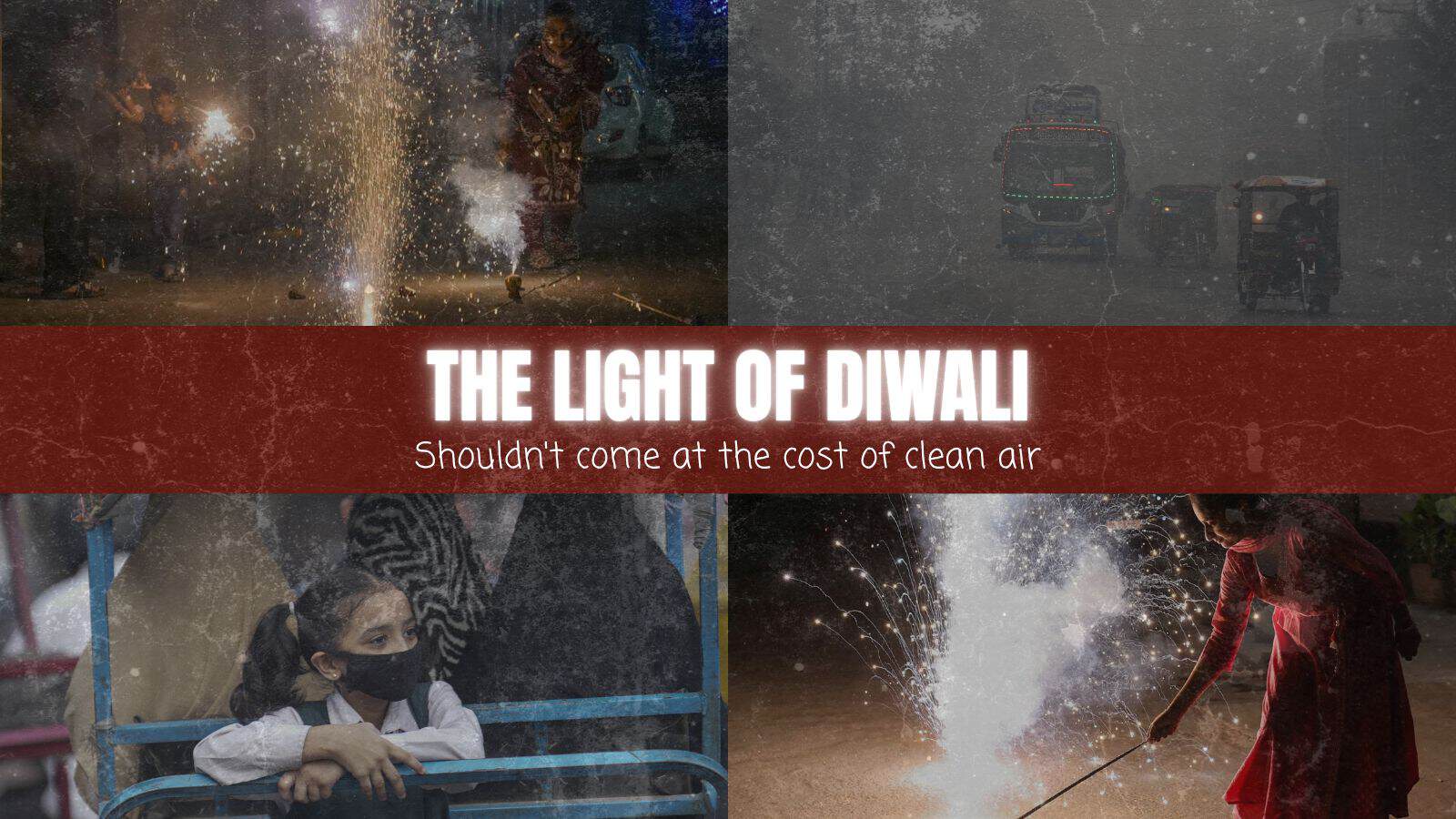
However, the manner in which Diwali is celebrated in many parts of the country has increasingly raised serious environmental and public health concerns. The widespread bursting of firecrackers, often continuing late into the night, releases enormous quantities of smoke, fine particulate matter and harmful chemical pollutants into the atmosphere.
The immediate consequences are visible: smoky skies, reduced visibility, irritation of the eyes and throat, breathing difficulties and a sharp deterioration in air quality. The more serious consequences, however, are not always immediately visible. They include respiratory complications, cardiovascular stress and prolonged exposure to hazardous airborne particles.
The post-Diwali air pollution episode of November 2026 has once again brought this issue into sharp focus. From Delhi and the National Capital Region to Bhopal, Ujjain, and several other Indian cities, monitoring stations recorded significant deterioration in air quality.
The situation raises an important question: Can a festival celebrating light, happiness and prosperity justify celebrations that compromise the health and well-being of millions of people?
This is not an argument against Diwali or any religious or cultural celebration. It is an appeal to recognise that environmental protection and public health are collective responsibilities that must take precedence over avoidable pollution.
What happens when firecrackers fill the atmosphere?
Firecrackers release a complex mixture of gases, smoke and suspended particles when their chemical compounds undergo combustion. Depending on their composition, these emissions may contain:
PM2.5: Extremely fine particles, measuring 2.5 micrometres or less, which can penetrate deep into the lungs.
PM10: Inhalable particles that enter the respiratory tract.
Sulphur dioxide (SO₂): A respiratory irritant that can aggravate asthma and other lung conditions.
Nitrogen oxides (NOx): Gases that contribute to respiratory irritation and atmospheric chemical reactions.
Carbon monoxide (CO): A toxic gas produced by incomplete combustion.
Metallic compounds: Certain fireworks release compounds of barium, strontium, copper, aluminium and other metals, depending on their composition. The concentration of these pollutants can rise sharply when large numbers of fireworks burst simultaneously in densely populated residential areas.
Post-Diwali pollution episode: A nationwide concern
The latest Diwali celebrations have demonstrated that post-festival air pollution is not confined to Delhi. Reports published on November 9, 10 and 11, 2026, indicate a significant deterioration in air quality across several regions.
According to readings reported from Madhya Pradesh Pollution Control Board monitoring stations for the period between 6 pm on November 8 and 6 pm on November 9, seven cities recorded AQI levels above 300.
Bhopal: Popularly known as the City of Lakes, Bhopal recorded an alarming post-Diwali pollution spike. The TT Nagar monitoring station reportedly recorded an AQI of 404. This was particularly concerning because the reading had been below 200 before the fireworks celebrations.
Ujjain: It recorded an AQI of 412, the highest among the seven cities highlighted in the November 9 monitoring assessment. A subsequent report placed Ujjain’s AQI at 382 on November 10, indicating that the pollution episode continued beyond Diwali night.
As a major religious and cultural destination, Ujjain attracts pilgrims, tourists and visitors throughout the year. The protection of its environmental health is therefore particularly important. Indore, Gwalior, Jabalpur, Mandideep and Dewas also experienced elevated pollution levels, demonstrating the wider geographical reach of the problem.
The public health consequences: The invisible damage
Air pollution is not simply an environmental nuisance. It is a major public health risk. The World Health Organization (WHO) has repeatedly highlighted the adverse consequences of exposure to fine particulate matter and other air pollutants. PM2.5 is particularly dangerous because these particles can penetrate deep into the lungs and, under certain conditions, enter the bloodstream.
Cardiovascular problems: Exposure to fine particulate matter can contribute to inflammation, increased cardiovascular stress and a higher risk of heart attacks and strokes. People with pre-existing heart conditions are especially vulnerable.
Children and elderly people: Children’s lungs are still developing, while older people may have reduced respiratory and cardiovascular reserves. Prolonged exposure to polluted air can adversely affect these vulnerable groups.
Pregnant women: Exposure to air pollution during pregnancy has been associated with adverse pregnancy outcomes, including increased risks of premature birth and low birth weight.
Noise pollution and the suffering of animals
The environmental consequences of firecrackers extend beyond atmospheric pollution. Extremely loud explosions create significant noise pollution and can cause distress to infants, elderly people, patients and individuals with sensory sensitivities.
Animals are particularly vulnerable. Dogs, cats and other domestic animals often experience extreme fear and anxiety during fireworks displays. Birds can become disoriented by explosions and bright flashes, disturbing their normal behaviour and resting patterns.
Are green crackers the answer?
Green crackers have been introduced as an alternative to conventional fireworks, with the objective of reducing certain emissions and particulate pollution. However, it would be misleading to describe them as pollution-free. Even certified green crackers release combustion products and can generate particulate matter and noise.
Expressing concern over the changing nature of Diwali celebrations and their impact on the environment, Madhya Pradesh Labour Secretary R. Rajendran has highlighted the growing pollution caused by firecrackers and the commercialisation of festivals.
In a social media post, he said Diwali symbolises the victory of light over darkness and knowledge over ignorance, but the script of festivals is increasingly being written by the market. Sales, festive offers and shopping have become the yardsticks of celebration.
“We are distributing bronchitis on Diwali,” Rajendran wrote, adding that even families that do not burst a single firecracker are forced to breathe the same air as those that set off thousands of them. Regardless of whether one participates in bursting firecrackers, everyone breathes the same air.
Can we celebrate festivals without compromising air we breathe?
The post-Diwali pollution episode of November 2026 is a reminder that India’s environmental crisis extends far beyond Delhi. The alarming readings in Bhopal and Ujjain, the deterioration across several cities in Madhya Pradesh, and the substantial increases reported in other state capitals demonstrate the scale of the challenge.
The solution, therefore, cannot be limited to temporary restrictions on fireworks. It requires a comprehensive environmental policy, scientific monitoring, effective enforcement and a change in public behaviour.
Clean air must not become a privilege available only to those who can afford protection. It is a basic public health necessity and a shared environmental right. The true spirit of a festival should be reflected not merely in the brightness of its lights but also in the happiness, safety and well-being of the people around us.
We have the right to celebrate our festivals, but we do not have the right to compromise the health of others. A cleaner Diwali is not a lesser celebration. It is a more thoughtful, humane and responsible celebration. The light of Diwali should illuminate our homes, not pollute the air we all breathe.
Get the latest updates in Hyderabad City News, Technology, Entertainment, Sports, Politics and Top Stories on WhatsApp & Telegram by subscribing to our channels. You can also download our app for Android and iOS.
This content is published by The Siasat Daily and has not been created or edited by Hello Headlines. View original