With Phones & Measuring Tapes, Pune Residents Are Building a Map to Protect the City's Trees
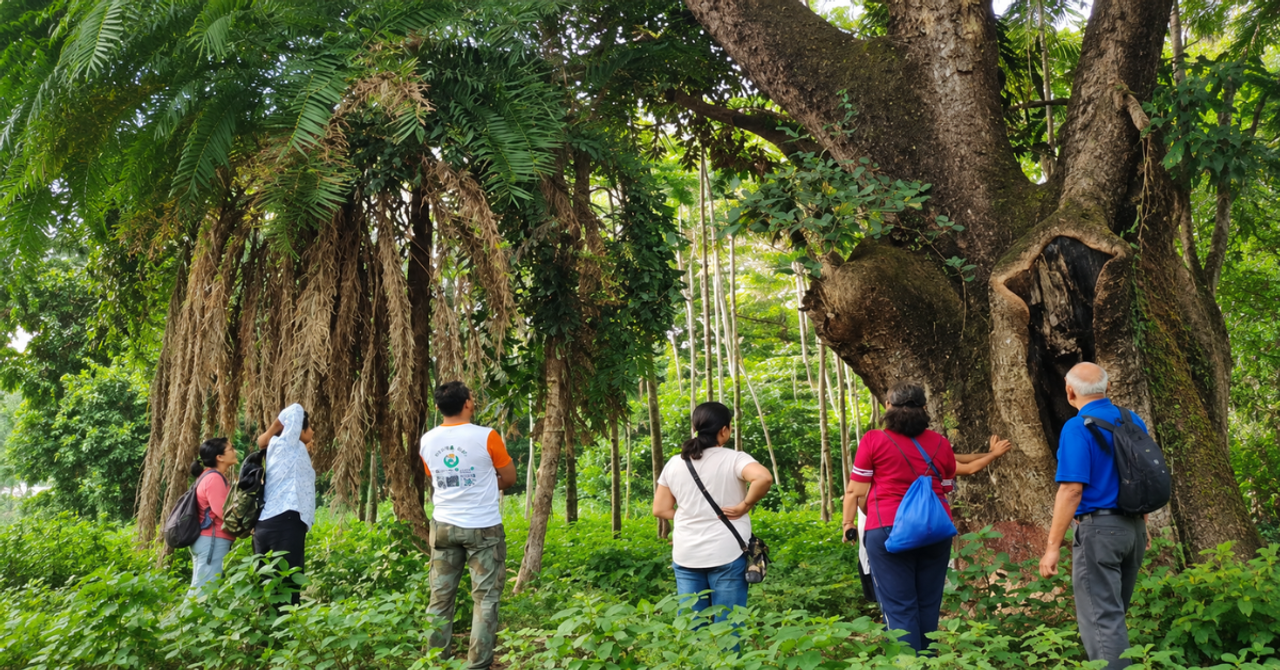
On a Saturday morning in October 2026, seven Pune residents gathered at Madhavrao Scindia Garden beside the Mula River. Across the water, two fishers steered their boat past a thick patch of trees.
The residents had brought smartphones and measuring tapes. They were there to document trees that people might pass every day without giving them much thought.
They photographed individual trees, noted their species, measured the circumference of their trunks and recorded their locations on a phone app. Each entry added another piece to a growing map of Pune’s riverbank greenery.
It may seem like a small weekend exercise. But for these volunteers, knowing exactly which trees grow where could make a difference when the city decides what to build next.
Why are Pune residents counting trees?
The volunteers belong to Pune River Revival (PRR), a citizen group that began mapping trees more systematically in 2024, amid concerns about the ₹4,727-crore Pune Riverfront Development Project. The plan includes promenades, recreational spaces and other construction along the Mula-Mutha riverbanks.
The group wanted a clearer record of the trees and other living things already thriving there. That meant going beyond counting trunks.
“We started organizing the tree mapping exercise systematically in 2024,” volunteer Raghunandan Patil told Mongabay. Earlier, he explained, the group had mapped trees by hand but lacked the technical knowledge to document them properly.
Today, volunteers use iNaturalist, an app on which people can upload photographs and locations of plants and animals. It helps them identify species and build a record that others can consult.
During mapping walks, volunteers spread out across stretches of the riverbank, taking photographs and measurements as they go.
Every entry helps answer an important question: if a patch of greenery disappears tomorrow, will anyone know what was there?
More than 500 trees faced removal. Residents got to work.
That question became urgent on Ganeshkhind Road, where plans to widen a busy stretch threatened 529 trees, including mature trees believed to be decades old.
When residents approached PRR, volunteers documented over 500 trees within a month. The records helped put names, numbers and locations to trees that people feared losing.
View this post on InstagramA post shared by Pune Tree Mappers • PRR (@punetreemapping.rivers)
The concern spread beyond the mapping group. On 18 and 19 April 2026, residents, artists and environmentalists came together for tree mapping, live painting and music, drawing attention to the proposed widening of the road between Sancheti Hospital and Savitribai Phule Pune University.
Under an earlier proposal, 469 trees were to be transplanted and 60 cut down. Environmentalists questioned whether older trees could survive being moved.
“I grew up with these trees and they are part of every Punekar’s heritage,” artist Janaki Gandhi told Pune Mirror. “Through art, we want people to see each tree as a living identity, not just an obstacle in a road plan.”
Citizens also raised objections and pushed for changes to the road design.
By September 2026, the Pune Municipal Corporation had revised its proposal, reducing the number of trees marked for removal from 529 to 33.
That meant 496 trees could be spared under the revised plan.
The change came through wider citizen action and efforts by environmental groups. Mapping helped document what was at stake and gave residents another way to make their case.
What can a sacred grove teach a growing city?
Along the rivers, PRR has also drawn attention to Ram-Mula Devrai, a sacred grove where the Ram and Mula rivers meet.
A devrai is a forest patch traditionally protected by local communities because it is believed to be the dwelling place of a village deity. In a busy city, it can also offer shelter to plants, birds and other wildlife.
Reports cited by Mongabay record around 1,000 heritage trees and at least 450 species of plants and animals in the grove. Among them are 160 bird species, as well as the Bengal monitor lizard and checkered keelback snake.

To help more people discover this place, volunteers organised butterfly and insect walks, tree-painting competitions and other activities.
They also suggested ways visitors could enjoy the space while protecting its trees.
Their efforts showed how people could explore and appreciate a natural space while keeping its greenery intact.
From riverbanks to hilltops, more people are joining in
Elsewhere in Pune, citizens are building similar records.
On Chatushrungi, Taljai and ARAI hills, the Green Hills Group uses an app called TrackMyTree to record saplings, their locations, species and caretakers.
Revisiting those records can tell volunteers which trees are surviving and where they need attention.
Along the Mula, PRR and JeevitNadi volunteers have also used ConnecTree, a tool developed by the Pune Knowledge Cluster, to document riverbank trees and saplings.
View this post on InstagramA post shared by Civic Sense Task Force (CSTF) PCMC Pune (@civicsensetaskforce)
Pune Municipal Corporation says it conducts a tree census every five years. But citizen groups believe accessible, regularly updated records are important too, especially when residents want to understand how a proposed project may affect their neighbourhood.
Back at the river, the work still comes down to a photograph, a measurement and a location saved on a phone.
The same simple steps the seven volunteers took that October morning could one day give residents a record to point to when an old tree is marked for removal.
And as Pune continues to grow, these records give its residents something valuable: a clearer picture of the trees around them and a stronger voice in deciding how to protect them.
Sources:
‘How citizen scientists are mapping Pune’s trees, with hopes of a greener future’: By Stephin Thomas, Published on 30 October 2026
‘Pune Citizens Take Geotagging Of Green Cover Into Their Own Hands’: By Urban Acres, Published on 21 July 2025
‘Citizens Launch Weekend Art and Music Protest to Save Ganeshkhind Road Trees’: By Chaitraly Deshmukh, Published on 18 April 2026
This content is published by The Better India and has not been created or edited by Hello Headlines. View original