Ladakh protests: LAB alleges Centre wants to weaken collective leadership
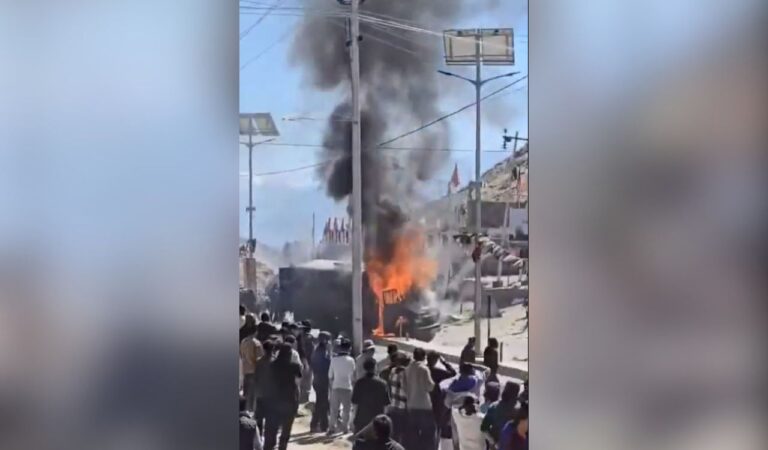
Leh/Jammu: The Centre is understood to be willing to hold high-powered committee-level talks with Ladakh representatives between December 5 and 10, immediately after the December 4 hill council elections, Leh Apex Body (LAB) chairman Chering Dorje Lakruk said.
However, he expressed apprehensions over the timing of the hill council elections, alleging that the government may be seeking to weaken the region’s collective leadership ahead of crucial negotiations.
Speaking to PTI over the phone from Leh, where he has been leading a sit-in protest since November 12 to press for various demands, including the resumption of dialogue and postponement of the Ladakh Autonomous Hill Development Council (LAHDC) elections, Lakruk said unofficial channels had conveyed the Centre’s readiness to resume negotiations between December 5 and 10.
He, however, questioned the government’s insistence on going ahead with the December 4 elections despite repeated demands for their deferment, alleging that the move could be a ploy to ensure that its preferred representatives participate in the proposed talks and weaken the LAB and Kargil Democratic Alliance (KDA).
The LAB and KDA have been agitating for several years over the demand for statehood and have been holding talks with the Centre over their demands, including an elected government and constitutional safeguards for Ladakh.
“We feel that they want to rig the elections by getting their own people elected… so that they can later say they are real representatives and we will talk with them to impose their agenda,” Lakruk said.
Lakruk said their leadership was apprehensive that the electoral process could be manipulated through the use of official machinery and other means. He claimed that the BJP appeared to have little chance of winning the elections under normal circumstances.
Criticising the government’s reluctance to reconsider the poll schedule, he said this was the first time in Ladakh’s history that elections were being conducted during the peak winter season, when nearly 25 per cent of the population had already moved outside the Union Territory.
He also claimed that there were serious discrepancies in the electoral rolls, alleging large-scale deletions, the exclusion of a significant number of Generation Z voters and the inclusion of names of deceased persons.
He said holding elections without correcting these discrepancies would undermine the credibility and representativeness of the exercise.
“We are not against elections, but want the polls to be held when people who are outside return to their homes after winter and the electoral rolls are properly updated. We want maximum participation,” he said.
The LAB chairman maintained that the demand for postponement of the polls was aimed at ensuring that every eligible voter, particularly young voters, gets an opportunity to exercise their democratic right.
He said the leadership wanted a transparent electoral process followed by meaningful engagement with the Centre on Ladakh’s long-pending demands.
Lakruk, who was among the 40 religious leaders who took part in a 24-hour hunger strike, said they would continue the protest until their demands were met.
“Two parallel forms of agitation are underway. While a peaceful dharna began on Thursday at NDS Memorial Park, a chain hunger strike commenced on Saturday, with 40 religious leaders observing a 24-hour fast in support of the demands,” he said.
He said the agitation had also received support from outside the Union Territory, with Jharkhand’s Tribal Affairs Minister visiting the protest site to express solidarity with the demonstrators.
He said the LAB and KDA leadership were committed to dialogue with the Centre but insisted that such engagement must be meaningful and inclusive, “rather than being shaped by an electoral process that a significant section of Ladakh’s population may be unable to participate in”.
Lakruk said the agitation had been planned well in advance to press the government to resume dialogue on constitutional safeguards and the demand for a UT-level elected body headed by a chief minister.
He said the decision to intensify the movement followed the government’s failure to hold the proposed October 22 dialogue with Ladakh’s representatives and its decision to go ahead with the hill council elections during the harsh winter.
This content is published by Telangana Today and has not been created or edited by Hello Headlines. View original