Fewer foreign students choosing US universities, report finds
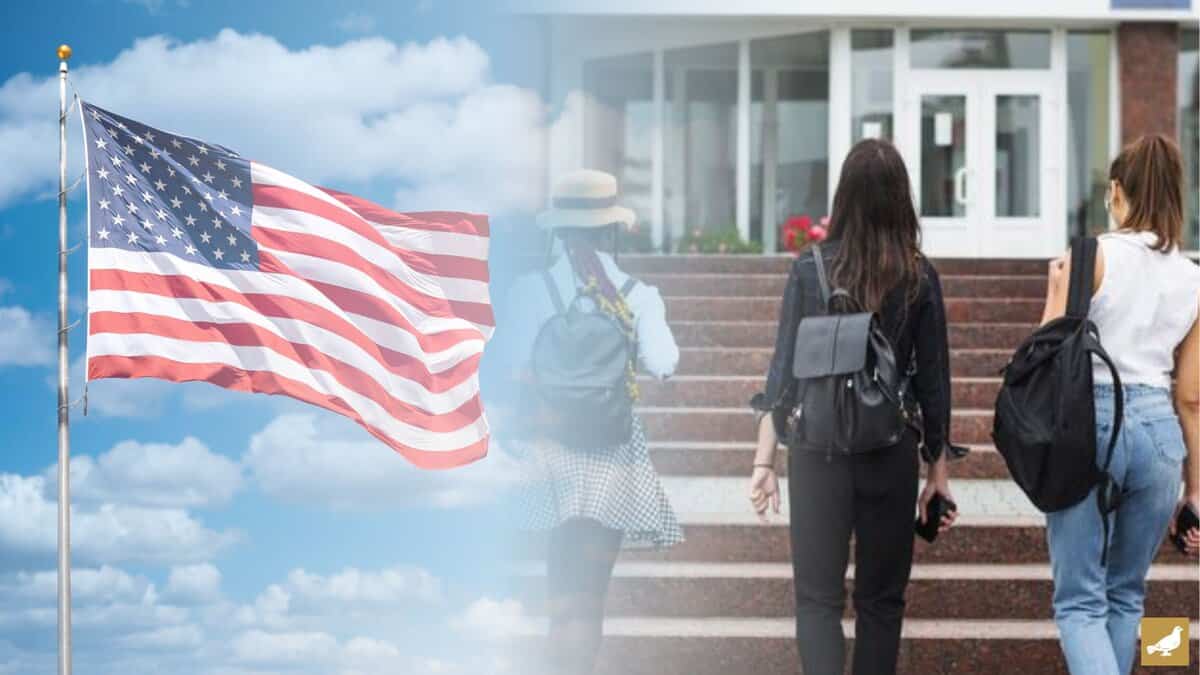
New York: Fewer international students are studying at US universities as the Trump administration cracks down on immigration and reshapes higher education, data released Monday shows.
Overall, US campuses saw a 9 per cent decrease in international enrollment this fall compared with last year, according to a survey from the Institute of International Education. And the number of new students entering the United States for the first time fell by 15 per cent.
The report also found declines in international students from India, which sends more students to the US to study than any other country.
“No one aspires to send their kids to get educated in the US,” said Veena Dubal, general counsel for the American Association of University Professors, whose father travelled from India to attend Tuskegee University, then the Tuskegee Institute, in the late 1960s on a student visa.
“It feels like an unsafe place. That’s the message that the Trump administration has been sending to families all over the world and they’re listening.”
Last year, the enrollment decreases were partially offset by large numbers of students who stayed in the US for temporary work after graduating. But after months of speculation, the Department of Homeland Security proposed requiring schools to pay a USD 70,000 fee for every student who participates in the optional practice training program.
Although the rule hasn’t been finalised, participation in the program, known as OPT for short, dropped 6 per cent this fall, according the survey.
International students facing political headwinds
The proposed rule, which is expected to face legal challenges, is part of wider DHS efforts that include terminating the legal status of thousands of international students, along with detaining and deporting many of them.
And this summer, the administration finalised a rule that will prevent international students from staying in the US for more than four years without approval from the federal government, although a judge has temporarily blocked it.
DHS Secretary Markwayne Mullin has said the changes were intended to crack down on loopholes that international students were exploiting by extending their studies.
Although the US remains the top destination for international students globally, the changes are having an affect, college leaders told the IIE.
Among more than 800 US colleges and universities surveyed this fall, 88 per cent blamed the visa application process and 70 per cent blamed travel restrictions for the enrollment drops. And if OPT options are limited, 95 per cent of schools predicted that international students would likely look to another country, according to the survey, which offers an early look at trends before full data is released next year.
Politics aren’t the only reason students are looking elsewhere, said Mirka Martel, head of research, evaluation and learning for the institute. Its survey found more global competition for international students and the rising cost of a US degree also contributed.
Fanta Aw, the executive director and CEO of NAFSA, an association that represents international education, said students also are worried about research funding. Last year, the Trump administration began dismantling the federal grant-giving process and attempting to exert more political influence over what projects get funded.
“They’re saying to themselves, Too much uncertainty in the United States. It’s too difficult, and you know, more importantly, we have many more choices today than we did 10 years ago. Why subject ourselves to this?’” Aw said, noting that students are going to places like China.
NAFSA, in partnership with the international education technology company JB International, found that amid the enrollment decline, international students’ contributions to the US economy dropped by USD 2.4 billion this fall.
Colleges see budgets squeezed
American colleges and universities heavily recruit students from overseas as a source of tuition revenue. So the drops have punched big holes in tuition revenue at some schools.
At Cleveland State University, international enrollment has dropped by 46 per cent in two years, from 1,542 in fall 2025 to 828 this fall. And fewer than 50 new international students started this fall, said Provost Nigamanth Sridhar, who estimated that the budgetary impact ranges from USD 2 million to USD 4 million.
Decades ago, he arrived in the US on an F1 student visa and participated in OPT. Eventually, he went through the process to became a naturalised citizen.
“I am here in this position, in this job, because I had the opportunity to come to the United States as an international graduate student and then decided to stay here and build a career,” said Sridhar, who is from India. “So international education is personal to me.”
The biggest drops were at the graduate level. This fall’s data shows a 15 per cent drop in international graduate enrollment, compared to a 3 per cent decrease at the undergraduate level.
Midterms raise questions about the future
Sarah Spreitzer, vice president at the American Council on Education, which represents college and university presidents, said substantial immigration bills are unlikely while Trump remains president. But she said congressional oversight might halt new policies targeted at international students.
“Those types of things could provide more certainty for our international students that there’s not just going to be these sudden or unexplainable changes,” Spreitzer said.
Get the latest updates in Hyderabad City News, Technology, Entertainment, Sports, Politics and Top Stories on WhatsApp & Telegram by subscribing to our channels. You can also download our app for Android and iOS.
This content is published by The Siasat Daily and has not been created or edited by Hello Headlines. View original