‘Won’t Tolerate Glorification Of Ravana’: Hindu Outfits Allege ‘Communist Agenda’, Threaten Protest Against ‘Ramayana’ Sequel
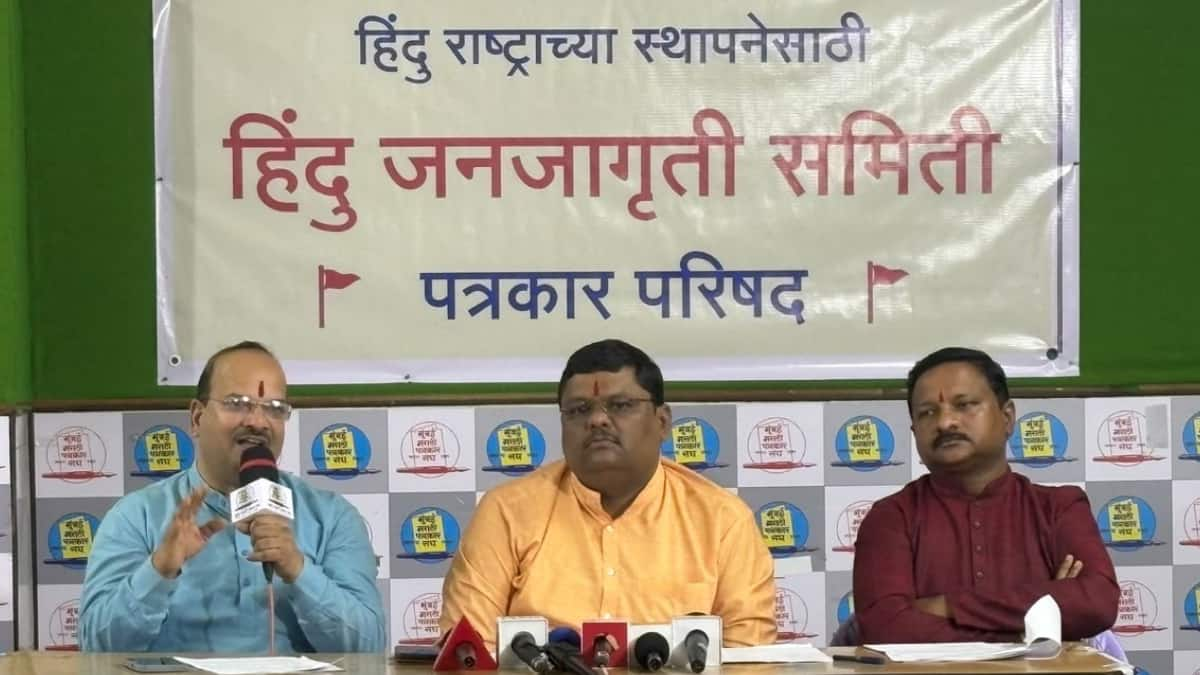
The Hindu Janajagruti Samiti (HJS) has strongly objected to certain scenes in the recently released film Ramayana, alleging that the makers have deliberately distorted the original story of the Ramayana, written by Maharishi Valmiki, in the name of “creative freedom”.
‘Film Promotes Communist Agenda’
The organisation said that the unnecessary glorification of Ravana, distortion of several episodes, undermining of Lakshmana’s character and portrayal of Lord Rama and Lakshmana in a manner contrary to their valour were deeply disturbing and objectionable. It stated that the Ramayana is a matter of faith for crores of Hindus and alleged that the film appeared to be promoting a “Communist agenda”.
“We will not tolerate a film that glorifies Ravana, distorts the original Ramayana and promotes a ‘Communist agenda’!”
The organisation warned that if Ravana is glorified at the expense of Lord Rama and references to Hindu scriptures are distorted, it will strongly oppose the film’s upcoming second part. “Sanatani Hindus should not watch this film, which promotes a Communist narrative,” said Sunil Ghanwat, Maharashtra and Chhattisgarh state coordinator of the Hindu Janajagruti Samiti.
Meanwhile, Abhay Vartak, spokesperson for the Sanatan Sanstha, said that the film should have portrayed the events exactly as described in the Ramayana. However, several episodes from the original epic have allegedly been altered, which he said was unacceptable.
He added that at a time when India has a Prime Minister who is a devotee of Lord Rama and a government that considers Rama an ideal, it was unfortunate that history was being distorted through cinematic works.
Ghanwat further alleged that the Central Board of Film Certification (CBFC) takes the religious sentiments of people belonging to all religions except Hindus into consideration, while showing little regard for Hindu religious beliefs. He said the censor board should thoroughly examine any film based on religious scriptures before granting it certification.
Organisation’s Objections To The Film
1- Glorification of Ravana: The organisation alleged that Ravana, who was responsible for destroying the ashrams of sages and hermits, has been portrayed in the film as a benefactor who provides golden houses to the poor and a saviour of the oppressed. It argued that Ravana was the king of demons, who were tyrannical rather than oppressed. According to the organisation, the film depicts him as a champion of the oppressed, reflecting Communist ideology.
2- Ravana portrayed as a protector of women: The organisation objected to the portrayal of Ravana, who abducted Sita and was accused of mistreating several women, as someone who kills Shurpanakha’s husband, Vidyutjivha, for harassing a maid. It also referred to the curse Ravana allegedly received, according to which he would be reduced to ashes if he touched another man's wife. The organisation called this portrayal of Ravana as a protector of women's dignity another example of a supposed Communist agenda.
3- Distortion of the Shurpanakha episode: The organisation claimed that the film depicts Shurpanakha as approaching Lord Rama only with a marriage proposal, following which Lakshmana cuts off her nose. It further objected to a scene in which Sita reprimanded Lakshmana, saying, “You have no right to disfigure a woman's appearance.”
The film also allegedly shows Lord Rama apologising to demons Khar and Dushan for Lakshmana’s actions. The organisation called this highly objectionable, claiming that the episode never occurred in the original Ramayana and was inserted to promote the narrative of so-called feminist movements.
4- Lord Rama and Lakshmana shown fleeing from battle: The organisation alleged that the film shows Lord Rama and Lakshmana running away from the demon army during battles against Khar, Dushan and their 14,000 demons, as well as during the battle with Tadaka.
It maintained that Lord Rama, an incarnation of Lord Vishnu, and Lakshmana were invincible warriors who never fled a battlefield or even accepted retreat. Showing Ravana fighting unarmed against thousands while depicting Lord Rama fleeing from demons was, according to the organisation, an attempt to glorify Ravana and insult Lord Rama.
5- Undermining Lakshmana’s character: The organisation alleged that Lakshmana has deliberately been portrayed as arrogant, short-tempered and constantly delivering dialogues like a contemporary comedy character.
It objected to his depiction as speaking sarcastically to Lord Rama, Lord Parashuram and revered sages, despite being known for his humility and devotion. The film allegedly shows Lakshmana telling sages Vishwamitra and Agastya, “I have also killed demons like Rama, so I too should be given knowledge of divine weapons.”
The organisation pointed out that, according to Valmiki’s Ramayana, Vishwamitra imparted the knowledge of ‘Bala’ and ‘Atibala’ to both Rama and Lakshmana. It called the portrayal of Lakshmana, regarded as an embodiment of sacrifice and loyalty, a grave distortion of the knowledge contained in religious scriptures.
6- Contradictory portrayal of Sita: The organisation said the film shows Sita fighting other demons herself, but does not show her resisting when Ravana abducts her. It called this a major contradiction and maintained that Valmiki’s Ramayana contains no account of Sita engaging in battle.
7- Ravana’s absence from the Sita Swayamvar: According to the organisation, Ravana was present at Sita’s swayamvar in the original Ramayana but failed to lift Lord Shiva’s bow, leaving him embarrassed. Despite this, the film does not show Ravana at the event. The organisation suggested that portraying Ravana as inferior to Lord Rama may not have suited the filmmakers’ alleged Communist agenda.
Questions Raised Over Censor Board’s Role
Ghanwat further said that the censor board is responsible for ensuring that films based on religious stories do not distort their original narratives. However, he alleged that the board had failed to perform its duty in this case.
Citing previous examples, he said that the film Messenger of God was banned in Maharashtra following opposition from Muslims, while The Da Vinci Code was banned in Goa and Kerala after objections from Christians.
He also referred to the film Kamaal Dhamaal Malamaal, which reportedly faced objections from members of the Christian community over a scene in which a priest conducts a dog’s wedding. According to him, the film was withdrawn a week after its release, edited and then re-released.
He questioned why the censor board was allegedly so insensitive towards the religious sentiments of Hindus.
The organisation warned the filmmakers, director and censor board that if similar distortions are found in the second part of the film, it will take to the streets across the country to protest.
It also urged the makers to screen the second part for Hindu saints and scholars of the Ramayana before its release. Abhay Vartak said that this appeal was being made on behalf of various Hindu organisations.
The organisation also appealed to the government, saying that a government which considers Lord Rama an ideal should clearly state its position on a film that it believes insults the deity.
“Why is the censor board so insensitive towards the religious sentiments of Hindus? This is a question we want to raise.”
This content is published by ABP Live - Entertainment and has not been created or edited by Hello Headlines. View original