Real Or Fake Gold? 5 Simple Ways To Check Your Jewellery’s Purity At Home
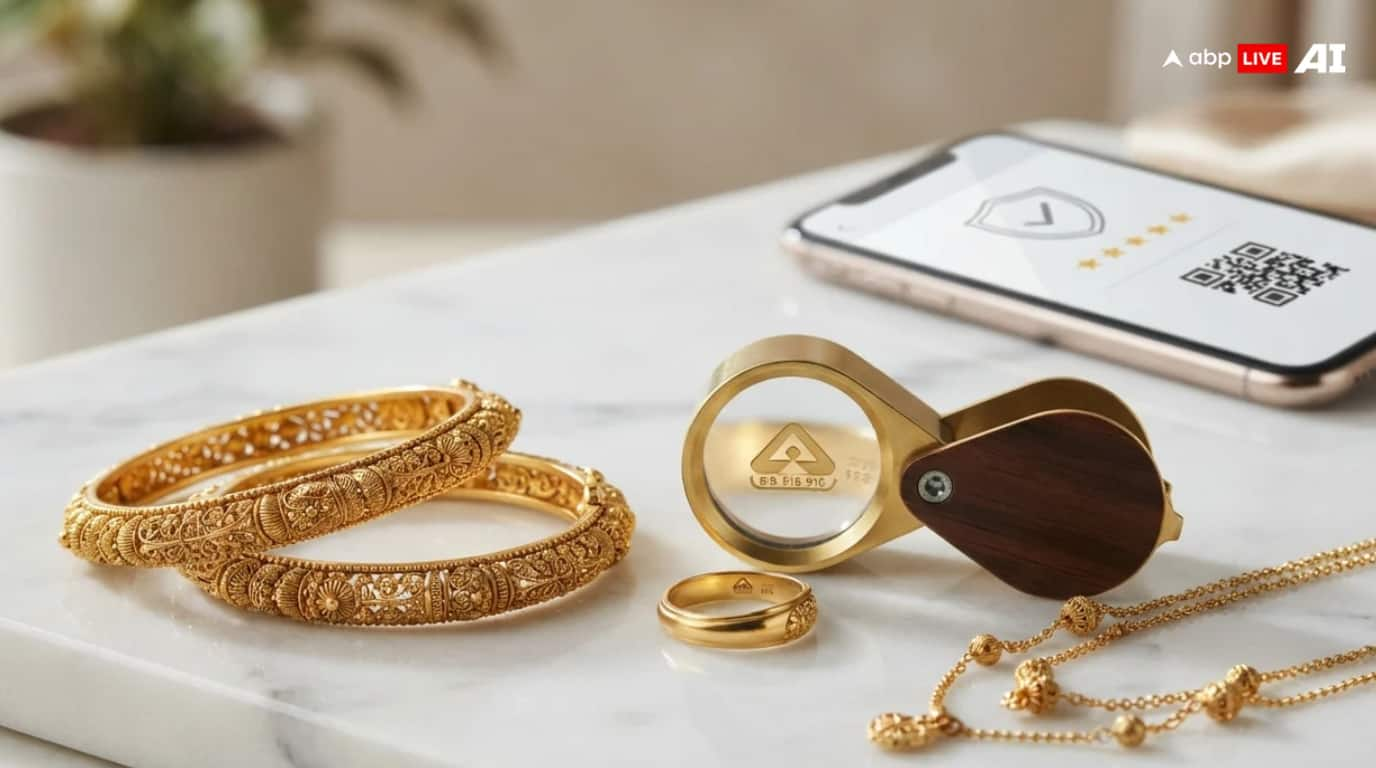
While a few simple tests can offer an initial indication of gold purity at home, they cannot provide complete confirmation. In India, the first step should always be to check the Bureau of Indian Standards (BIS) hallmark and the six-digit Hallmark Unique Identification (HUID) code.
Check The BIS Hallmark First
If your gold jewellery carries a hallmark, look for three important details: the BIS standard mark, the purity or fineness mark, and the six-digit alphanumeric HUID code.
The purity mark indicates the amount of gold present in the jewellery. For instance, 22K916 indicates 22-carat gold with 91.6 per cent purity. Similarly, 18K750 represents 18-carat gold with 75 per cent purity, while 14K585 indicates 14-carat gold.
You can also verify the HUID code through the HUID verification facility available on the BIS Care app. This allows you to check the details associated with the hallmark rather than relying only on the markings engraved on the jewellery.
ALSO READ | Jagaddhatri Puja 2026: Date, Navami Tithi, Religious Significance And Puja Vidhi
Can You Check Gold Purity At Home?
Yes, there are a few simple ways to get an initial idea of whether your gold jewellery is genuine. However, these methods should not be considered a final test of purity.
Gold jewellery is not always made from 24-carat gold. Other metals are often mixed with gold to make it stronger and more durable. This means different jewellery pieces may react differently to household tests.
Gold-plated ornaments can make the process even more difficult. Therefore, passing a home test does not necessarily mean that a piece is solid gold or confirm whether it is 14, 18 or 22 carats.
1. Try The Magnet Test
One of the simplest ways to conduct an initial gold check at home is through a magnet test.
Gold is not a magnetic metal. Place your jewellery on a flat surface and bring a strong magnet close to it. If the ornament gets strongly attracted to the magnet, it could indicate the presence of other metals.
However, if the jewellery does not stick to the magnet, it does not automatically mean that it is genuine gold. Several other metals are also non-magnetic, so this test alone cannot establish purity.
2. Check Gold By Putting It In Water
Another commonly discussed method is the water test. Gold is a dense metal, which means genuine gold generally sinks when placed in water.
However, simply observing whether an ornament sinks is not enough to confirm its purity, as several other metals can also sink.
A more detailed density check involves comparing the jewellery's weight with the amount of water it displaces. However, gemstones, hollow designs and other metals mixed into the ornament can affect the result.
ALSO READ | 6 Easy Ways To Wash Shoes In A Washing Machine Without Damaging Their Colour Or Shape
3. Examine The Hallmark, Magnet Reaction And Surface
Instead of relying on just one home test, it is better to examine multiple indicators together.
Start by checking the BIS hallmark and HUID code. Next, carefully inspect the jewellery's surface and colour. Look for any unusual discolouration, exposed metal or areas where the outer coating appears to be peeling.
You can then use the magnet test as an additional indicator. If you still have doubts about the jewellery's authenticity, getting it examined by an expert is a safer option than trying more household experiments.
4. Avoid Vinegar, Lemon And Toothpaste Tests
Several home remedies circulating online claim to help identify genuine gold using vinegar, lemon juice, toothpaste, bleach and even makeup products. However, these methods should be approached with caution.
Toothpaste can cause friction and potentially damage the jewellery's surface or its outer coating. Similarly, household chemicals may react with certain jewellery materials and damage delicate gemstones.
If your gold ornament contains pearls, emeralds, opals or other sensitive stones, avoid experimenting with such substances. A small attempt to check gold purity could end up damaging the jewellery or its precious stones.
5. Get Your Jewellery Tested By An Expert
If you have serious doubts about an old gold ornament or are planning to purchase expensive jewellery, professional testing is the most reliable option.
Jewellers and authorised testing centres may use different techniques, including electronic testing, touchstone or acid testing, and X-ray fluorescence (XRF), to examine the metal composition and estimate its purity.
When purchasing new jewellery, opting for BIS-hallmarked gold and verifying its HUID details can help you make a more informed decision.
Difference Between Gold Carat And Gemstone Carat
Gold purity is measured in carats (K). Twenty-four-carat gold is considered the purest form, while 18-carat gold contains 75 per cent gold and carries a fineness mark of 750.
However, the word carat is also used to measure the weight of gemstones. One metric carat is equal to 200 milligrams.
For example, if an 18-carat gold ring contains a one-carat ruby, the one-carat measurement refers to the weight of the gemstone, not the purity of the gold used to make the ring.
This content is published by ABP Live - Lifestyle and has not been created or edited by Hello Headlines. View original