How HalfPe is building a marketplace for surplus inventory at 50% off
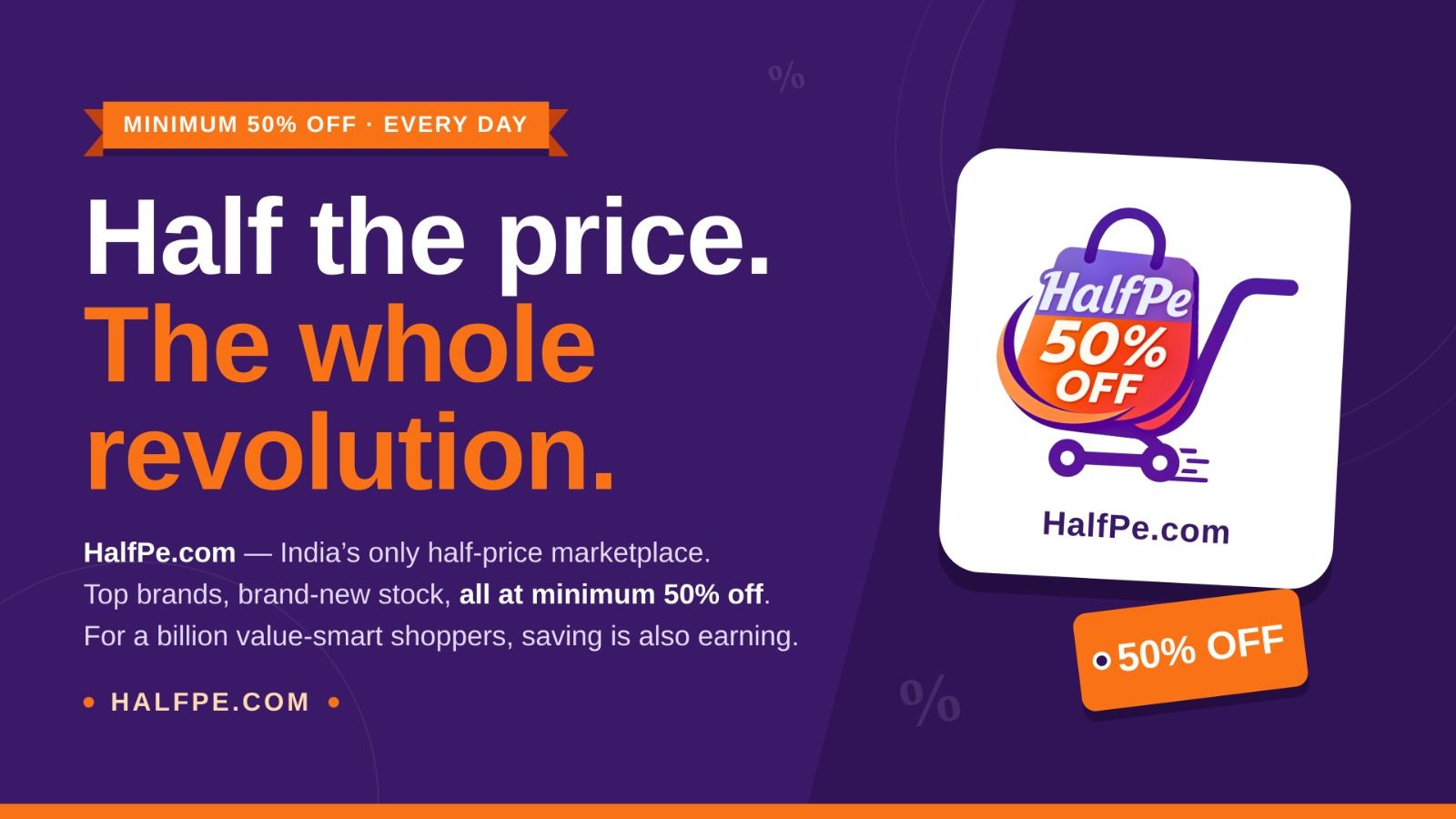
A product sitting unsold in a warehouse can still be exactly what a household needs. HalfPe.com connects those two sides with a simple promise: every listed product at least 50% below MRP, throughout the year. For shoppers, the attraction is everyday savings. For retailers and brands, it is another route to turn unsold stock into revenue.
The platform focuses on surplus inventory: new, unsold products that retailers and brands need to clear as new stock arrives. It aims to provide an organized, consumer-facing marketplace for this inventory while allowing sellers to recover value from products that might otherwise remain unsold or be liquidated through bulk channels.
HalfPe was founded by Venu G Somineni, with Tirumalarao Chamalla as co-founder. Somineni, a former Microsoft employee and serial entrepreneur, has founded five technology businesses. He has spent 15 years building impactful businesses from India and the US. The company also has some of the most famous business executives, including Umasankar Nistala and Rajkumar Velagapudi, on board.
The company operates with an AI-first team of 40 employees and says it processes more than 5,000 orders a day, with most orders coming from Tier II and Tier III markets.
“Every other platform asks how much discount to give,” Somineni says. “We asked a different question: what happens if half price is simply where India starts shopping?”
Addressing the surplus inventory market
India's retail market is estimated at around $1.2 trillion. According to the industry estimates cited by HalfPe, nearly 20% of retail inventory remains unsold each year, representing a potential surplus pool of approximately $240 billion.
This includes products such as previous-generation phones, out-of-season clothing, and unsold festival gift packs.
For retailers and brands, clearing this inventory can be difficult. Large discounts on their own platforms may affect brand positioning and create pricing concerns among customers who purchased the same products at full price.
As a result, surplus stock is often sold through bulk liquidation channels at substantially reduced prices or held in warehouses, where its value may decline over time.
Organised off-price retail has developed into a large global sector, but HalfPe sees an opportunity to build a dedicated consumer-facing marketplace for surplus products in India as ecommerce continues to expand.
Partnerships and a seller-owned inventory model
HalfPe says it has signed master-level agreements with Flipkart for surplus inventory across multiple categories, Reliance Retail for fashion, Zepto for surplus generated by its dark stores, and many other top brands and conglomerates in India.
According to the company, the first consignments from Reliance Retail are being scheduled.
The platform allows these companies to sell surplus inventory through a separate channel without offering the same discounts on their primary storefronts.
Unlike conventional inventory-led retailers, HalfPe does not purchase the products it sells.
Inventory remains with sellers and is either shipped directly from the warehouses of more than 700 vendors through a nationwide logistics network or held on consignment at HalfPe's consolidated warehouses in the National Capital Region (NCR), Mumbai, Bengaluru and Hyderabad.
The company is also rolling out hyperlocal delivery through partner stores in major cities.
Vendors receive payment when their products are sold, while HalfPe earns a fee on completed sales. This allows the platform to operate without purchasing inventory or tying up capital in unsold goods.
The company uses AI-based order routing to manage dispatch and fulfilment.
Targeting value-conscious consumers
HalfPe's marketplace lists products from more than 250 brands, including Bata, boAt, Lakmé, Tata, and Penguin.
According to the company, every product is new and listed at a minimum 50% discount on its MRP, regardless of the category or time of year.
The platform aims to simplify discount shopping by replacing varying promotional offers, coupon codes, and limited-period sales with a fixed minimum discount.
Its proposition is particularly focused on middle-class and value-conscious households.
HalfPe describes this approach through the idea that saving money on purchases is another form of earning. It believes a consistent discount can help households reduce their spending on regular purchases.
The company says most of its daily orders come from Tier II and Tier III cities, including markets such as Vijayawada and Indore, where it sees demand for affordable branded products.
It also considers these markets important to the next phase of ecommerce growth in India.
Taking the model offline with Half Price Days
HalfPe is extending its marketplace model to physical retail through Half Price Days, a city-level shopping exhibition where participating brands offer products at a minimum 50% discount.
Customers can examine and purchase products at the venue, while the same inventory is made available on HalfPe.com to shoppers across India for the duration of the event.
The company has organized editions in Tirupati and Vijayawada, which it says attracted substantial footfall.
Bengaluru is the next planned destination, with the company positioning the event as the city's largest retail expo. HalfPe plans to take the format to other major cities, including Visakhapatnam, Hyderabad, Chennai, Kochi, Mumbai and Delhi.
Participating vendors do not pay stall fees. Instead, HalfPe earns revenue when products are sold.
The company says these events also help it acquire customers and onboard vendors, with surplus inventory remaining available on its online marketplace after the exhibitions conclude.
It plans to use the format during festive shopping periods and aims to organise Half Price Days weekends across major Indian cities.
Using agentic AI to manage operations
HalfPe uses agentic artificial intelligence (AI) to automate parts of its marketplace operations.
According to the company, autonomous software agents onboard vendor catalogues, check whether listings meet the minimum 50% discount requirement, analyze demand, and route orders through the available fulfilment network.
These systems handle repetitive operational tasks, allowing the company's 40-member team to focus on decisions that require human intervention.
HalfPe is also preparing for the growth of agentic commerce, in which AI assistants help consumers compare products, evaluate prices, and potentially place orders.
As consumers increasingly use AI assistants, including ChatGPT, for shopping recommendations, the company is structuring its catalogue to make its products searchable by these systems.
HalfPe believes its consistent discount model could make its listings attractive to AI-driven shopping tools that compare products primarily on value.
Building an off-price retail platform
HalfPe’s business model is based on using existing surplus inventory rather than subsidising discounts to attract customers.
Retailers and brands offer markdowns to recover value from unsold stock, customers purchase products at reduced prices, and HalfPe earns a fee on each sale.
The company believes this approach can provide a sustainable pricing advantage as its network of brands, vendors and customers grows.
It also sees an environmental benefit in finding buyers for surplus products that might otherwise be discarded, destroyed or left unused.
HalfPe was recognised as Ecommerce Platform of the Year 2026 by HT Media and Emerging Retailer of the Year 2026 by The Economic Times.
The company aims to expand its position in India's off-price retail market by helping brands and retailers sell existing inventory to value-conscious consumers.
“The middle class built modern India,” Somineni says. “HalfPe is how modern India pays them back — 50% at a time.”
(Disclaimer: The views and opinions expressed in this article are those of the author and do not necessarily reflect the views of YourStory.)
This content is published by YourStory and has not been created or edited by Hello Headlines. View original