Autopsy shows Epstein strangled, no suicide: Forensic scientist
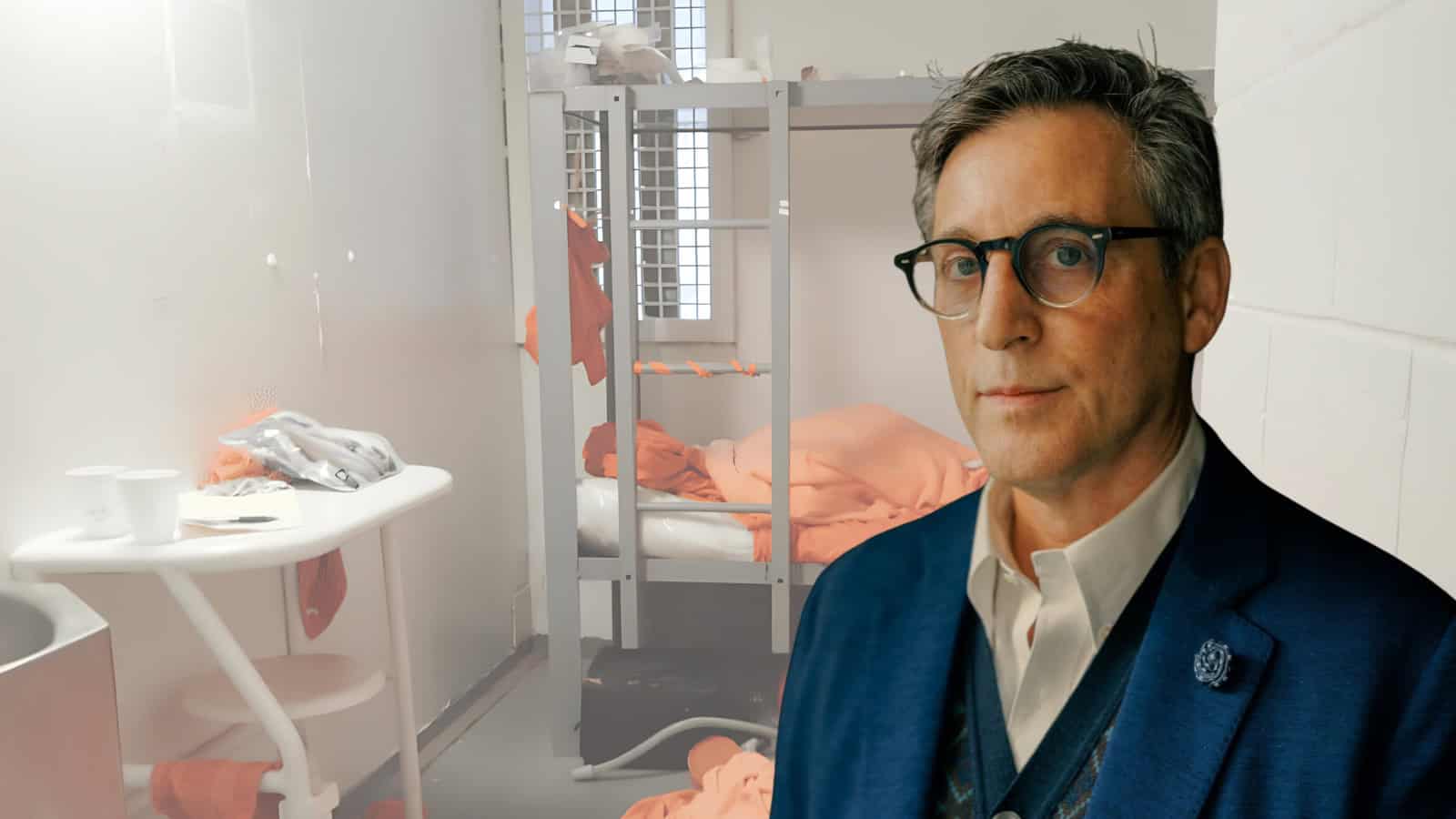
London: A forensic scientist who reviewed Jeffrey Epstein’s full autopsy file has said the injuries on the financier’s body point to homicidal strangulation rather than suicide, reopening questions about his 2019 death in a New York federal jail.
Michael Freeman, a forensic medicine academic who studies bias and error in death investigations, presented his findings on November 16 at the Middle Temple, one of London’s historic legal societies. He had received the file from Epstein’s brother, Mark, last November.
The New York City medical examiner’s office, which conducted the autopsy and ruled the death a suicide, said it stands by that finding.
Epstein, a convicted sex offender, was found dead in his cell at the Metropolitan Correctional Center in Lower Manhattan in August 2019 while awaiting trial on federal sex trafficking charges. Several official inquiries have found no evidence that anyone else was involved.
Neck mark at centre of claim
Freeman’s case rests largely on the ligature mark on Epstein’s neck. He argued that a typical hanging leaves a smooth, even line that rises towards a peak. Epstein’s mark was deep and jagged and split into a Y-shape on one side.
Recalling his reaction to the first autopsy photograph he saw, Freeman told The New York Times it “doesn’t look like a hanging mark.”
He also pointed to what he described as fingernail marks above the ligature line, an abrasion at the base of the neck and a deep, fresh haemorrhage in the left shoulder muscle. He said these suggested a struggle.
Using 3D computer models built from Epstein’s physique and the autopsy images, he reconstructed the hanging. He argued that strangulation from behind better explained the injuries.
The reconstruction drew on the account of the jail officer who found the body. Two years after the death, the officer told investigators that Epstein’s buttocks were about an inch above the floor.
Freeman also criticised investigators for not testing Epstein’s fingernails for DNA.
He told the The New York Times that he had no theory on who might have killed Epstein and was concerned only with what he called lapses in the death investigation.
Gaps in the original probe
Dr Kristin Roman, the medical examiner who performed the autopsy and has since retired, worked with limited material. No photographs were taken of Epstein while he was hanging or with the cloth around his neck. According to The New York Times, the strip of fabric sent to her office was not the one used as the noose, and she was not allowed to examine the cell.
She nevertheless told federal investigators she had no doubt it was suicide. She said there were no signs of a struggle, no bruising and nothing under the fingernails.
Experts divided
Forensic pathologists who have seen some, though not all, of the photographs agree the neck mark is unusual for a hanging. Some said the images could still fit a suicide. They also cautioned that a string of institutional failures may make it impossible ever to settle the question.
Michael Baden, the pathologist Mark Epstein hired to observe the autopsy, has long disputed the suicide ruling. He has told The Telegraph that the findings were “much more consistent” with homicidal strangulation than with suicidal hanging.
Freeman worked with cognitive neuroscientist Itiel Dror, known for research exposing bias among forensic experts, and Swedish forensic pathologist Anders Eriksson. They have so far failed to get the analysis published in a peer-reviewed journal and are still looking for one.
Freeman is not a board-certified forensic pathologist, the top credential for US medical examiners. He holds doctorates in epidemiology and forensic medicine and edits the Journal of Forensic and Legal Medicine.
He co-authored a 2020 analysis that, though contested, helped discredit “excited delirium” as a cause of death in police custody. He also consulted for the prosecution in the trial of a police officer over George Floyd’s death.
Venue switch
University College London’s Centre for Criminal Law was originally to host the lecture. The university called it off the day before, citing “well-being implications” for students. The event moved to the Middle Temple, and those who had registered were told to watch online.
Mark Epstein released the autopsy photographs online shortly before the lecture. Towards the end of his talk, Freeman displayed a QR code linking to the images and urged people to judge the evidence for themselves.
Get the latest updates in Hyderabad City News, Technology, Entertainment, Sports, Politics and Top Stories on WhatsApp & Telegram by subscribing to our channels. You can also download our app for Android and iOS.
This content is published by The Siasat Daily and has not been created or edited by Hello Headlines. View original