Kashmir’s Job Seekers Paid Rs 48.88 Crore to Wait
Kashmir, Observer, Jammu, Srinagar, Latest Kashmir News, Kashmir News, Kashmir Latest News
ByHamid Ansari
A shared official document puts the examination fees collected by the Jammu and Kashmir Public Service Commission at Rs 17.90 crore for 2023-24 and 2024-25.
The Jammu and Kashmir Services Selection Board collected approximately Rs 30.98 crore over the same two years.
Added together, the figure comes to Rs 48.88 crore, paid in sums small enough to seem harmless by young people whose finances leave little room for them.
Behind any single application fee stands a household that has already spent what it could on education, coaching, books, internet access and years of preparation.
For a family like that, a government post means a regular salary, a measure of security and an exit from long uncertainty, which explains why a young graduate will pay the fee for vacancy after vacancy.
Claims have circulated that collections rose sharply in 2026, with estimates of another Rs 25 crore.
That number awaits official confirmation and belongs to the agencies to publish, so the two-year total is the figure to argue from.
A reasonable fee to cover administrative costs is easy to defend. The bigger question concerns what candidates receive for the money: transparency, value and a realistic chance at a job.
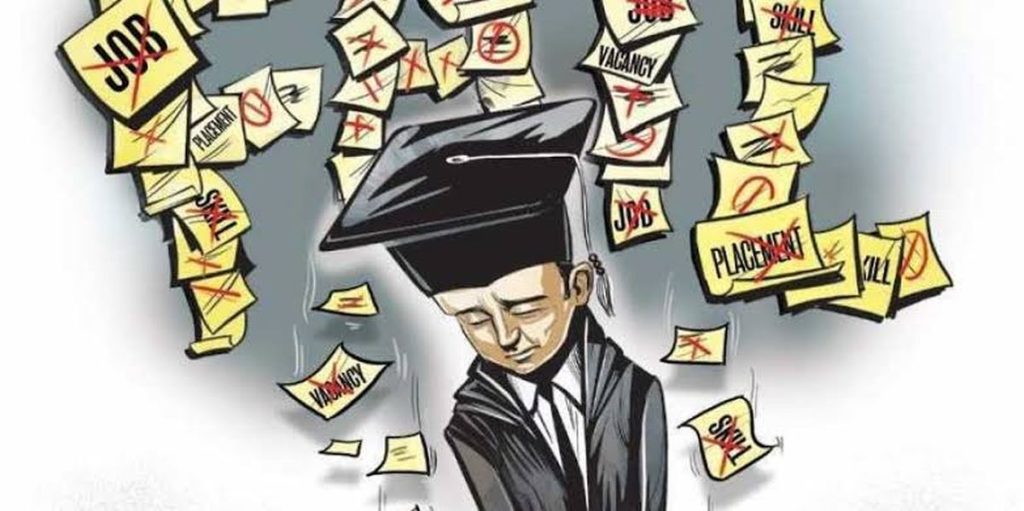
Aspirants have come to see a government post as something closer to a lottery win than a career step. They prepare for years, apply to multiple vacancies, pay fees repeatedly and then wait through notifications, examinations, results, document verification and final appointments.
Several recruitment processes have become tangled in administrative delays, legal disputes and cancellations, and the candidate who paid at the start is left holding an uncertain future.
Vacancies lie unfilled while thousands of qualified candidates wait outside them. The fees themselves prove how many willing applicants exist.
A delayed recruitment cycle costs a young person another year of working life, taken from the prime of that life, and the fee collected at the beginning does nothing to repay it.
The debate over the reservation and selection framework sits inside this frustration.
Social justice and equal opportunity for disadvantaged communities are essential in a democracy, and the system should protect those constitutional rights while keeping fairness and accountability intact for everyone.
That second task depends on public confidence, because a candidate who has studied for years should be able to believe that academic performance and merit still count.
Transparency answers both concerns, since a recruitment body that publishes its process gives every candidate, whatever the category, grounds for trust.
Unemployed youth are a human resource that Kashmir badly needs to put to work, and a government that treats them as a revenue line has misread them.
Collecting crores in application fees without timely and predictable recruitment raises legitimate questions of institutional accountability, and the remedies are specific.
Authorities can publish annual statements listing fee collections, administrative expenditure, refunds, vacancies advertised, examinations conducted and appointments completed.
A published recruitment calendar with strict deadlines would let a candidate plan a year ahead. Automatic refunds would follow wherever an examination is cancelled or a process abandoned in circumstances that warrant reimbursement.
Recruitment can absorb only so many people, so the government also needs a comprehensive strategy for jobs in the private sector, industry, tourism, technology, agriculture and entrepreneurship, one that goes past the occasional employment announcement.
Kashmir’s educated youth are asking for opportunities, transparency and a fair chance to build their future. Sympathy, political slogans and temporary assurances satisfy none of the three.
A government can count the recruitment notifications it issues and the crores its examinations collect, and both numbers will look impressive in a press release.
The measure that tells more is how many lives a job has changed.
Until that number is published alongside the other two, the arrangement runs in one direction: candidates finance the process, and nobody finances their waiting.
- The author is a senior journalist and former Editor at the Abu Dhabi-based Gulf Time daily.
The post Kashmir’s Job Seekers Paid Rs 48.88 Crore to Wait appeared first on Kashmir Observer.
This content is published by Kashmir Observer and has not been created or edited by Hello Headlines. View original