Education Loan with a Retired Parent: Who Can Co-Sign?
Kashmir, Observer, Jammu, Srinagar, Latest Kashmir News, Kashmir News, Kashmir Latest News
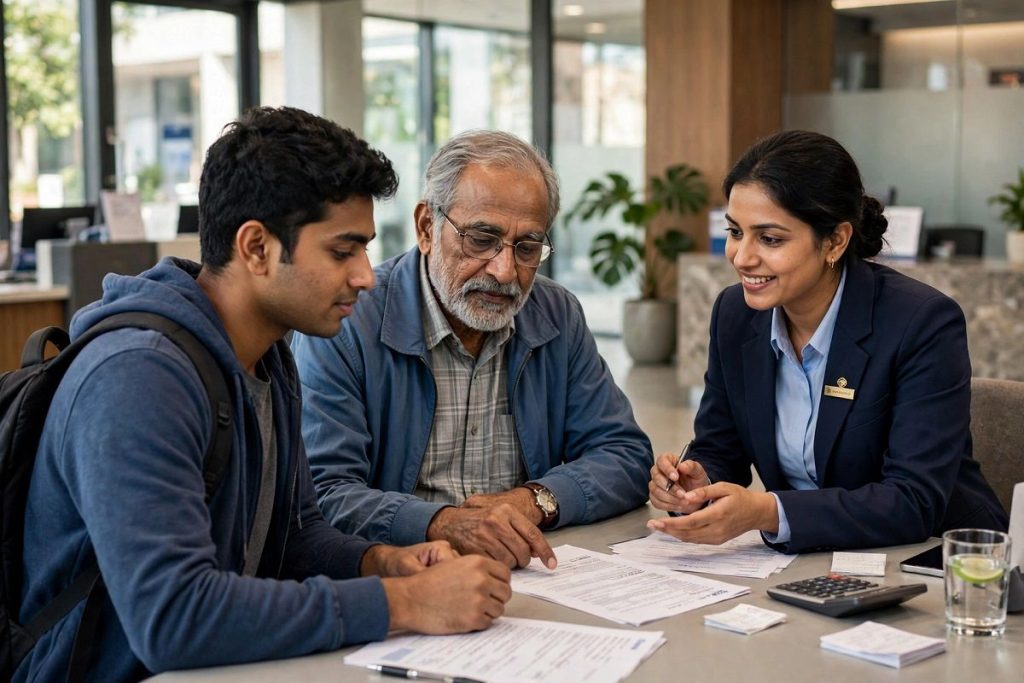
A student has her admission letter from a university abroad. The fee schedule is printed, the deadline is close, and the loan application asks for a co-applicant. Her father retired a year ago. Her mother never held a job outside the house. So is the application over before it starts?
Not quite. It does change the conversation, though. Banks say co-borrower, co-applicant, co-obligant. Different names. Same job: sharing the burden of repayment. A parent’s age is rarely the deciding point. Steady income and a clean record are. Here’s how that plays out.
Does a Retired Parent Count as a Co-Signer?
Yes, in most cases. Indian lenders almost always ask a parent or guardian to join the loan, and nothing in the usual approach rules out someone who has retired. Under the Model Education Loan Scheme that public sector banks follow, loans up to ₹7.5 lakh generally don’t need collateral, though the parent signs as co-obligant. Go past that figure and collateral usually enters the file.
That word, usually, carries weight. Every lender sets its own policy. One may be comfortable with a pension and savings. Another may want an additional earning co-applicant. A few ask a spouse, sibling or other close relative to sign when the parent’s income looks thin. So her first call isn’t to a branch counter. It’s to a loan officer, asking which of those routes that lender allows.
What Do Lenders Look at Besides Salary?
Salary is only one way to show income, and a pensioner’s file rests on others. Lenders look at regular pension credits, interest from fixed deposits, rent from property, dividends. They also look at what the family owns: savings, a house, insurance policies. Some of these can double as security when the loan is large.
Study loan eligibility also depends on the credit history of whoever signs. A father who has cleared his home loan and keeps card balances low is a good sign. One with missed payments is a problem, whatever his pension. Then comes the obligation side. Existing EMIs reduce what a household can take on. Age matters too, because a loan can run ten years or more after the course ends. Policies differ here, and not every lender publishes an age limit. So she asks.
Gratuity and provident fund balances count too. A retired government employee may hold both, and some lenders ask about them as proof of reserves.
Which Papers Does a Pensioner Need to Show?
Paperwork is the part families dread. It’s also the most predictable. Documents for education loan files split three ways: what the student brings, what the course supplies, and what the co-applicant must show.
The student’s side first. She brings identity and address proof, PAN or Aadhaar if asked, transcripts, entrance test scores. For an overseas course, passport and visa details as well. The course adds an admission letter and a fee structure, plus a cost estimate that should include living expenses.
Then her father. He shows identity and address proof and PAN. The pension payment order. Bank statements with pension credits, usually the last six months. Income tax returns for two or three years, where they apply. Proof of any rent or interest. A statement of assets and liabilities.
A small habit helps. Pull bank statements close to the application date, because lenders want recent ones. Check names and addresses too. A spelling that differs between two papers can hold up a file. Weeks can go by over one initial.
Should Someone Else Join the Application?
Sometimes it helps. A working sibling or spouse brings regular salary into the file. A mother with her own income, even from rent or part-time work, strengthens it as well. The lender usually looks at the combined picture.
There’s a trade-off, though. Every added name is another person legally responsible for the loan, and it appears on that person’s credit report too. A joint file also means more documents, more signatures and a longer wait.
Government-backed routes deserve a look as well. PM-Vidyalaxmi is one, a scheme for collateral-free, guarantor-free loans. Students must be admitted to an eligible institution. Behind the loan sits a credit guarantee: 75% of any default, on loans up to ₹7.5 lakh. And for families earning up to ₹8 lakh a year, a 3% interest subvention may apply on loans up to ₹10 lakh. The lender’s own checks still apply. Applications go through the Vidya Lakshmi portal. One form, several banks.
What Risks Come With Co-Signing?
A co-signer isn’t a witness. In law, the co-borrower is jointly liable. Suppose the student misses instalments. The lender can go after either person, and both credit reports take the hit. A retired parent has less room to recover from that, since a pension doesn’t rise with a new job.
Then there’s the moratorium. Interest usually builds up during the course and the grace period after it, and depending on the lender, unpaid interest may be added to the principal. The real burden can end up larger than the sanctioned amount. Many lenders encourage paying at least the simple interest during study, and a parent on a fixed pension may decide to do exactly that.
The sanction letter has one more thing worth a look. Insurance. Some lenders offer or recommend life cover tied to the loan. In many cases it’s optional. Read before accepting. On tax, a parent who repays interest on a loan taken for his child may claim the deduction, generally for up to eight years from the year repayment begins.
Final Thoughts
Retirement doesn’t shut the door on an education loan. The paperwork changes. Sometimes a second name joins the file. Sit down with the pension figures, the savings, the existing EMIs. A week is often enough to see how much is sensible to borrow.
Compare two lenders before applying. Co-applicant rules. Interest during the study period. How each treats pension income. Get the answers in writing. One last rule. Borrow what the course needs, not the largest amount the bank will approve.
The post Education Loan with a Retired Parent: Who Can Co-Sign? appeared first on Kashmir Observer.
This content is published by Kashmir Observer and has not been created or edited by Hello Headlines. View original