
India ties for APAC’s highest phishing rate as employee awareness gaps emerge: Kaspersky
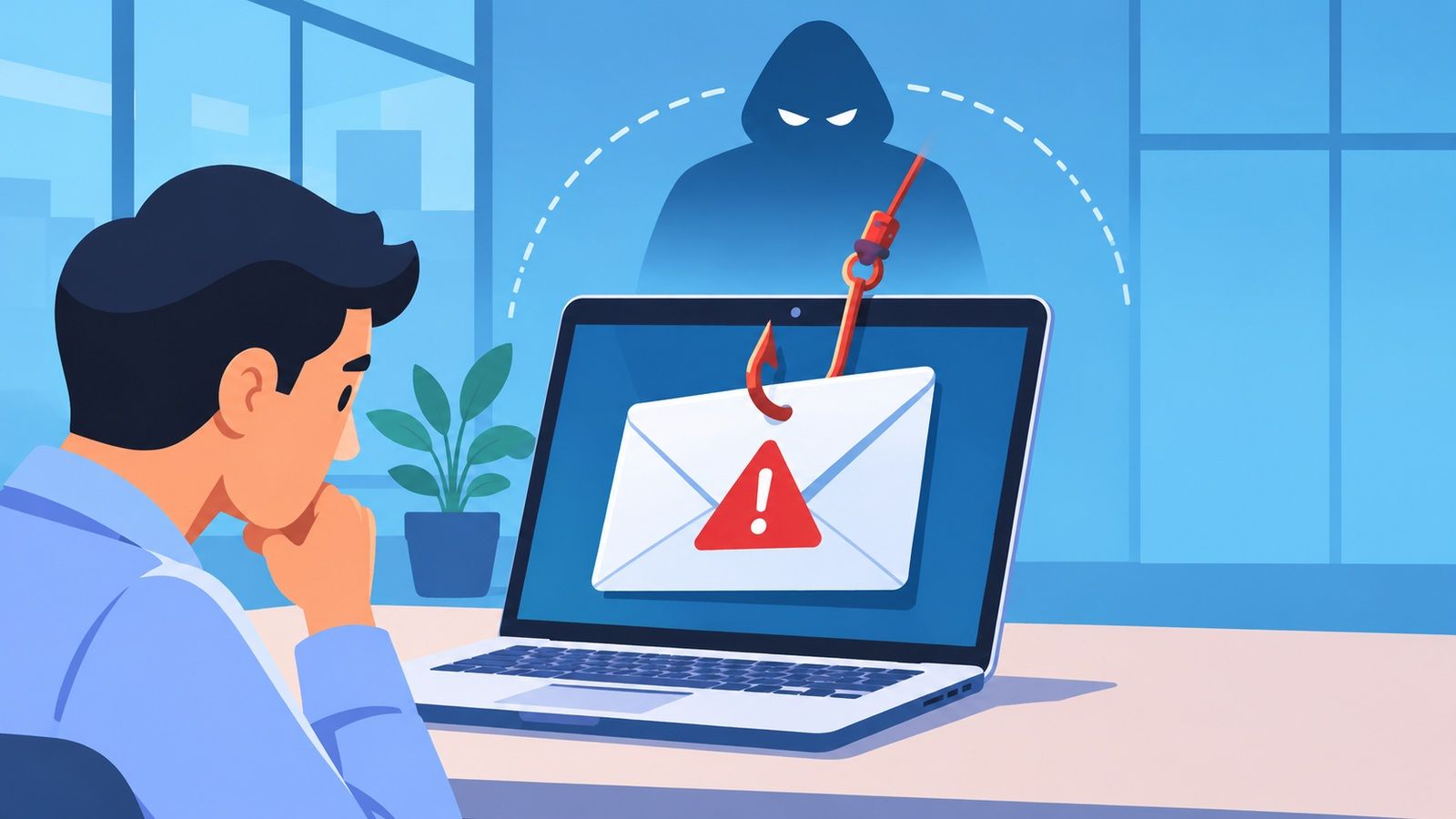
Phishing is the most frequently reported cyber incident among businesses surveyed in Asia-Pacific, but the sharper warning for India is that attacks are exploiting weaknesses in employee awareness as well as technology.
In a Kaspersky survey, 28% of Indian businesses said they had experienced phishing between March 2025 and March 2026. India shares the highest reported proportion with Indonesia, above the APAC average of 24%.
The survey covered 1,800 interviews across 18 countries, including 100 Indian respondents.
In India, 21% reported attacks involving weak or stolen credentials, compared with 15% across APAC. Mass malware attacks were reported by 21%, against 18% regionally. Software vulnerability exploits were at 20%, slightly below APAC's 21%.
Among APAC respondents whose organisations experienced cyber incidents, 33% said attackers sought sensitive business information and 32% identified customers’ personal data as a target during their most harmful incident.
One of the most striking findings concerns employee awareness. About 70% of Indian respondents said their organisations had experienced at least one cyberattack exploiting employees’ low IT security awareness. That matched Malaysia and was above the APAC average of 63%, though below Vietnam’s 75%.
This sits uneasily beside another survey result. Some 53% of Indian respondents described their organisation’s cybersecurity culture as high, meaning employees were well-educated in IT security and followed the rules. The remaining 47% rated it average, indicating that staff knew basic practices but did not always act on them. None selected the lowest category.
“A phishing email can look like any other message on a busy workday, from a supplier's invoice to a request from a colleague. Employees may know what phishing is, but recognising it in everyday communications can be a challenge,” said Adrian Hia, managing director for Asia Pacific at Kaspersky.
Hia argues that businesses should move beyond basic instruction and give staff repeated opportunities to practise identifying suspicious requests through simulated attacks.
The threat is also becoming more sophisticated. In an advisory issued on August 7, 2026, India’s Computer Emergency Response Team (CERT-In) warned of targeted attacks against Microsoft 365 environments using password-spraying, credential-stuffing, device-code phishing and stolen session tokens.
Device-code phishing abuses a legitimate sign-in process to trick a user into authorising an attacker's access. The advisory also describes business email compromise, in which criminals take over or impersonate business email accounts to divert payments or obtain sensitive information.
India’s regulatory framework is evolving alongside these risks. CERT-In requires specified cyber incidents to be reported within six hours of being noticed and calls for ICT system logs to be retained securely for 180 days within India.
The Digital Personal Data Protection Rules, notified in November 2025, provide for phased compliance and require organisations responsible for personal data to inform affected individuals without delay after a personal data breach. The Reserve Bank of India’s 2026 directions for commercial banks and non-bank payment operators also formalise controls around cyber resilience and digital payment security.
This content is published by YourStory and has not been created or edited by Hello Headlines. View original