The Government Must Look In The Mirror
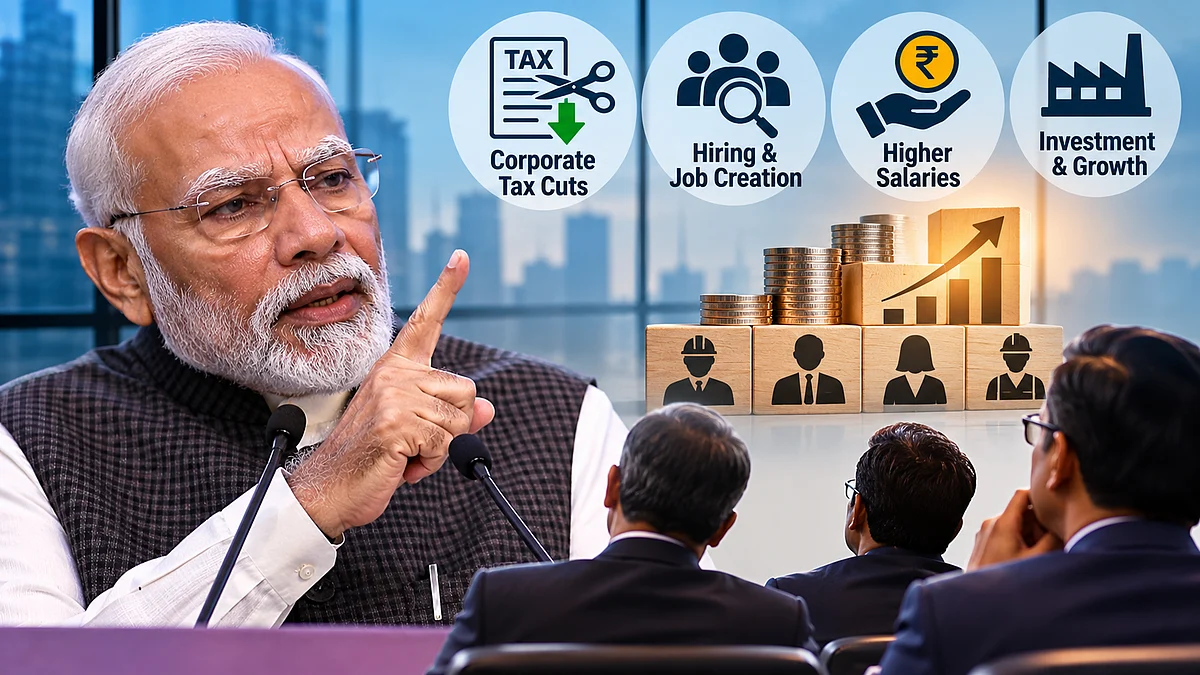
Prime Minister Narendra Modi, who is rarely critical of corporate India, surprisingly lashed out at industry leaders during an industry event early this week, asking them why they had not increased hiring and passed on the benefit of tax cuts to their employees when the government had, on its part, reduced corporate tax and introduced personal exemption of up to Rs 12 lakh. In her budget speech two years ago, the Finance Minister, while announcing a ₹2 lakh crore package offering direct financial incentives to employers for hiring first-time employees, had said that it is now up to the private sector to pick up the baton and create more jobs. One doesn’t know whether the incentive has actually led to more hiring in entry-level jobs, but the Prime Minister is right to expect corporate India to do more for its employees. Companies that have benefited from tax concessions and public incentives cannot remain indifferent to job creation, wage growth, and worker welfare.
But accountability cannot be a one-way street. The government must answer whether its corporate tax cuts have generated the expected additional investment, whether PLI incentives have created enough sustainable employment, whether national champions are building wider industrial ecosystems and whether MSMEs are receiving the support they need to expand. It must also find out why government departments continue to have vacancies, why public institutions struggle with staffing shortages, and why employment generation remains heavily dependent on self-employment. More importantly, it must consider whether regular handouts in the form of cash transfers to voters, instead of using the same funds to create jobs, are legitimate.
The government should realise that companies do not recruit simply because their tax liabilities have fallen. They hire when they see demand for their products and services, when additional capacity is commercially viable, and when they have confidence in the economic outlook. Similarly, sustainable salary increases depend on productivity, business growth, and companies' ability to share the gains with their employees. These conditions cannot be created through tax concessions alone. They require a combination of economic policies that stimulate demand, encourage investment, improve competitiveness, and create opportunities for businesses of different sizes to grow.
At the same time, a tax reduction that improves take-home pay and an employer-funded increase in gross salary are two entirely different things. The government cannot club these two measures together and expect companies to treat them as a mandate to increase salaries. The real test of economic policy is not how much tax the government has foregone, how many incentives it has announced, or how many large companies it has helped build; it is whether these interventions have produced more productive enterprises, better-paying jobs, rising household incomes, and a broader distribution of economic prosperity.
It cannot wash its hands of the job challenge to corporate India. It is as accountable as the private sector is when it comes to creating jobs.
This content is published by Free Press Journal and has not been created or edited by Hello Headlines. View original