Opinion: Telangana Intermediate Board merger—structural change isn’t education reform
By Adama Srinivas Reddy
The Telangana government is now moving towards a major restructuring of school and Intermediate education. The proposal includes a common board for Classes IX to XII and amendments to the existing laws governing school and Intermediate education. The government is also considering a phased transition, with a Bill expected in the coming Assembly session. These steps could reshape how the State organises secondary and higher secondary education.
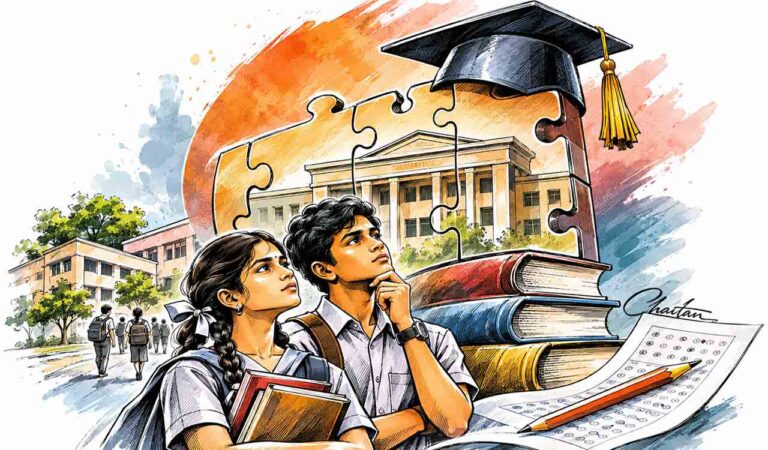
So far, the debate has focused largely on administrative and institutional questions. Should government high schools be upgraded to offer Classes XI and XII? Should existing Junior Colleges be allowed to add Classes IX and X? How will teachers’ service conditions be protected? What changes will be needed in the boards, affiliation procedures and administration? These questions need clear answers. But there is a more fundamental issue that deserves equal attention: What kind of education should students receive during the two years after Class X?
No Simple Change
The merger should not be treated as a simple administrative change. It gives the government an opportunity to rethink the purpose of Intermediate education, its curriculum and the way institutions function. If this opportunity is missed, the existing system may simply continue under a different administrative arrangement, with all its present problems.
Earlier education commissions and committees had recognised the importance of the higher secondary stage. The Kothari Commission (1964–66) laid the foundation for the 10+2+3 structure. The PD Shukla Committee (1973) argued that changing the structure of education should help improve its quality, rather than become an objective in itself.
The Adiseshiah Committee (1978) stressed the need to link higher secondary education with work and vocational learning. The Amrik Singh Task Force (1997), while examining the role of school education boards, argued that boards should function as autonomous academic bodies rather than merely conduct examinations. It called for boards to take greater responsibility for academic planning, curriculum and educational standards, while remaining free from undue political interference.
These recommendations point to a common idea: the Plus Two stage should provide a sound general education while preparing students for higher studies, employment and responsible participation in society.
The proposed merger offers Telangana an opportunity to address the commercialisation of education, ease the pressure of entrance examinations and strengthen public institutions
The proposed common board therefore deserves attention beyond the administrative convenience of bringing two boards together. The recommendations of the Amrik Singh Task Force suggest that a board should play an active academic role. It should guide curriculum development, improve assessment, support educational research and work to maintain standards.
It should also ensure that students can move between different boards without facing problems of recognition or equivalence. A common board will serve little purpose if it remains only an examination authority. It must have academic autonomy, professional expertise and a clear responsibility for improving the quality of education.
Inter Education
Over time, however, the purpose of Intermediate education has become much narrower. In many institutions, especially corporate Junior Colleges, education has come to mean preparing students for engineering and medical entrance examinations. The race for ranks has pushed other areas of learning to the margins. Languages, humanities, social sciences, sports and arts receive little attention. Students spend much of their time learning how to answer examination questions quickly, often without developing a proper understanding of the subjects or the ability to think independently.
Corporate colleges are not the only reason for this situation. The importance given to a few competitive examinations, the shortage of good higher education opportunities, and the social pressure to enter professional courses have all contributed to it. However, corporate institutions have turned this competition into a business and intensified it. Students are treated as potential rank holders, while their results are used to attract more admissions. High fees, exaggerated claims about results, long study hours and poor attention to student welfare are signs of a system in which commercial interests often take precedence over education.
Preventing corporate colleges from starting Classes IX and X will not solve the larger problem. The government needs to regulate private Junior Colleges effectively. This should include clear rules on fees, infrastructure, teaching hours, hostel facilities and student safety. Colleges should not be allowed to make misleading claims about their results. Nor should entrance coaching take the place of the prescribed curriculum. Students need sufficient time for sleep, sports, recreation and other activities that are part of growing up. Regular inspections and a grievance mechanism through which students can raise complaints without fear are also necessary.
Admission Practices
Regulation alone, however, cannot change the culture of education. The government must also address the excessive influence of entrance examinations. This calls for a review of admission practices, the creation of multiple pathways into higher education and better opportunities across different disciplines. Examinations should assess whether students understand a subject and can apply what they have learnt. They should not reward only memorisation and the ability to follow coaching methods.
Government Junior Colleges also need serious attention. Upgrading selected high schools may help students in rural and remote areas, but enrolment alone should not decide which schools are upgraded. The government must consider the availability of qualified teachers, laboratories, libraries, classrooms, transport, sanitation and a reasonable choice of subjects. Public institutions should offer students a genuine alternative to commercial colleges. They also need counselling, career guidance and academic support.
Students in Classes XI and XII are at an important stage of their intellectual, emotional and social development. They need teachers who understand the challenges of adolescence and can guide them beyond examination preparation. This requires appropriate teacher qualifications, regular professional development, reasonable workloads and freedom to make academic decisions. Teachers must be valued as educators, not judged only by the ranks their students secure.
Education during these two years should prepare students for much more than admission to professional courses. It should help them think independently, distinguish information from knowledge, understand society, respect different cultures and make informed decisions about their lives. It should also prepare them to take part responsibly in a democratic society. Humanities, languages, vocational learning, arts and physical education must have a proper place in the curriculum. They should not be treated as less important than science and mathematics.
The success of the merger should not be judged solely by the money saved, the number of students enrolled or examination results. The real test is whether students receive a better education and whether teaching and learning improve. That will require serious discussions with teachers, students, parents and educationists, as well as a clear plan supported by adequate funds and facilities.
Changing the administrative structure of education does not necessarily change its purpose or practice. Even a well-intended policy change becomes an educational reform only when it makes a difference in classrooms and in students’ lives. Telangana’s challenge is not simply to merge Intermediate education with school education. It is to restore the purpose of this stage by addressing commercialisation, reducing the pressure of rank-based competition and giving students the opportunity to learn in a broader and more meaningful way.
(The author is a faculty member at Kakatiya Government College [Autonomous], Hanamkonda)
This content is published by Telangana Today and has not been created or edited by Hello Headlines. View original