These Karnataka Women Are Saving Desi Seeds. Their Work Won Them Rs 10 Lakh
A handful of seeds can carry generations of farming knowledge.
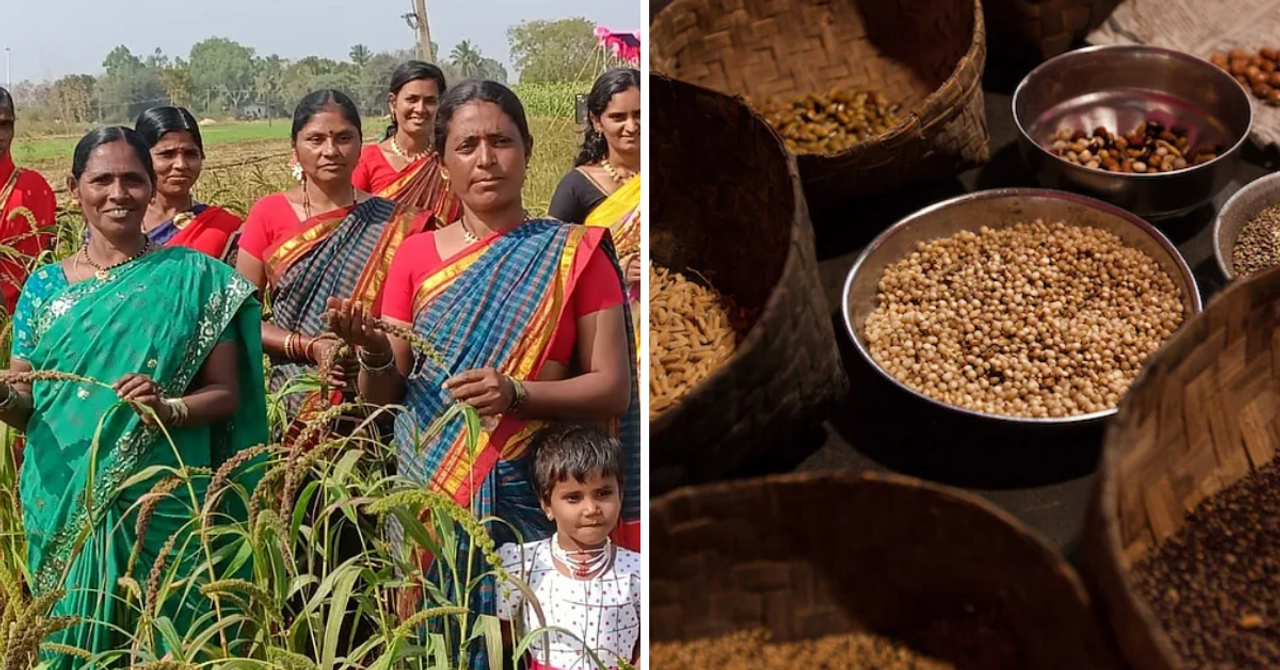
In Karnataka's Dharwad district, a group of women has been collecting, preserving, and sharing these seeds, helping farmers continue cultivating indigenous crops suited to the region's rainfed conditions.
On November 12, 2026, the Bibi Fatima Women's Self-Help Group (SHG) from Teertha village in Kundgol taluk received the Plant Genome Saviour Community Award, along with a cash prize of Rs 10 lakh, a citation, and a memento.
The recognition acknowledges the collective's efforts to conserve more than 250 indigenous seed varieties and revive traditional millet-based mixed cropping systems across 30 villages in Dharwad's rainfed farming areas.
The initiative began in 2018, when farmer Bibijaan Maulasaab Halemani brought together 14 other women to establish the collective.

According to Bibijaan, her interest in seed conservation came from her father, who also preserved seeds.
Speaking to The New Indian Express in a report published on November 5, 2026, she said, “My father used to conserve seeds, and I too developed an interest and took to seed conservation.”
She established the SHG and its seed bank in 2018, with the aim of making good-quality indigenous seeds accessible to farmers and encouraging traditional crop cultivation.
A seed bank with more than 250 varieties
The group's community seed bank preserves a wide range of indigenous crops, including:
-
- Jawari (sorghum)
-
- 70 varieties of finger millet
-
- 25 varieties of little millet
-
- Two varieties of browntop millet
-
- 10 varieties of foxtail millet
-
- 25 varieties of horse gram
-
- 10 varieties of chickpea
-
- 25 varieties of paddy
-
- Three varieties of green gram
-
- Around a dozen oilseed varieties
-
- Several varieties of vegetables
These varieties form part of the region's traditional agricultural diversity. The indigenous millet varieties, in particular, are adapted to local agro-climatic conditions and can withstand variations in weather.
The collective has also worked to revive millet-based mixed cropping, in which farmers cultivate multiple crops together rather than depending on a single crop.
According to the United Nations Development Programme's Equator Initiative, the group now supports more than 5,000 farmers across 30 villages. Its work includes promoting multi-cropping, maintaining community seed banks, and encouraging sustainable agricultural practices.
Beyond seed conservation, the collective has expanded into agricultural processing and livelihood activities.
It operates a solar-powered millet processing unit, which helps women produce value-added millet products. The initiative also works on livestock rearing, horticulture, and improving household food and nutritional security.
Recognition for community-led seed conservation
The national award is not the group's first recognition for its work.
In August 2025, the United Nations Development Programme announced Bibifathima Swa Sahaya Sangha as one of the 10 winners of the Equator Prize 2025. The award recognised community-led initiatives working on nature-based solutions under the theme 'Nature for Climate Action', with a focus on women's and young people's leadership.
According to the UNDP's August 20, 2025 announcement, the collective received recognition for its work combining traditional agricultural knowledge, seed conservation, renewable energy and climate-resilient farming. Each winning initiative was awarded $10,000.

For the women of Dharwad, their work continues to centre on collecting indigenous seeds, keeping traditional crop varieties in cultivation and helping farming communities access planting material suited to their local conditions.
Sources:
‘Karnataka: Bibi Fatima group bags award for saving desi seeds’: By Subhash Chandra N S, Published on 5 November 2026
‘UNDP Equator Initiative Award’ for Bibi Fatima SHG of Teertha village': By The Hindu Bureau, Published on 9 August 2025
This content is published by The Better India and has not been created or edited by Hello Headlines. View original