Congestion pricing could ease Hyderabad traffic: Study
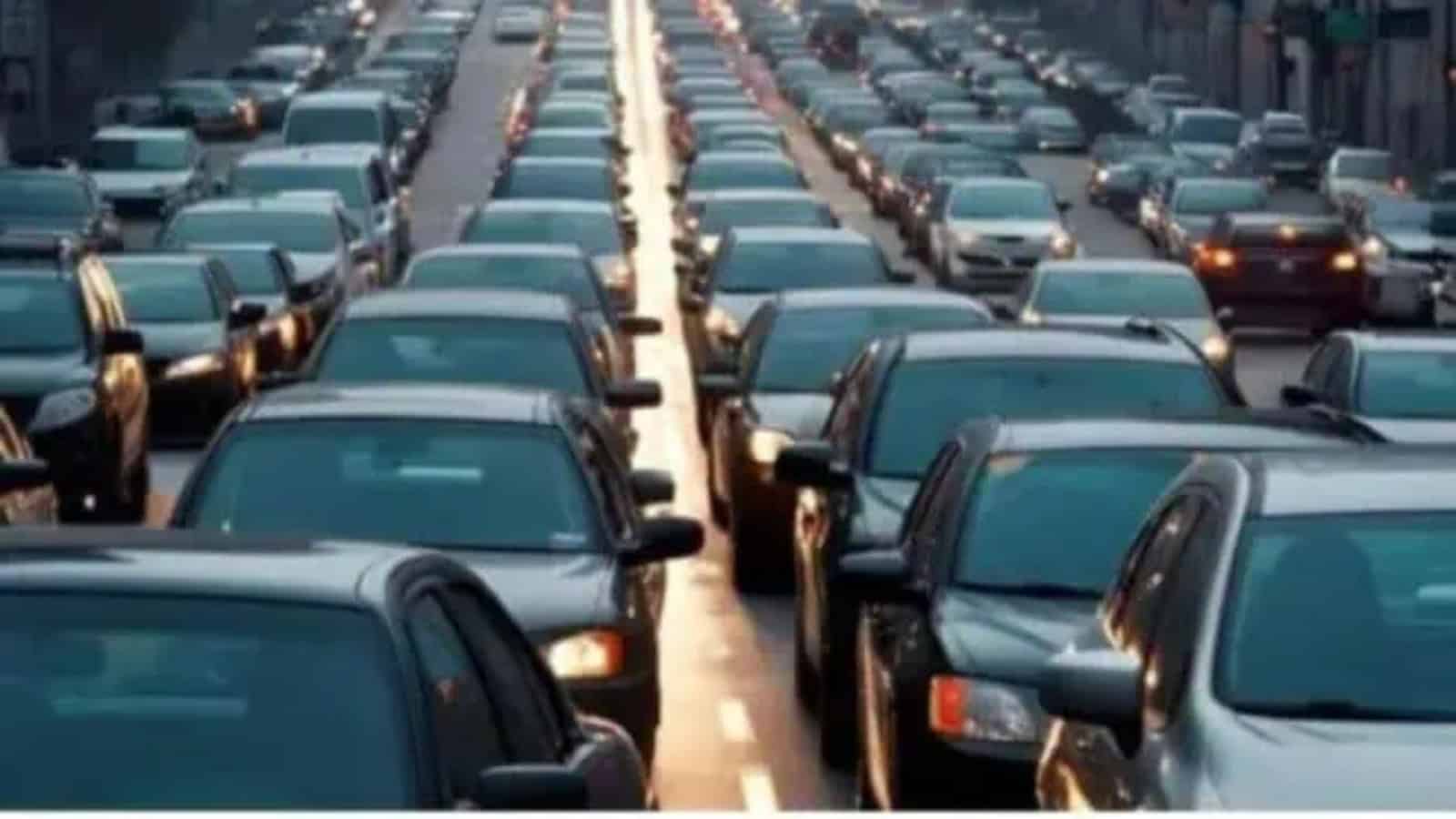
Hyderabad: Motorists in Hyderabad are willing to pay a congestion charge on the city’s most congested roads, provided it shortens their journeys and the money is reinvested in public transport, according to a new study by Indian and international researchers.
According to The Times of India, the study was carried out by researchers from the Birla Institute of Technology and Science (BITS) Pilani, Hyderabad Campus, Cardiff University and King Fahd University of Petroleum and Minerals. It was funded by the Government of India (GoI).
It was led by professors Prasanta Sahu and Bandhan Majumdar of the Transportation Research and Innovation Lab (TRIAL) at BITS Pilani, along with Professor Dimitris Potoglou and Dr Naveed Marazi.
The team surveyed 435 car commuters. Shorter travel time was the benefit they expected most from a congestion charge. The researchers suggested starting with corridors near employment hubs, commercial districts, metro interchanges and congested intersections.
Sahu said that congestion is not just a matter of how many vehicles are on the road. Bottlenecks, roads of uneven width, poor pedestrian facilities, on-street parking, bus-stop activity and badly designed junctions all add to the delays. He said that a charge on the worst corridors, combined with better public transport and grade-separated junctions, could cut delays, emissions and fuel wastage.
Majumdar said that commuters accept the charge when they believe it will save time, clean the air, improve road safety and strengthen public transport. He said that the revenue could fund more buses, feeder services, better footpaths, road safety work and cleaner transport options.
Fix bottlenecks, not just widen roads
The study cautioned against widening roads indiscriminately. Instead, the researchers want authorities to identify spots where queues build up repeatedly and fix those first. They pointed to grade-separated junctions at locations where conflicting turning movements and limited intersection capacity cause the jams.
Rising vehicle numbers
The push comes as vehicle numbers keep climbing. Hyderabad, Ranga Reddy and Medchal-Malkajgiri districts together had 94.78 lakh registered vehicles in 2025, up from 89.89 lakh in 2024. The count is expected to approach one crore by the end of 2026.
IT corridor as a pilot
Transport experts said that the IT corridor could be a suitable place to pilot such measures because of the heavy peak-hour inflow of vehicles.
Cyberabad traffic police surveys show that more than 10,000 vehicles an hour pass the Cyber Towers stretch in Hitech City. About 6,550 of them carry only the driver, while nearly 3,500 carry two people. Daily traffic on the Hitech City main road is estimated at 1.5 lakh vehicles.
T Satyanarayana Reddy, former scientist-G and head of Traffic and Transportation Planning and Engineering at the Central Road Research Institute, said that one option is a high-occupancy vehicle (HOV) system on selected corridors. Cars with fewer than three occupants could face restrictions or an extra charge at peak hours. He said that Automatic Number Plate Recognition (ANPR) cameras could identify vehicles, monitor compliance and issue challans where violations are established.
Experts said that Singapore pioneered congestion pricing to manage traffic demand, and that London, Stockholm, Milan and Oslo have adopted similar road-charging schemes.
Get the latest updates in Hyderabad City News, Technology, Entertainment, Sports, Politics and Top Stories on WhatsApp & Telegram by subscribing to our channels. You can also download our app for Android and iOS.
This content is published by The Siasat Daily and has not been created or edited by Hello Headlines. View original