27 Years Of Dhyanalinga At Sadhguru’s Isha Ashram: An Architectural Marvel And 'Ultimate Meditation Machine'
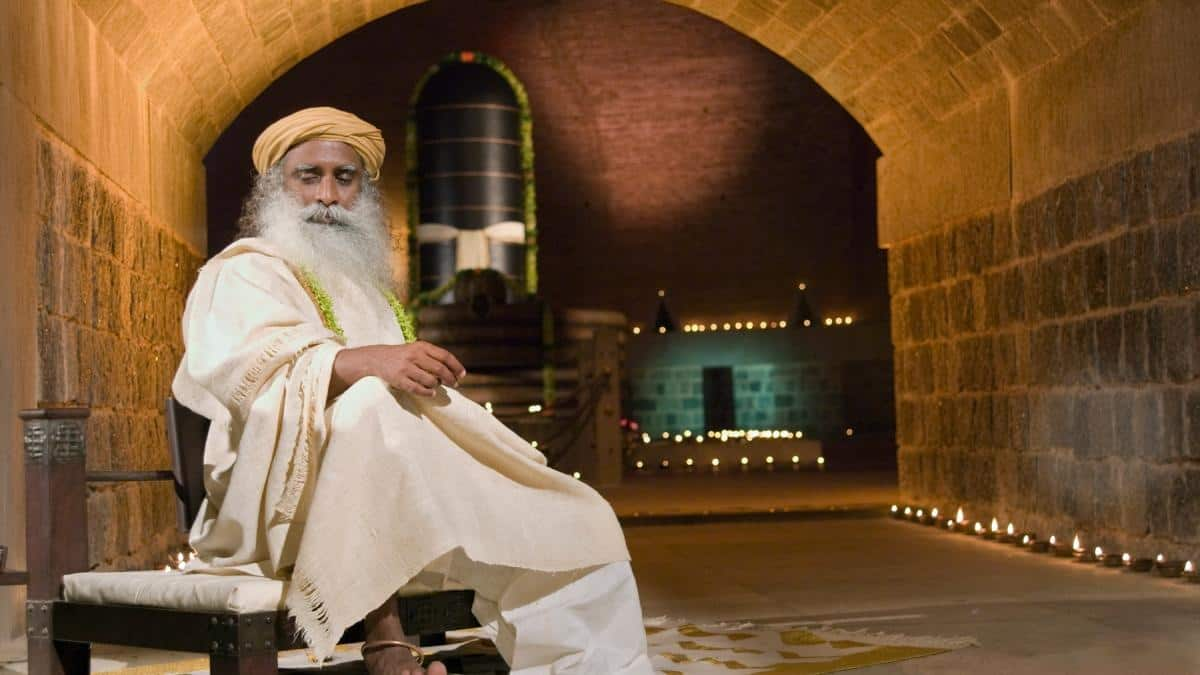
At the foothills of the Velliangiri Mountains, near Coimbatore, stands a structure that is as remarkable for what it holds as for how it was built. Beneath an elliptical dome made of 2,50,000 bricks, weighing nearly 700 tonnes and standing without a single pillar, lies Dhyanalinga, a powerful meditative energy form consecrated by Sadhguru and offered to the world on November 24, 1999. Twenty-seven years later, it continues to draw people from across the world, not for rituals or worship, but simply to sit in silence and experience something within themselves.
In an age when the mind is constantly pulled in a dozen directions, the idea that sitting silently for a few minutes could bring about a profound shift might seem improbable. Yet, for many who enter the Dhyanalinga dome, stillness seems to come without much effort. There are no instructions to follow, no offerings to make and no particular belief to subscribe to. One simply sits.
An Architecture That Defies Convention
The dome that houses Dhyanalinga is 33 feet high and 76 feet in diameter. Built entirely with brick, mud and lime, it has no steel, cement or concrete and stands as a striking example of geometry and architectural ingenuity. Unlike conventional hemispherical domes, it is elliptical, a form chosen not merely for its architectural distinctiveness but also for its relationship with the energy form it houses.
“Architecturally, the Dhyanalinga dome is very unique. Usually, domes are semi-circular, like the Taj Mahal or Gol Gumbaz, but we decided to build an elliptical dome. To make a section of an ellipse stand the way it is standing without the use of any steel, concrete or cement was the whole challenge. That is why the dome is unique,” Sadhguru has said.
The choice of the ellipse was also deliberate. “We wanted it that way because a linga is also an ellipsoid, so an elliptical dome is the best complement for the linga’s energy,” he explained.
The construction of the dome rests on remarkable precision and geometry. As Sadhguru puts it, “The simple technology used in this marvellous piece of architecture is this – all the bricks are trying to fall down at the same time! But the way the bricks are packed together, they can never fall. Each brick is held up by its neighbours, and those bricks by their neighbours, and so on.”
The dome's strength lies in this precise arrangement, with each brick supporting the next. Its geometry, Sadhguru says, is designed to ensure a lifespan of at least 5,000 years, “because there is no tension in the building anywhere. It is standing because of the simple, perfect geometry of construction.”
The making of the dome was also a collective effort, requiring an intense level of involvement. Sadhguru recalled, “The 250,000 bricks we used in the dome were measured and placed by volunteers. I sat down and explained to them, ‘See, this is what it means, I’m placing it in your hands. If somebody is a little lax by even two millimeters less than what it should be, the whole thing may collapse.’ Men, women and children sat down and measured day and night.”
A Meditation Machine And A Space Beyond Religion And Belief
But the engineering marvel is only one dimension of Dhyanalinga. The structure was built to cradle what Isha describes as a unique energy form created through an intense process of prana pratishtha over three years, during which “the energies of all the seven chakras were raised to their peak and locked to prevent dissipation over time”. In the yogic tradition, consecration is not simply the installation of an idol, but a process of creating a living energy form.
Sadhguru has repeatedly emphasised that Dhyanalinga was created not for religious adherence but for inner access. “Dhyanalinga is not to be worshipped – it needs to be experienced. The linga is a doorway to the unlimited nature of existence,” he said.
There is no prescribed way to engage with it. People walk in, sit quietly and allow themselves to be still. Some close their eyes; others gaze at the dome. Even those unfamiliar with meditation often describe a natural slowing down, a pause in the usual chatter of thought and a sense of quiet that seems to settle without being cultivated.
Sadhguru has often called Dhyanalinga a “laboratory for inner transformation”. It does not demand faith or belief, only openness. Much like sunlight that illuminates anyone who stands beneath it, the space is intended to be accessible to everyone, a seeker, a sceptic or someone who has simply walked in out of curiosity.
When Silence Becomes An Experience
Over the years, visitors have spoken of moments of deep peace, tears of joy or a meditative state they had never experienced before. For some, it is the first time their minds seem to quieten without effort.
Karan Sain, 31, from Mumbai, shared, “Ten minutes of quiet meditation completely calmed my nervous system. I emerged feeling profoundly relaxed, yet sharp and ready for more work.”
Janhavi Adesara, a 30-year-old singer from Rajkot, Gujarat, shared, “Sitting in the space of Dhyanalinga again and again, something quiet but profound shifted within me. Dhyanalinga did not give me beliefs; it gave me an experience, a stillness where my questions softened, a presence that felt both vast and intimate. I cannot fully explain what Dhyanalinga is for me, but I can say this: in that silence, I stopped feeling alone and incomplete.”
Such experiences are difficult to articulate. Perhaps that is the nature of a space like Dhyanalinga. It does not offer explanations so much as an opportunity to experience something beyond them. There is no chanting, no ritual and no instruction. Just silence.
In a world increasingly hungry for peace, Dhyanalinga stands as a reminder that silence is not emptiness, but a dimension of life that is always available beneath the noise. For those who enter burdened by restlessness, or simply curious about what meditation might offer, Dhyanalinga provides an unusual possibility: to sit, to be and perhaps to discover that stillness need not be achieved through effort.
Twenty-seven years after it was offered to the world, Dhyanalinga remains both an architectural marvel and an invitation to turn inward, a space built with extraordinary precision, yet one whose most profound dimensions may lie beyond what the eye can see.
This content is published by ABP Live - Lifestyle and has not been created or edited by Hello Headlines. View original