IndiaAI Mission-Backed Chariot AI Unveils 11 Bn Parameter LLM, Speech Models

Chariot AI, a startup developing sovereign foundation model under IndiaAI Mission, has unveiled its Chariot-1 model suite. Launched at a MeitY event, the AI suite comprises a large language model (LLM) and a text-to-speech (TTS) model.
The Chariot-1 LLM is an 11 Bn parameter mixture-of-experts model, with 4 Bn active parameters per token. It is available in three sizes: 10.7 Bn, 1.7 Bn and 745 Mn parameters, allowing deployment across different computing environments, including data centres, laptops and smartphones.
Here are the three key AI innovations showcased by Chariot:
- IndicShift: Introduces a shared alphabet across 12 Indian scripts, using 350 letters to represent 1,012 characters. It reduces token usage on Indian text by up to 2.5 times compared to OpenAI’s GPT tokeniser and improves model performance on Indian languages by 5–8% on the same compute.
- Nested Training: Enables three different model sizes to be trained simultaneously in a single training run using one set of weights, allowing deployment across data centres, laptops, smartphones and edge devices. It improves training speed by 62% compared to training the three models separately.
- Mixture of Vocabularies: Divides the model’s vocabulary into 11 groups, allowing it to score only the relevant group during word selection. This reduces vocabulary entries scored per word by 5.7 times and improves training speed by 38% on the same GPUs, with negligible change in model loss.
The models have been pretrained from scratch in India and incorporate three research innovations aimed at improving computational efficiency, multilingual capabilities and deployment across devices.
“Designed to advance language understanding and speech generation, the models incorporate novel research innovations aimed at improving computational efficiency, multilingual capabilities and adaptability across different deployment environments,” the government said.
Alongside these, Chariot AI also launched a text-to-speech (TTS) model that can generate speech in 10 Indian languages. This model is designed to account for context when converting text into speech. It can determine how numbers, dates, currencies, units, URLs and abbreviations should be pronounced, rather than relying on fixed pronunciation rules.
The startup reported over 97% verbalisation accuracy on the Async TTS Pronunciation Benchmark, which comprises 1,029 real-world sentences and 2,251 instances of non-standard text across 42 categories. It also recorded a Hindi character error rate (CER) of 7.60% and an average CER of 6.47% across nine other Indian languages, which Chariot said was the lowest among the systems evaluated in its tests.
Building Chariot AI
Founded earlier this year by Stanford University alumni Parth Sarthi and Suvrat Bhooshan, the Noida-headquartered startup is focusing extensively on foundation models for speech reasoning.
In an earlier interview with Inc42, Sarthi said that Chariot wants to bring frontier AI research capabilities to India. He identified speech reasoning as a gap in the industry, particularly in a voice-first market such as India.
For context, speech reasoning refers to an AI system’s ability to understand spoken input, interpret context, reason through it and respond or take an appropriate action. The cofounders believe existing models struggle to transfer knowledge across languages and modalities.
“Our goal is to develop novel architectures that address these limitations and demonstrate that frontier AI research can be done in India,” Sarthi said.
Chariot’s longer-term ambition is to build a trillion-parameter model, like AI unicorn Sarvam. The startup is currently working towards a larger model with around 70 Bn parameters to demonstrate that its technology can scale.
Beyond its LLM and TTS model, Chariot is developing tech for automatic speech recognition (ASR) and other speech-related tasks. Sarthi believes speech reasoning could enable applications beyond conventional voice assistants and customer support tools.
“Just as ChatGPT opened up millions of possibilities, a speech reasoning model could allow developers to build applications that we may not have thought of yet,” he said.
While Chariot primarily operates as a B2B provider, its models could also be used by developers to build applications across different use cases.
“In India, voice AI is taking off. There are several standard use cases, including personal AI assistants and customer support agents that can provide round-the-clock assistance,” Sarthi said. The startup currently has a core team of 12.
Chariot also wants to simplify the technology stack for voice developers by building a single model that can support multiple speech applications. Developers today have to integrate several components, including voice activity detection (VAD), ASR, TTS and language models. Sarthi expects more efficient and affordable models to expand the market for voice AI, invoking the Jevons paradox: as technology becomes cheaper and more efficient, its use tends to increase.
“Applications that were previously not viable because of cost, efficiency or capability constraints will become possible, unlocking new use cases and encouraging more innovation,” he said.
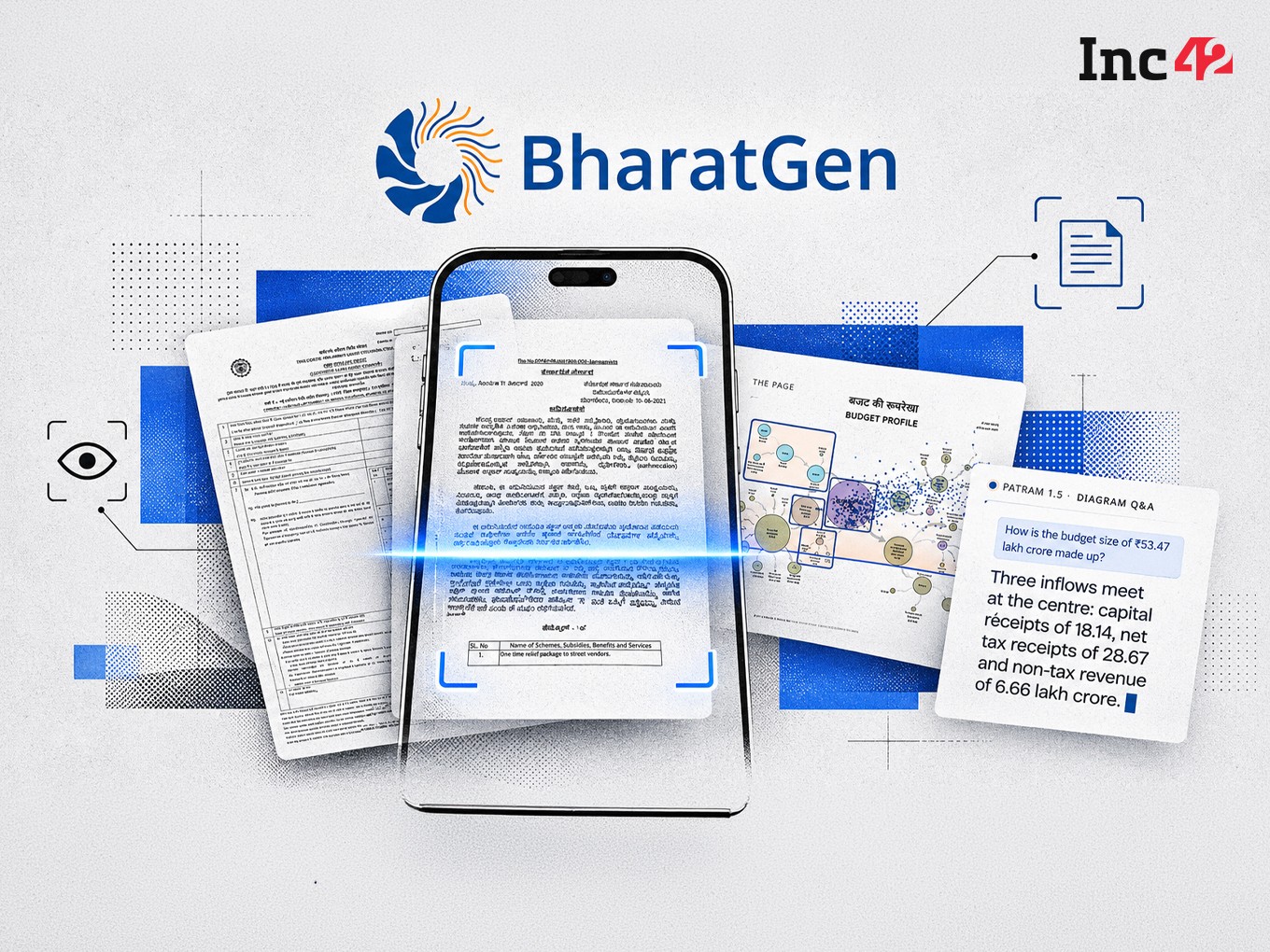
The launch comes amid a push by IndiaAI Mission-backed companies to build homegrown AI models. Earlier today, BharatGen launched vision-language model Patram 1.5 for automating document processing across BFSI, healthcare, government, and other enterprise workflows.
The post IndiaAI Mission-Backed Chariot AI Unveils 11 Bn Parameter LLM, Speech Models appeared first on Inc42 Media.
This content is published by Inc42 and has not been created or edited by Hello Headlines. View original