Major Parsi Trust Backs Maharashtra's Uniform Civil Code, Seeks Safeguards For Religious Practices & Community Trusts
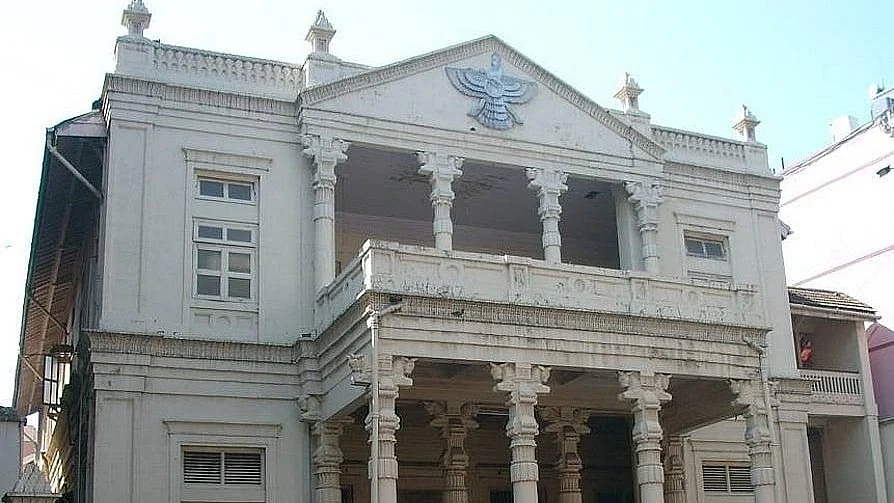
Mumbai: The Bombay Parsi Punchayet (BPP) has extended support to the proposed Uniform Civil Code (UCC) in Maharashtra while seeking specific safeguards to protect the religious practices, institutions and charitable trusts of the Parsi-Irani Zoroastrian community.
BPP Seeks Safeguards Under UCC
In a formal representation dated November 17 to the drafting committee chaired by retired Justice Ranjana Desai, BPP trustees stated that the community supports the codification of civil laws but is concerned that certain provisions could override existing protections. The community’s personal laws are already codified under the Parsi Marriage and Divorce Act, 1936, and the Indian Succession Act, 1925 (which governs intestate succession).
The BPP said it has no objection to reforms such as a uniform minimum age for marriage, compulsory registration of marriages, and recognition of irretrievable breakdown of marriage as a ground for divorce. However, it has sought safeguards in the following areas:
Religious solemnisation of Parsi-Irani marriages, the discretion of priests over rituals and eligibility, and initiation into the religion exclusively through the Navjote ceremony.
Determination of membership and religious status.
The community’s prohibition on the adoption of non-Parsi/Irani children.
Protection of consecrated religious institutions (Atash Behrams, Agiaries, Dadgahs and Dakhmas) and trusts established exclusively for the community’s benefit.
Ensuring that registration of live-in relationships or adoption for civil purposes does not confer religious status, either directly or indirectly.
Preservation of constitutional protections under Article 26, which guarantees religious denominations the right to manage their own affairs in matters of religion.
Protection of community charitable trusts, including subsidised housing colonies known as Baugs, so that their intended purpose is not overridden or diverted.
Trustees Request In-Person Hearing
The BPP has also requested an in-person hearing before the committee, where its trustees and the community’s High Priests can explain their concerns. The submission draws on representations made by the Punchayet to the 22nd Law Commission of India in July and August 2023.
From Mumbai’s Mini Vada Pav, Butter Garlic Crab Choux To Parsi Kheema: Inside Prince William’s Lunch At Karan Johar’s Dharma ProductionsCalls To Retain Special Matrimonial Court
Separately, Parsi individuals have sought similar safeguards. Dr Viraf Kapadia of Godrej Baug, Nepean Sea Road, in a representation dated November 25 addressed to Justice Ranjana Desai, urged the committee to retain the community’s special matrimonial court and to exempt Parsis from provisions relating to religious conversion and adoption.
Kapadia noted that the Parsi community is governed by the Parsi Marriage and Divorce Act, 1936, under which the Parsi Chief Matrimonial Court at the Bombay High Court (presided over by a sitting High Court judge and assisted by Parsi delegates) adjudicates matrimonial disputes, including divorce. He requested that this court’s jurisdiction be retained even under a new UCC.
Also Watch:
Safeguards For Adoption And Succession
He also sought exemption from provisions on religious conversion and adoption, stating that Parsi Zoroastrian religion and customary law do not permit these practices. If adoption is permitted under the new Code, he proposed that it be restricted to cases where Parsis adopt Parsi children. On succession, he called for the preservation of the special provisions applicable to Parsis under Sections 50 to 56 of the Indian Succession Act, 1925. Kapadia has also requested a personal hearing.
To get details on exclusive and budget-friendly property deals in Mumbai & surrounding regions, do visit: https://budgetproperties.in/
This content is published by Free Press Journal and has not been created or edited by Hello Headlines. View original