Top 3D Tile Brands in India for Modern Interiors
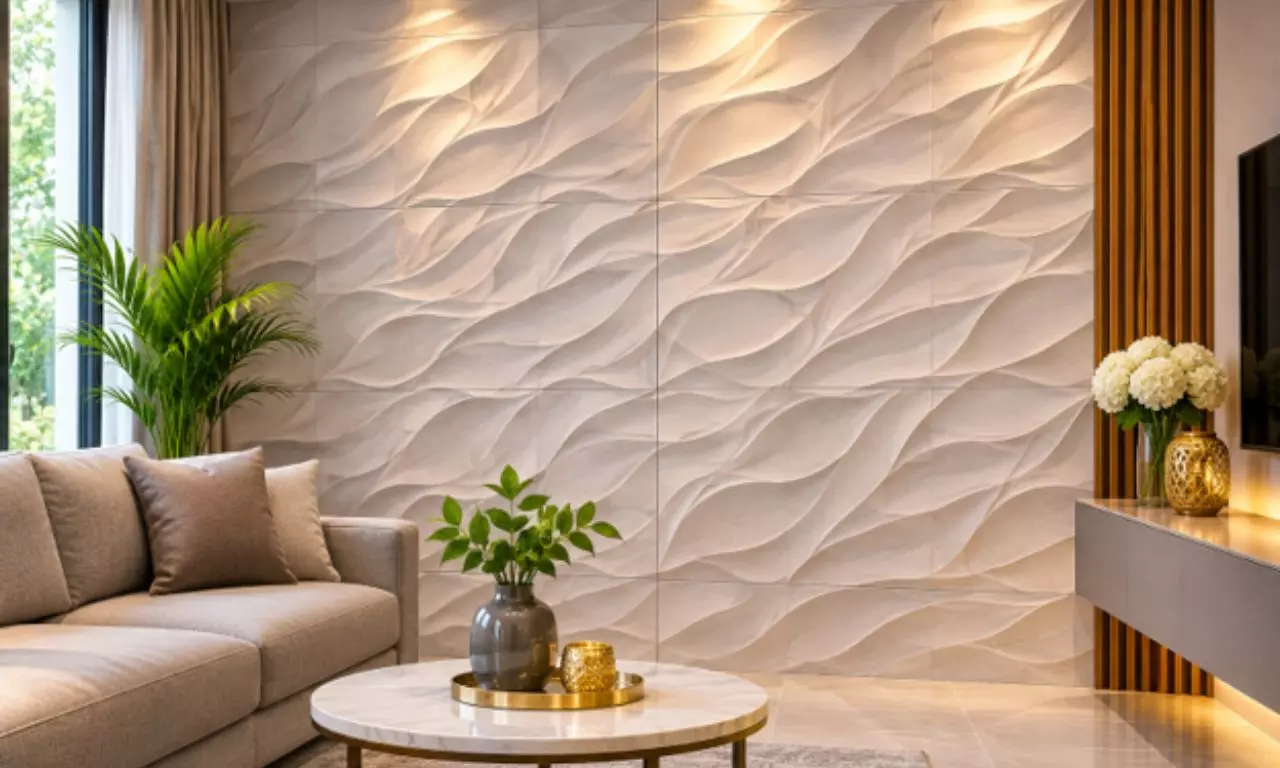
Plain wall tiles can make a room look simple, but they may not add much character. 3D wall tiles add depth and texture, making walls stand out. A single feature wall in the living room or bathroom can transform the space without major changes or high costs. Many Indian homeowners now prefer simple interiors with fewer decorative items. 3D wall tiles help add interest to these spaces, much like paint or wallpaper.
What Are 3D Wall Tiles and How Do They Work
3D wall tiles are tiles with raised, recessed or sculpted surfaces that create patterns of light and shadow on the wall. The effect changes throughout the day as natural light moves across the surface. Common patterns include waves, geometric ridges, fluted lines, hexagonal forms and abstract organic shapes.
Most 3D wall tiles are made from vitrified material and suit interior walls. Install them the same way as standard wall tiles, using tile adhesive and applying grout as usual. The visual impact comes entirely from the surface relief, so they work well even in a single neutral colour.
Top 3D Tile Brands in India
Choosing a reliable brand for 3D wall tiles helps with consistent surface quality, pattern depth and availability across projects. The right brand invests in surface relief technology that holds up over time without the texture wearing flat. Finish options, size range and colour variety also matter, since a 3D tile that only comes in one format limits how you can use it across different rooms and wall sizes.
Brand
Tile Range
Key Strengths
Simpolo Tiles & Bathware
Premium vitrified 3D wall tiles
Fenso, Glyphstone and Prozzo collections with geometric, wave and jaali-inspired designs
Nexion
Large-format textured tiles
Contemporary patterns for accent walls
Kajaria
Textured and patterned tiles
Multiple designs for residential interiors
RAK Ceramics
Textured wall tiles
Different formats for modern interiors
The Tiles House
Textured and 3D tiles
Multiple patterns, sizes and finishes
Simpolo Tiles & Bathware
Simpolo Tiles & Bathware is a premium vitrified tile brand in India, with 3D wall tile designs across collections such as Spectra, Marmorica and Impatto. The range includes geometric, wave, stone-look and jaali-inspired patterns in different sizes, with glossy and matt finishes. These 3D tiles create light-and-shadow effects that shift through the day and work well on living room accent walls, bathroom feature walls, kitchen backsplashes and foyer surfaces. Simpolo also has coordinated flat wall tile options, floor tiles and bathware, so you can pick everything for a room from one brand.
Nexion
Nexion has vitrified tiles, including textured and 3D wall tile options in large-format sizes for high-end residential interiors and design-led projects across Indian cities. The brand has multiple pattern styles for accent wall use.
Kajaria
Kajaria has wall tiles across multiple collections for residential interiors. The brand covers textured and patterned options for accent walls, available across Indian cities.
RAK Ceramics
RAK Ceramics has textured wall tiles in multiple formats for modern Indian interiors, covering residential and commercial living and bathroom spaces. The brand has 3D surface options in standard and large-format sizes.
The Tiles House
The Tiles House has wall tiles including textured and 3D patterns for residential interiors. The brand covers multiple sizes and finishes, available across Indian cities and towns.
Where to Use 3D Wall Tiles in Indian Homes
3D wall tiles work best as accent features on one wall or a defined section. Using them across every surface reduces the effect and makes the room feel heavy.
- Living room accent wall. The wall behind the TV unit or sofa is the most common application. A single 3D wall tile surface adds depth and lets the furniture stay the focus.
- Bathroom feature wall. The wall behind the vanity or the shower partition. Pairs well with plain glossy or matt wall tile options on the remaining surfaces.
- Bedroom headboard wall. A textured wall behind the bed replaces the need for a separate headboard panel.
- Entrance foyer. A 3D wall in the entryway sets the tone in apartments where the foyer is compact.
- Kitchen backsplash. Geometric or fluted 3D tiles behind the counter add texture to an otherwise functional zone.
Keeping 3D tiles to one surface per room gives the cleanest result.
How to Choose 3D Wall Tiles for Your Space
Selecting the right 3D wall tile involves matching the pattern, size and finish to the room’s lighting and design direction.
- Pattern depth. Deeper relief creates stronger shadows and works well in rooms with good natural light. Subtle textures suit rooms with controlled artificial lighting.
- Colour. White and neutral tones show shadow play most clearly. Darker colours reduce the 3D effect because the contrast between raised and recessed areas is less visible.
- Size. Larger tiles (300x600 mm and above) create a more continuous pattern with fewer grout lines. Smaller tiles suit detailed mosaic-style textures.
- Finish. Matt finishes highlight texture better than glossy ones. A glossy 3D tile reflects light off the raised surface and can reduce the shadow effect.
- Room size. In compact rooms, use a lighter-coloured 3D wall tile on a single surface to add depth without making the space feel enclosed.
- Covering too many surfaces. One accent wall per room is enough. Multiple 3D surfaces compete for attention and make the room feel cluttered.
- Choosing a dark colour for a low-light room. Dark 3D tiles need strong light to show the pattern. In dim rooms, the texture disappears.
- Using 3D tiles on floors. The raised surface collects dirt and is uncomfortable underfoot. 3D tiles are designed for walls only.
- Ignoring grout colour. Matching grout to the tile colour keeps the pattern uninterrupted. Contrasting grout creates a grid that breaks the 3D flow.
Common Mistakes When Installing 3D Wall Tiles
Conclusion
A well-designed interior starts with the right wall tile and the right brand behind it. 3D wall tiles add depth, texture and visual interest to living rooms, bathrooms, kitchens and foyers, turning a single surface into a feature that defines the room. The final choice should come down to the pattern style, finish, tile size and how well the texture works with the room’s natural light. As a trusted tiles company in India, Simpolo Tiles & Bathware offers a dependable starting point for modern interiors, pairing a wide choice of 3D designs and finishes with the performance and durability a premium wall tile demands.
This content is published by BOOM Live and has not been created or edited by Hello Headlines. View original