Google Cloud’s Gemini voice AI wants to do more than just talk
Imagine asking an AI assistant to find a customer, negotiate a price and help close a sale, all without typing a single prompt. Voice AI is moving beyond answering questions to taking on tasks, and Google Cloud wants businesses to put it to work.
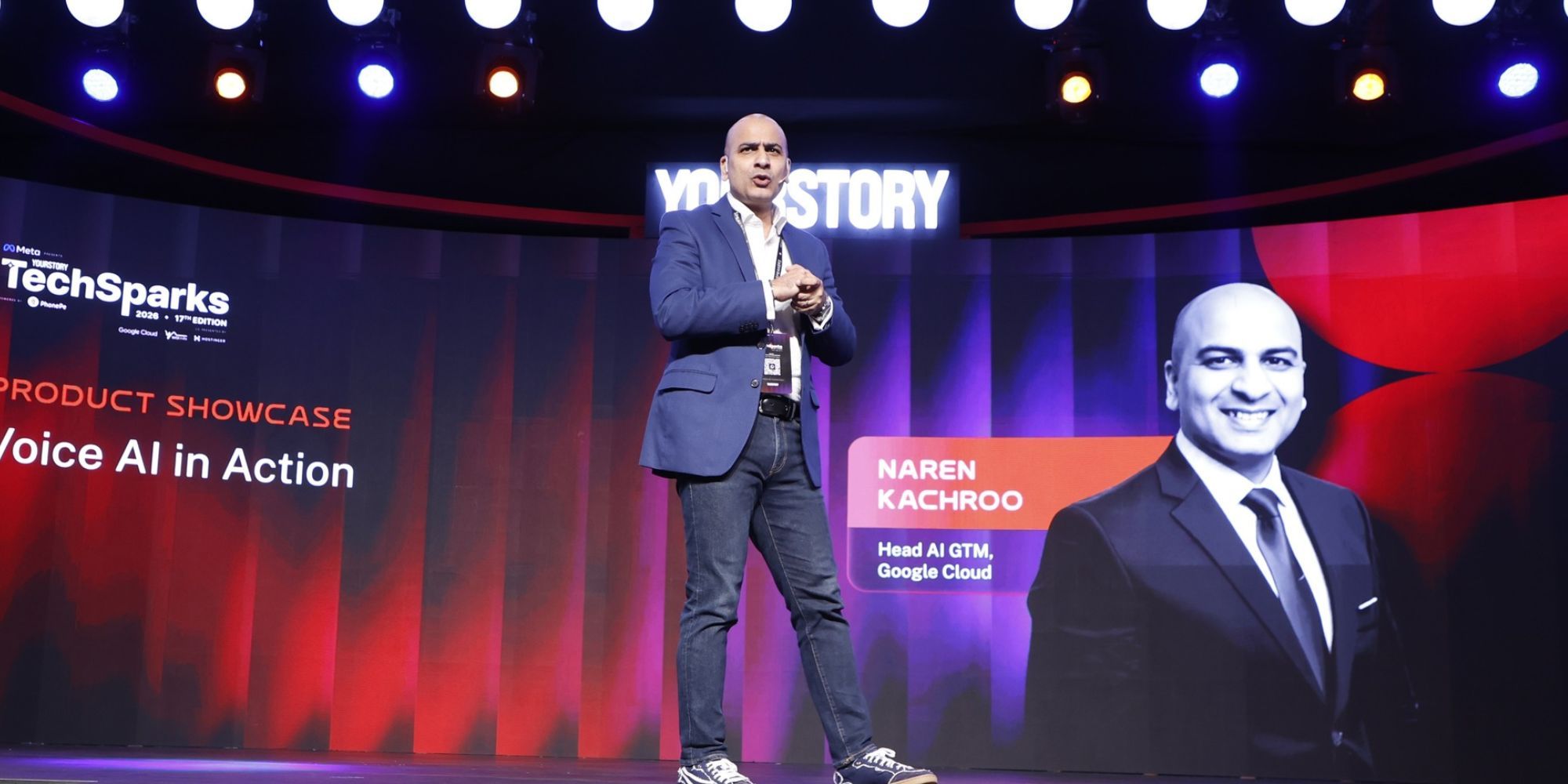
At TechSparks 2026, Naren Kachroo, Head of AI Go-to-Market at Google Cloud, demonstrated how Gemini’s voice AI capabilities could help businesses handle customer conversations, restaurant bookings and sales negotiations.
From talking to taking action
Until now, much of the AI experience has revolved around asking questions and getting answers. Kachroo said the next step is AI that can access information, use tools and take action on a user’s behalf.
“We don't want to focus on voice AI just being an experience to talk to AI,” he said. “We want voice AI to be powered through agentic experiences where the task is actually accomplished with AI.”
To show what that means, Naren Kachroo played a demonstration of an AI assistant booking a restaurant table for eight. The assistant answered questions about bringing a birthday cake, identified a dish from an image, discussed vegetarian options and switched between English and Spanish during the conversation.
In other words, it did more than take a booking. It handled the questions that came with it, too.
Kachroo also introduced Gemini Live voice capabilities, alongside models for text-to-speech, speech-to-text and translation. He showcased Live Avatar, which combines voice interaction with a visual AI presence.
Meet the AI sales assistant
The standout demonstration involved a fictional safety equipment business with 500 helmets sitting in its inventory. Its owner, Rajesh, wanted to sell them quickly and instructed an AI voice agent to find a suitable lead, contact the customer and negotiate a price above Rs 400 per helmet.
The assistant checked the business’s leads, identified a construction company that needed 500 helmets and initiated a call in Hindi. When the prospective buyer pushed for a lower price, the AI negotiated while sticking to the owner’s pricing instruction.
It was a glimpse of how AI could help small businesses manage sales without handling every step themselves. The agent could draw on internal business information, speak to a customer and respond to objections, rather than simply recommend what the owner should do next.
Kachroo said the demonstration showed how the agent maintained context as it moved from internal information to a customer conversation.
Why India needs voice AI
Voice could be particularly useful in India, where people speak many languages and have different levels of comfort with typing or navigating digital interfaces.
“I believe that India and Indian consumer is continuing to go as voice first,” Naren said.
He highlighted Google’s work on Indian languages, accents and cultural nuances, and pointed to Equal AI, an Indian company building voice assistants that can handle calls on users’ behalf.
For Kachroo, the goal is to make voice AI useful in everyday business processes, not just impressive in a demo. That means building systems that understand context, handle interruptions and follow instructions while completing tasks.
The real test, then, is not whether AI can hold a conversation. It is whether it can get the job done. And for businesses exploring voice AI, that could be the difference between another chatbot and a genuinely useful assistant.
This content is published by YourStory and has not been created or edited by Hello Headlines. View original