Resizing Parliament: More seats do not mean better performance
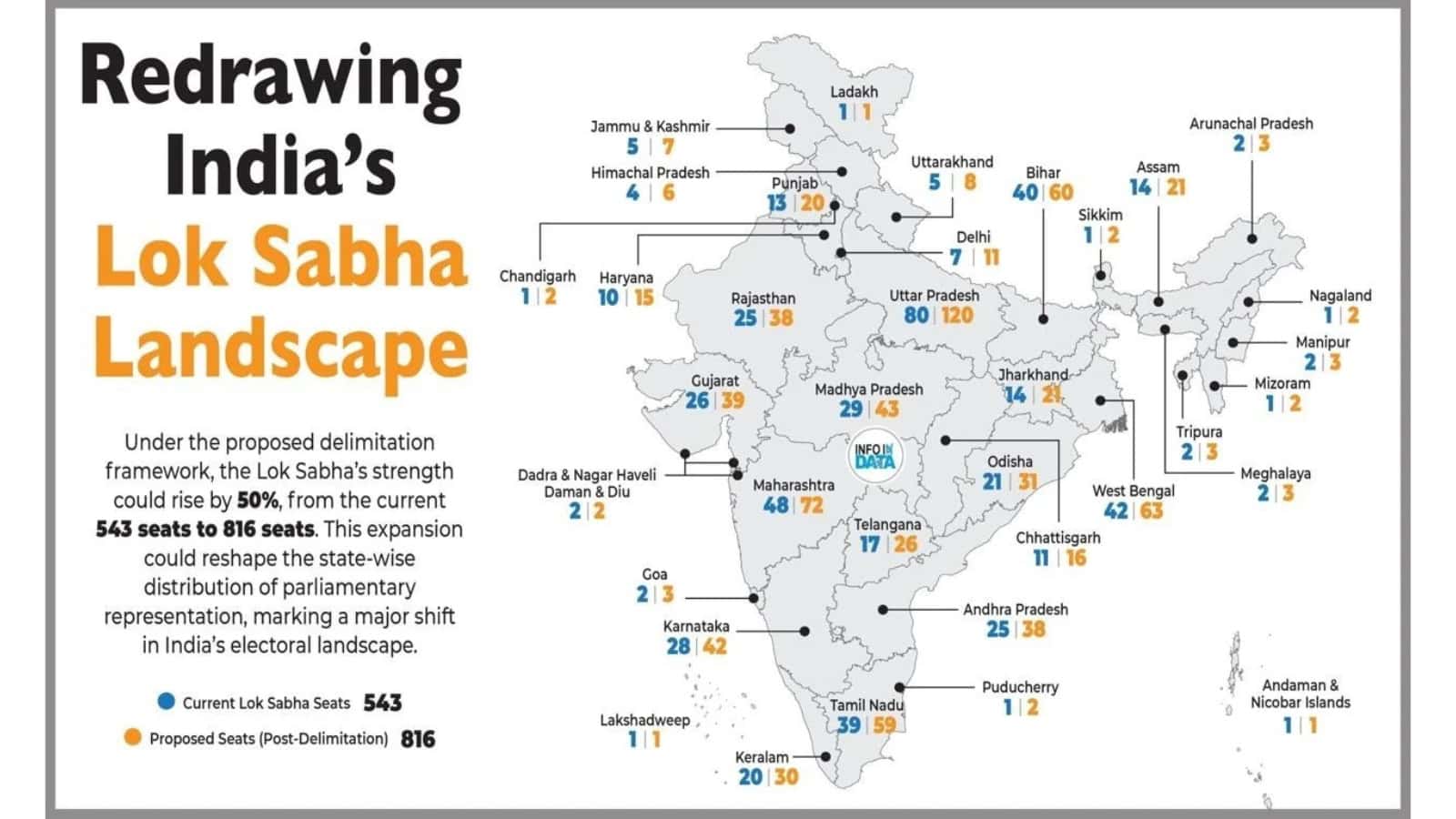
A pertinent question about the proposed law expanding the Lok Sabha from 543 seats to up to 850, likely to be approved next week if the treasury strength is adequate, is simple: Is it a step toward reform at all and would it help in any manner to strengthen Parliament? To my mind, it is not. For, it cannot be, given that those who make up the Lok Sabha do not change their ways. That is, let the House function purposefully, which is what it is set up for.
Another germane question: apart from parliamentary business, which deals with matters that come under the Union List of the Seventh Schedule, what role do MPs have in the constituencies that are to be resized? Development is the task assigned to the local bodies, from the gram panchayat up, and to the respective states. There are hundreds of panchayats, zilla parishads and civic bodies, and an MP is an intrusion.
The MP only needs to look to the Union List of the Seventh Schedule. So, 543 of them are good enough. More does not mean better.
The “highest panchayat,” as politicians describe it time and again, has to be seen as a consultative process, with all sides discussing issues threadbare, pouring in their doses of wisdom for the common good, enacting policies in the form of laws and ensuring their enforcement. Despite there being two sides in a House by design, one the Treasury and the other the Opposition, it is a consultative mechanism where consensus has to be the objective. But is it?
Anything but consultative
Experience has shown that the processes seen in the Lok Sabha, telecast live, are anything but consultative. It is more a war between the two sides, though the Treasury knows its numbers are enough to get a bill through, because it has the numbers and therefore it is the government. The Opposition is where it is because it lacks the numbers, and it can only float its ideas, urge sincere and serious consideration and move towards consensus.
The Treasury cannot think that mere strength of numbers confers legitimacy, because it can also, as it at times has, enact laws that are suspect, unconstitutional or even morally repugnant, like the lifetime legal immunity to Chief Election Commissioner (CEC) or converting the selection panel that appoints some officers, like the Election Commissioners, into a suspect process. These were not the right things to do with its parliamentary majority, but they did them.
So how would increasing the number of members to 850 make any difference if one side insists and the other disrupts with an equally strong will? It could happen even in a House of 100, or even fewer, or many more, because it has everything to do with ensuring equity, honesty of purpose and, above all, a commitment to serve the country’s interests. This applies to all sides, including the presiding officers.
If the Opposition improperly creates a ruckus that leads to no discussion taking place, it also fails to present a properly studied argument for its case, because the disruption it causes shuts down its own intended logic. And if the Treasury ensures that the Opposition does not get to speak and, in the hubbub, enacts a law by voice vote, no one is the wiser. Not even those who follow the debates on television.
As it is, even when Parliament wants to discuss an issue of import, and despite the best of intentions at the time, members do not get enough time to speak. Many may not even get an opportunity to speak. The smaller the party, the less time it has to ventilate its view. Even if there is time enough, some members may not be able to bring enough wisdom to the table, for there is no qualification to be a member except being an adult citizen, on the voter rolls and not less than 25 years old.
The hundreds of lost hours
The way we lost 387 hours to disruptions in the previous Lok Sabha, from 2019 to 2024, and some 300 hours and more in the current one, speaks volumes about the seriousness of the members, whether they are 543 of the maximum of 550, as now, or 850, as they would be under the new law, if it is approved next week in the session called to discuss the delimitation Bill. With a larger membership, things are unlikely to change if the attitudes of both sides remain what they are.
Admittedly, there are disparities in the number of voters a member represents. As things stand now, Malkajgiri in Telangana has an MP who represents 37.8 lakh voters, while the Lakshadweep MP represents a mere 57,953 voters, which is an unhealthy disparity. But when you put together all the MPs, regardless of the parties they represent, and all the voters in the country, they represent India’s soul.
But do they? Ideally, they should. That ideal should be our purpose.
Even before enlarging the strength to a possibly unmanageable 850, we could ignore the financial liability, for it is but a small sum in proportion to the country’s budget. It is possibly equal to a small percentage of the leaks in government spending, and we know who benefits from such leaks, which are not unwitting but by design.
What is of foremost importance, regardless of the numerical strength of the Lok Sabha, is what the collective conscience of the legislative body can ensure. It is a moral question.
Get the latest updates in Hyderabad City News, Technology, Entertainment, Sports, Politics and Top Stories on WhatsApp & Telegram by subscribing to our channels. You can also download our app for Android and iOS.
This content is published by The Siasat Daily and has not been created or edited by Hello Headlines. View original