POT POURRI
Tiny bee hotels open a hidden world of city pollinators in South Africa
JOHANNESBURG, Nov 28: Just before checkout on a warm spring morning in South Africa, a solitary bee peeks outside one of the world’s smallest hotels and then retreats to her room: a small hole drilled into untreated pine.
Johannesburg, South Africa, recently. (AP)
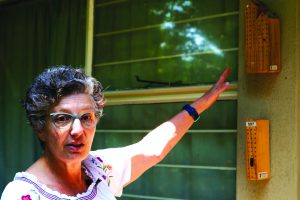
Monitoring this tiny, black guest is Celia Haupt of Johannesburg, a banking analyst-cum-bee hotelier who owns one of the 510 bee hotels distributed to volunteers across her city and Cape Town. As they report on the bees, these citizen scientists are themselves being monitored as part of UrbanBEE, a project exploring how cities shape solitary bee diversity and how engaging with overlooked pollinators can reconnect city dwellers with nature.
Haupt, for one, has spent months watching her bee hotel. She thinks of its guests as “little homebodies” who love their cozy holes but are happy to meet the neighbors now and then.
“They pop their heads out, and I feel like they’re chatting to me,” Haupt told The Associated Press. “For a solitary bee, they’re not so anti-social. Maybe these are the extroverted introverts.”
Honeybees get the glory, solitary bees deserve more love The hive-dwelling managed western honeybee is among the world’s best-studied insects, but most of the more than 20,000 bee species known worldwide are solitary, making them harder to locate and monitor. UrbanBEE grew out of a pandemic-era project involving 347 Johannesburg residents, led by University of the Witwatersrand researcher Chevonne Reynolds. The expanded project, funded by the European Union-backed Biodiversa+ partnership, includes parallel studies in Budapest, Hungary; Turin, Italy; and Vienna, Austria. The volunteers began submitting weekly photographs in October 2025. Comparing hotels across African and European cities could show how climate, vegetation, development and socioeconomic conditions affect bee diversity and how collecting data changes how people value urban nature. Researchers also hope a standardized approach can be adapted for other cities as the world gets warmer.s
For many participants, learning about biodiversity started with recognizing creatures they hadn’t realized were bees. (AP)
This content is published by The Shillong Times and has not been created or edited by Hello Headlines. View original