Deeksha Diwas: KCR’s enduring place in Telangana history
By Chitikena Kiran Kumar
History has witnessed several leaders who dedicated their lives to the aspirations of their people and the freedom of their nations. Nelson Mandela and Martin Luther King Jr. occupy distinguished places in world history for their struggles for equality, dignity and freedom. In the history of Telangana, Kalvakuntla Chandrashekar Rao (KCR) holds a significant place for leading the movement for a separate state. His determination transformed the long-standing aspirations of the people into a powerful political movement and eventually contributed to the formation of Telangana. His journey remains an important chapter in the political and social history of the region.
The demand for a separate Telangana did not emerge overnight. Its historical roots can be traced to the period before Indian Independence, the integration of Hyderabad State and the political developments that followed. The Gentlemen’s Agreement and subsequent developments further shaped the aspirations of the people. The 1969 Telangana movement, led largely by students and youth, became a defining chapter in the region’s history. Many families endured immense hardships, and several young lives were lost in the struggle. Although the movement could not achieve statehood at that time, it firmly established the demand for a separate Telangana in the public consciousness. The aspirations of that generation continued to inspire those who came after them.
With the objective of giving political direction to this long-standing demand, KCR founded the Telangana Rashtra Samithi (TRS) on April 27, 2001. Transforming a regional aspiration into an organised political movement was a significant undertaking. He travelled extensively, explained the concerns of Telangana and consistently argued for a separate political identity for the region. Taking the demand to the national political arena required determination and sustained effort. Despite several political challenges and changing circumstances, he continued to pursue the goal of statehood.
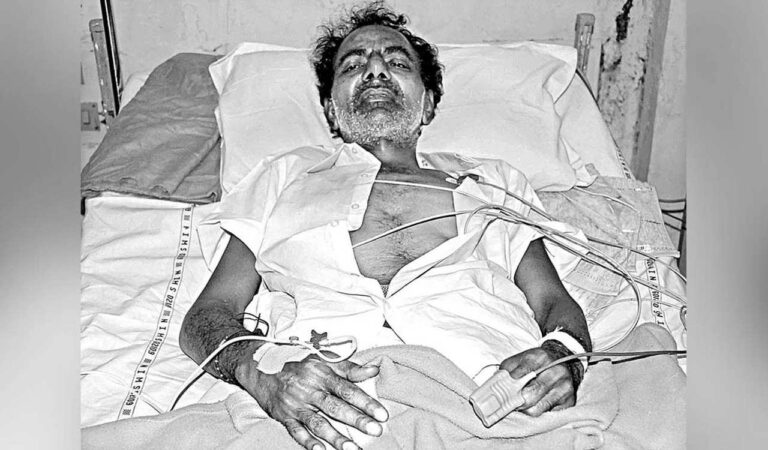
November 29, 2009, marked a decisive moment in the history of the Telangana movement. KCR began an indefinite fast demanding the formation of a separate Telangana State. While proceeding to undertake the fast, he was taken into police custody near Alugunur and shifted to Khammam. His fast continued despite the difficult circumstances, and his deteriorating health brought renewed national attention to the Telangana demand. On December 9, 2009, the Union Government announced that the process for the formation of Telangana would be initiated. Although subsequent political developments created further uncertainty and the movement entered another phase, the fast became a significant turning point. It brought the demand for statehood into the centre of national political discussion.
It would not be historically accurate to attribute the formation of Telangana to one person’s fast alone. The contribution of KCR’s leadership, however, cannot be overlooked. Students from Osmania University and Kakatiya University played an important role. Government employees, teachers, workers, advocates, women, farmers, writers, poets, artists and various people’s organisations participated in the movement. The Sakala Janula Samme, Million March and Sagaraharam became powerful expressions of collective public participation. Telangana found its voice through songs, poetry, cultural performances and public gatherings. Every section of society contributed in its own way to the larger aspiration for statehood.
World history offers several examples of movements built around freedom, equality and human dignity. Nelson Mandela’s struggle against apartheid in South Africa and Martin Luther King Jr.’s leadership in the American Civil Rights Movement brought historic changes to their respective societies. India’s freedom movement under Mahatma Gandhi also demonstrated the strength of collective public participation. Each of these movements had its own historical circumstances and objectives, and they cannot be equated directly with the Telangana movement. However, the ability of leadership to organise public aspirations and transform them into a sustained movement offers an important point of comparison. In this context, KCR’s contribution to the Telangana movement deserves recognition.
On June 2, 2014, Telangana emerged as the twenty-ninth state of India, fulfilling a long-standing regional aspiration. KCR assumed office as the first Chief Minister of the newly formed state. His journey then entered a new phase, moving from the role of a movement leader to that of an administrator. His government introduced several initiatives relating to irrigation, drinking water, agriculture, electricity, rural development, welfare and industrial growth. As with every government, these initiatives and their outcomes remain subjects for public evaluation and democratic discussion. Nevertheless, his role in the political movement that led to the formation of Telangana remains an important part of the state’s history.
For the people of Telangana, statehood meant much more than the creation of a new administrative unit. It represented the aspiration to have a greater voice in decisions concerning their region, language, culture, resources and development. From Bathukamma and Bonalu to folk songs, literature and traditional arts, the cultural identity of Telangana gained wider recognition. The confidence to express the region’s distinctiveness became an important aspect of its public life. The political platform created through the Telangana movement played a significant role in bringing these aspirations into the mainstream.
While evaluating the life and contribution of any political leader, it is important to consider the historical circumstances, challenges and public impact of their work. KCR’s political journey and administrative decisions may invite different opinions, as is natural in a democratic society. Public scrutiny and constructive criticism are essential to democracy. At the same time, his contribution as a leader who took the long-standing demand for Telangana statehood to a decisive political stage deserves a distinct place in history. Equal respect must also be extended to the martyrs, students, employees, women, intellectuals and ordinary citizens whose sacrifices and participation strengthened the movement.
Deeksha Diwas is not merely a remembrance of an individual’s indefinite fast. It represents a significant chapter in the collective journey of a people who aspired to shape their own political future. KCR’s determination, the sacrifices of the movement’s participants, the commitment of students and the unity of the people together created the path towards Telangana’s formation. The responsibility of the present generation is to understand this history and pass its lessons on to future generations. The Telangana movement cannot be confined to the name of a single leader; it is a collective history woven with the hopes, struggles, sacrifices and aspirations of millions. Within that history, KCR’s name will remain associated with the leadership of the separate Telangana movement. As long as the story of Telangana’s struggle is remembered, Deeksha Diwas and the leadership that gave it a defining political significance will continue to hold a special place in the region’s historical memory.
(The author is a poet, writer and columnist. He is also a member of the International Benevolent Research Forum)
This content is published by Telangana Today and has not been created or edited by Hello Headlines. View original