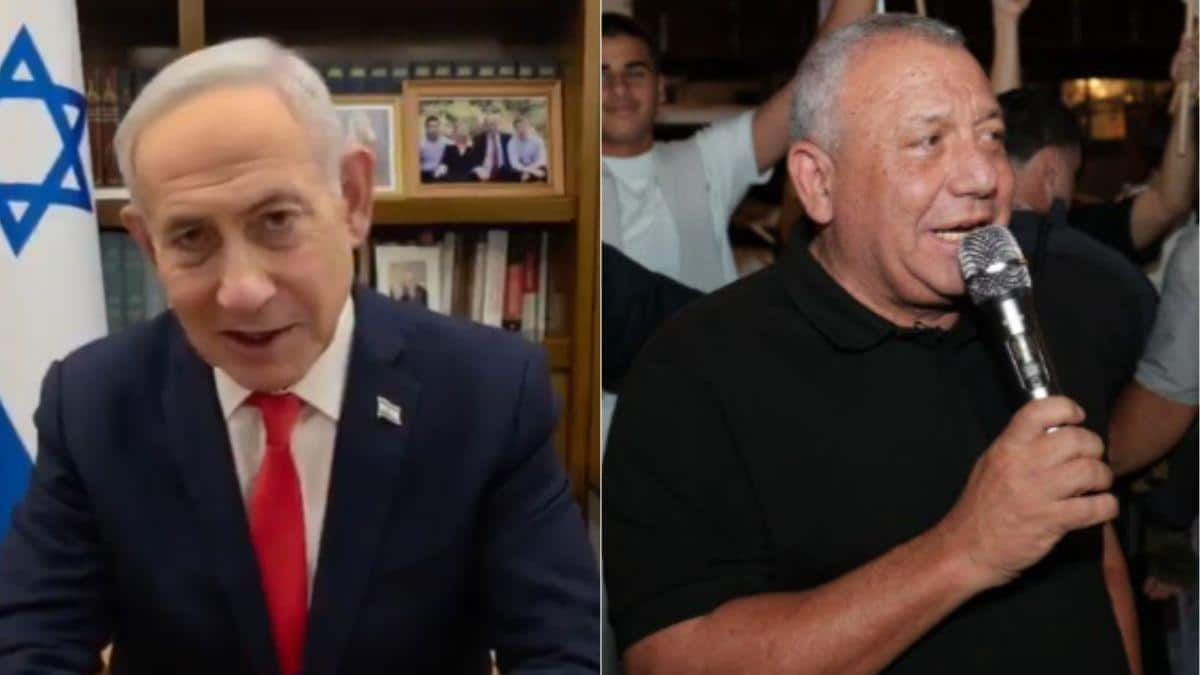
Who Is Gadi Eisenkot? The Former Army Chief Challenging Netanyahu’s Grip On Israel
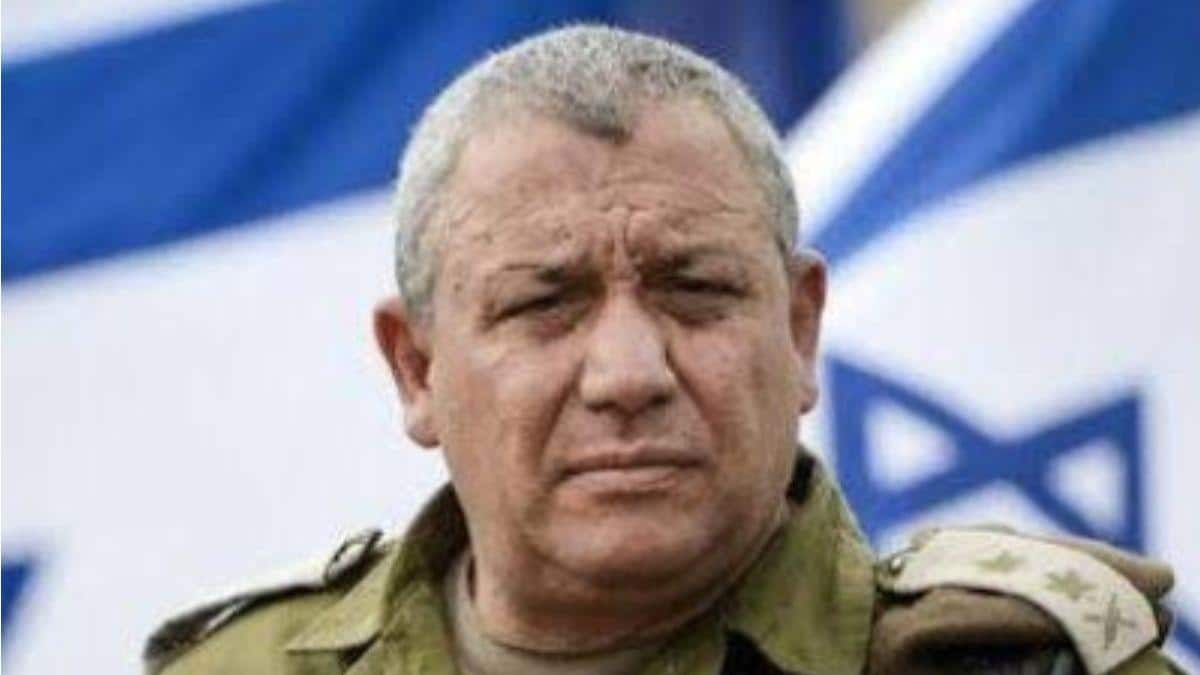
Gadi Eisenkot, the man who could unseat Israeli Prime Minister Benjamin Netanyahu, cuts an understated figure. Almost always dressed in black, he speaks halting English and often answers interview questions with bullet-point lists, reflecting the military culture that shaped him.
For some voters ahead of Tuesday’s general election, the 66-year-old’s lack of charisma could be one of his biggest strengths.
Serious and unassuming, Eisenkot stands in stark contrast to Netanyahu, Israel’s longest-serving prime minister. Netanyahu is known for his polished, American-accented English and his ability to deliver headline-grabbing soundbites on US television and social media.
From Military Chief To Netanyahu’s Main Challenger
Eisenkot served as Israel’s military chief of staff from 2015 to 2019. He has pledged to unite Israelis after Netanyahu’s divisive tenure, during which the country has shifted sharply to the right.
Polling has placed Eisenkot neck and neck with Netanyahu. He has promised to repair Israel’s international standing, which has suffered significant damage after three years of war in Gaza and violence in the occupied West Bank.
He has also vowed to crack down on extremist Israeli settlers in the West Bank who have attacked Palestinians with impunity. Condemning recent incidents in which settlers beat up an American journalist and a French mayor, Eisenkot described the violence as “Jewish terror” enabled by Netanyahu’s government.
However, Eisenkot is no dove on the Palestinian question. He has sought to position himself to the right of Netanyahu on some issues, pledging that there would be no Palestinian state. His campaign has also highlighted earlier footage of Netanyahu reluctantly expressing openness to Palestinian statehood under US pressure.
The Military Doctrine That Shaped His Reputation
Eisenkot’s military record remains central to his public image. During the 2006 war with Hezbollah, he devised the so-called “Dahiya doctrine”, named after a Beirut suburb. The strategy envisaged the use of overwhelming force against civilian infrastructure in areas populated by the Lebanese militant group.
Israel has since applied the doctrine in Gaza, where the resulting destruction has prompted accusations from critics that its actions amount to war crimes. Israel disputes those allegations.
His military background has helped define his political approach, even as he seeks to present himself as an alternative to Netanyahu’s leadership.
Eisenkot has also drawn public sympathy following the deaths of his son, Gal, and two nephews while fighting in Gaza. Their deaths have added a deeply personal dimension to his political campaign.
Appeal Beyond Netanyahu’s Base
Eisenkot’s background is another element of his appeal. The son of Moroccan Jewish immigrants, he grew up on Israel’s geographic periphery, unlike Netanyahu, who comes from an elite family and whose father was a prominent professor in the United States.
If elected, Eisenkot would become Israel’s first prime minister of Sephardic background, a term referring to Jews whose recent origins lie in the Middle East and North Africa.
His campaign has sought to reach voters across political divides by combining security-focused policies with promises of institutional reform.
On Gaza, Eisenkot has pledged to end Hamas rule within 18 months. He has said this could be achieved through the implementation of US President Donald Trump’s ceasefire plan, which envisages the gradual disarmament of Hamas and a transfer of power, or through what he called “creative operations” targeting the group’s military wing.
Military Service, Judicial Independence And Minority Rights
Eisenkot has also addressed growing resentment over exemptions from military service for religious students following three years of war. He has promised to limit these exemptions and introduce a “universal national service law” requiring ultra-Orthodox Jews and Arab citizens to undertake either military or civilian service.
Seeking to attract centrist and liberal voters, he has pledged to protect judicial independence, the rule of law, minority rights and a free press.
These commitments offer a contrast with Netanyahu’s polarising tenure and could help Eisenkot appeal to voters seeking political change without abandoning a security-focused approach.
At his final major rally before Tuesday’s election, Eisenkot made a direct appeal to Netanyahu supporters who were still undecided.
“Deep down, you too know that Israel cannot go on like this,” he said. “Israel needs change.”
His message captures the central question facing voters: whether Eisenkot’s low-key style, military credentials and promises of reform can persuade enough Israelis to bring Netanyahu’s long rule to an end.
This content is published by ABP Live - World and has not been created or edited by Hello Headlines. View original