Why Indian AI Founders Are Eyeing Silicon Valley And What They Risk Leaving Behind
When AI-powered sales intelligence startup Reo.Dev raised $11.3 Mn in July 2026, its priorities reflected a growing reality for Indian startups building for global markets.
The company planned to deploy fresh capital towards expanding sales and marketing operations in the US, which already accounted for nearly two-thirds of its revenue. Yet most of its approximately 75-member workforce remained in India.
Reo.Dev is not alone in operating across these two markets. Bengaluru- and San Francisco-based Coreworks AI raised $5 Mn earlier this year to develop its enterprise AI platform. More recently, RapidCanvas secured $29 Mn to expand its go-to-market and field AI engineering teams across India, the US and Brazil.
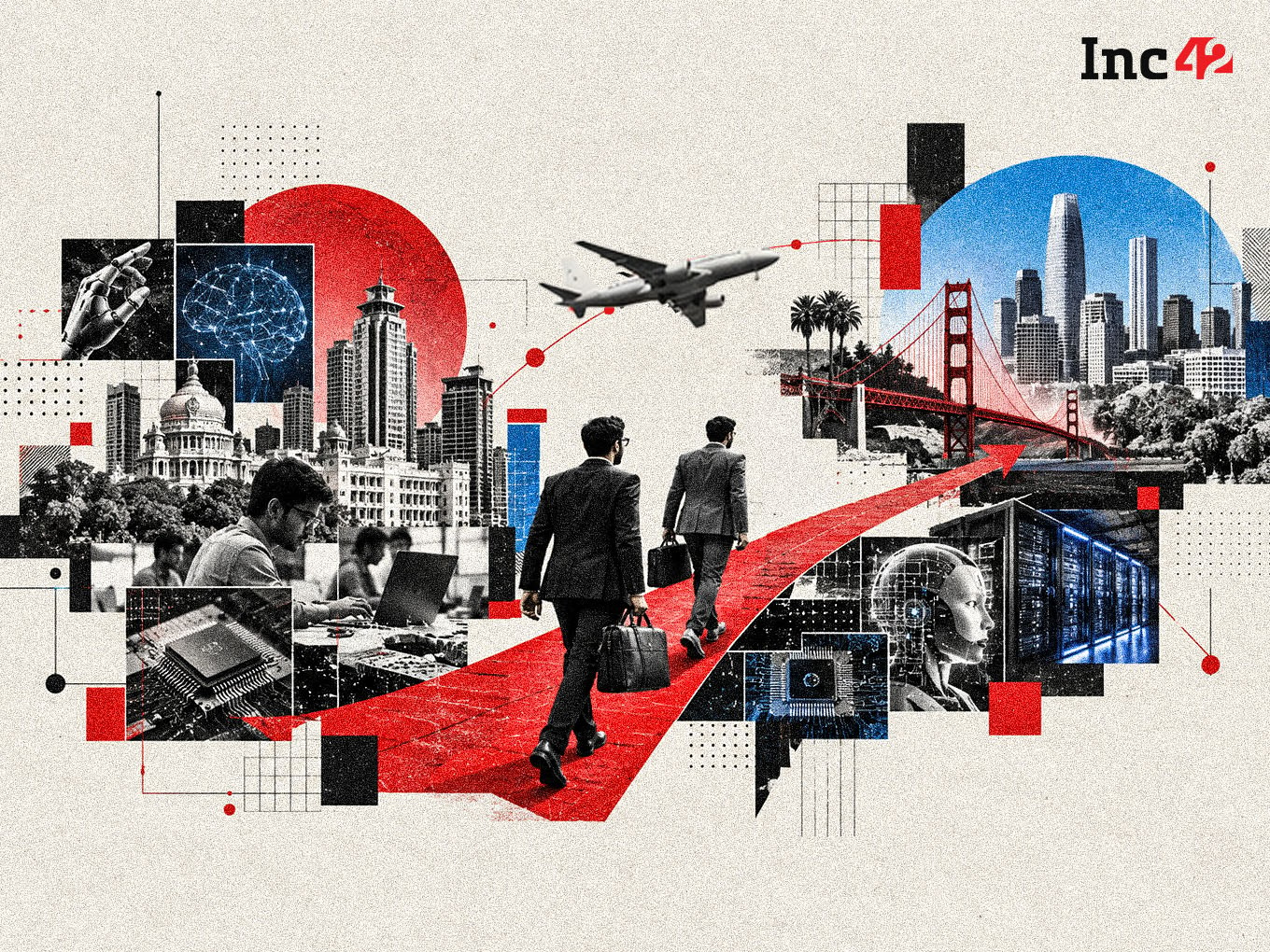
These companies illustrate the increasingly international nature of India’s AI startup ecosystem, where the markets founders sell into, the teams they build and the locations from which they operate do not necessarily overlap.
The momentum is backed by capital.
According to Inc42’s Indian Tech Startup Funding Report, Q3 2026, Indian AI startups raised $438 Mn during the July–September quarter, a 265% year-on-year increase. With $676 Mn raised in the first half, cumulative funding for the first nine months of 2026 crossed $1.1 Bn.
As more startups pursue global AI opportunities, however, an important question is emerging. Does getting closer to Silicon Valley necessarily make an Indian AI startup more competitive?
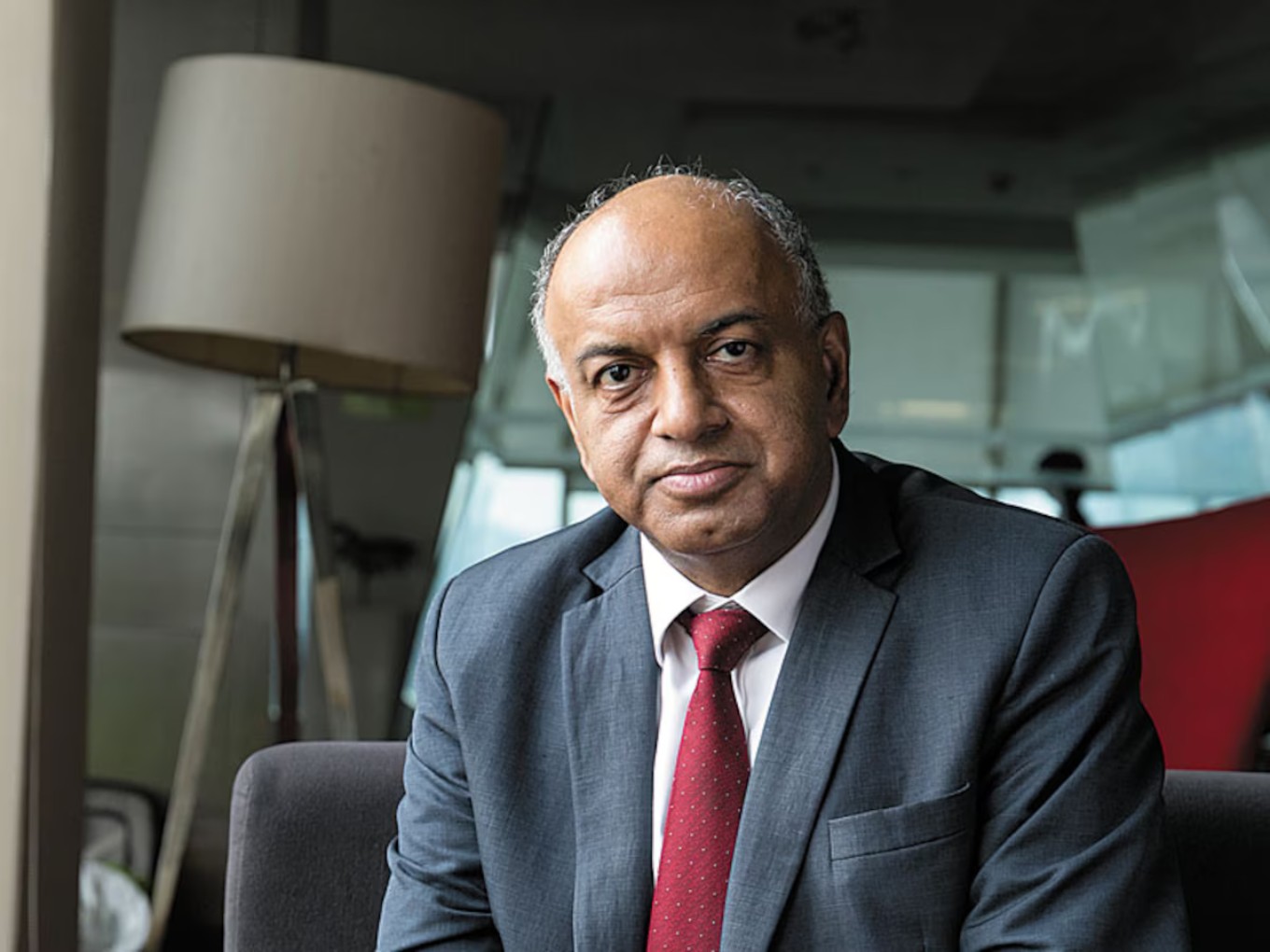
For Suhas Motwani, cofounder of The Product Folks, a global community of product professionals and builders, the answer is more complicated than a change of address.
“The corridor is real, and for a lot of founders it is useful,” says Motwani. “The harder question is what gets built on each side of it, and what gets lost when the move happens too early.”
Why Silicon Valley Is Becoming Harder To Ignore
The attraction of Silicon Valley extends well beyond fundraising, which was the case even at the height of the Indian SaaS boom.
For AI startups, just like SaaS startups before them, proximity to potential enterprise customers, experienced operators, specialised talent and the wider AI ecosystem can shorten the distance between product development and commercial validation.
That matters particularly for startups building enterprise AI products, where customer discovery often requires understanding complex workflows, procurement processes, security requirements and the commercial value of automation.
As Inc42 previously explored in its analysis of enterprise AI sales, winning enterprise customers is no longer simply about demonstrating technical capabilities. Startups must identify decision-makers, prove measurable returns and navigate the operational risks associated with deploying AI in live business environments.
For companies whose largest potential customers are American enterprises, building those relationships from thousands of kilometres away can introduce additional challenges.
Physical presence can create opportunities for more frequent customer interactions, closer feedback loops and a better understanding of how enterprise buying decisions are made.
Motwani believes this proximity can be particularly useful in a sector where product capabilities, customer expectations and competitive positioning are evolving rapidly. But there is an important distinction between using Silicon Valley to accelerate learning and treating relocation itself as a competitive advantage.
“A low barrier to raising in the Bay is very different from a low barrier to building a durable company,” he says. “The move itself is cheap. The compounding effects are not.”
The challenge for founders is to determine whether their company genuinely needs a physical presence in the US, and what business outcomes that presence is expected to deliver.
How AI Is Changing The India–US Equation
The India–US technology corridor is not new. Indian SaaS companies have spent years building products and engineering teams at home while selling to enterprise customers abroad.
However, AI is changing the economics of that relationship.
The cost and complexity of developing frontier AI models continue to demand enormous capital, computing infrastructure and specialised talent. At the same time, access to increasingly capable models is making it possible for smaller teams to build AI-powered applications without developing the underlying technology themselves.
The distinction is becoming more visible as the global AI industry enters a new phase.
On 26 October, Anthropic publicly filed its registration statement for a proposed US initial public offering. The Claude maker reported approximately $16.3 Bn in revenue during the first half of 2026, compared with about $1.2 Bn in the corresponding period last year, illustrating the rapid commercial expansion of the frontier AI industry. Its proposed listing also comes amid questions over the enormous capital requirements and long-term economics of building advanced AI models.
For Indian founders, the implications extend beyond the public market performance of companies such as Anthropic.
While frontier AI development remains heavily capital-intensive, application-layer startups can increasingly build on models developed elsewhere, allowing them to direct more resources towards solving specific customer problems.
This distinction is particularly relevant to India. According to the Google × Inc42 Bharat AI Startups Report, 2026, 90% of funded Indian AI startups covered in its analysis operate at the application layer.
However, access to powerful models also means that technological capabilities can become easier for competing startups to replicate. A sophisticated AI feature, by itself, may no longer constitute a lasting competitive advantage.
What becomes harder to replicate is a startup’s understanding of its customers, its integration into their workflows, its distribution network and the trust it builds through repeated use.
This is where the India–US corridor takes on a different significance.
For application-layer startups, being close to Silicon Valley can offer access to frontier AI developments, customers and distribution networks. But the ability to build quickly, experiment cost-effectively and develop products for demanding users can remain rooted in India.
The opportunity is no longer just about exporting Indian engineering capabilities to the US. It is about determining which parts of an AI business need to operate closer to the technology frontier, which need to be closer to customers, and where the startup can build its strongest competitive advantage.
Knowing The Risks
For much of the past decade, Indian technology startups have competed globally by combining engineering talent, leaner operating structures and access to international markets.
AI is changing the economics of building software, but it has not eliminated the importance of these advantages.
Moving an entire founding or engineering team to San Francisco can significantly increase operating costs, particularly when the startup is still experimenting with products, pricing and its target customer segment.
More importantly, an early relocation can affect the company’s product development process.
Founders who move away from their engineering teams may find themselves managing critical product decisions across time zones. The resulting separation can make experimentation, communication and decision-making more complex at precisely the stage when startups need to move quickly.
There is also the question of which users influence the product roadmap.
A startup developing AI products for American enterprises may benefit enormously from spending more time with US customers. But the same approach could prove counterproductive for a company building for Indian consumers, small businesses or enterprises with distinctly local requirements.
Motwani argues that the environment in which a startup develops its earliest products can influence the capabilities it prioritises and the problems it learns to solve.
India, for instance, exposes AI products to considerable variation in languages, devices, connectivity, user behaviour and willingness to pay.
A product designed around affluent, English-speaking users with reliable connectivity may not necessarily work as effectively for consumers using regional languages, shared devices or less predictable networks.
These constraints can force teams to improve reliability, usability and cost efficiency much earlier in the product development cycle.
The risk is not that an Indian founder builds for the US. It is that the founder changes markets without deliberately reassessing which customers, capabilities and advantages should shape the business.
An Opportunity Too Large To Overlook
The case for maintaining a strong presence in India is also increasingly supported by the size of the domestic opportunity.
According to the Google × Inc42 Bharat AI Startups Report, 2026, India’s AI market is projected to reach $126 Bn by 2030.
Enterprise AI expenditure is estimated to grow from $11 Bn in 2025 to $71 Bn by 2030, while consumer AI expenditure is projected to rise from $13 Bn to $55 Bn over the same period.
For application-layer startups, this represents a significant opportunity to build products that address specific customer problems, integrate into existing workflows and earn sustained adoption.
There are, however, important differences between market opportunity and commercial readiness.
India was already the world’s second-largest market for AI application downloads in 2024, accounting for 177 Mn downloads. Yet the Bharat AI report estimated consumer AI monetisation at just $12 Mn during that period.
In other words, significant user adoption does not automatically translate into strong monetisation.
For Indian AI founders, this creates two different opportunities. The US offers access to enterprise customers with established software budgets, while India offers a large and diverse market in which startups can build products around local workflows and underserved customer segments.
Choosing between them should depend on the problem being solved, rather than the assumption that one market is inherently superior.
There are also alternative routes to global customers that do not require startups to abandon their Indian operating base.
An earlier analysis published on Inc42 examined how India’s Global Capability Centres (GCCs) could become an important route to multinational enterprise buyers, offering Indian AI startups access to global workflows and potential decision-makers within the country itself.
The major implication is that access to international customers does not always require shifting the entire centre of product development overseas.
The Case For Building Across Two Markets
Rather than viewing Bengaluru and Silicon Valley as competing destinations, Motwani sees merit in founders using the two ecosystems for different purposes.
Through his work with The Product Folks, he has observed differences in the priorities that dominate conversations among founders and product professionals in the two markets.
In San Francisco or the Valley, discussions tend to centre on distribution, pricing and category creation. In Bengaluru, they are often more focused on engineering teams, product positioning, capital efficiency and the immediate challenges of building a sustainable business.
Both perspectives matter.
A startup can build a technically capable AI product in India and still struggle to reach the right international customers. Equally, access to American buyers and investors does not guarantee that the company will develop a defensible product or sustainable business model.
This is where a two-market operating strategy becomes relevant.
For founders serving US enterprises, customer-facing functions may need to be closer to those customers, while product and engineering teams can continue operating from India.
Reo.Dev offers one illustration. As Inc42 reported in July, the startup was expanding its American sales and marketing operations while retaining most of its workforce in India.
But operating across two markets brings its own challenges.
Founders must establish clear ownership of product decisions, maintain communication between customer-facing and engineering teams, and ensure that feedback from international customers translates into improvements rather than endless customisation.
There is also a less visible challenge: access to the right relationships.
Entering a new market requires more than understanding its customers. Founders often need introductions to experienced operators, potential partners, investors, early hires and advisors who understand the practical challenges of building across borders.
Motwani has been working to address some of these gaps through The Founder Folks, an invite-only founder initiative emerging from The Product Folks network.
Built around the India–US corridor, the initiative seeks to connect founders with experienced operators, potential customers and advisors, alongside offering practical guidance on US market entry, fundraising and managing cross-border teams.
Its emphasis reflects a broader challenge in the ecosystem: founders looking to build global businesses need more than access to capital. They also need access to relevant experience, networks and market-specific knowledge.
Ultimately, a US presence can accelerate customer discovery, but whether that learning becomes a competitive advantage depends on how effectively it informs the product being built.
The Real Test Is Product-Market Fit
The debate over where Indian AI startups should operate ultimately connects to a larger challenge facing the sector.
AI has made it easier for startups to develop prototypes, experiment with new capabilities and launch products. But these improvements do not automatically make it easier to build businesses that customers depend on.
Motwani believes founders must distinguish between what an AI product can demonstrate and what users will actually trust it to do.
“The shift from demo to daily use is not about adding features,” he says. “It is about deciding what work a user will actually trust the system to do.”
This distinction becomes particularly relevant when founders enter new markets.
Customer expectations around product reliability, workflow integration, support, pricing and accountability can vary considerably between India and the US.
A product that performs well during a demonstration may still struggle when deployed within an enterprise workflow that requires multiple approvals, integration with legacy systems or verification of AI-generated outputs.
These challenges are becoming more consequential as investor expectations mature.
Inc42’s Q3 2026 investor survey found that 63% of institutional investors surveyed saw some degree of froth in Indian AI startup valuations. At the same time, 39% believed vertical AI applications would capture the greatest value over the next five years.
The findings suggest that while investor interest in AI remains strong, the ability to build commercially viable, differentiated applications will increasingly matter.
For founders, the priority is not simply to reach a larger market. It is to understand which problems customers will pay to solve, how the product fits into their existing processes and whether the business can deliver value consistently.
A startup may need to be in San Francisco to understand those requirements. Another may discover its strongest opportunities by working more closely with Indian enterprises and consumers.
Neither outcome can be determined by geography alone.
Where Will India’s Next Global AI Companies Be Built?
India’s AI startup ecosystem is entering a phase in which global ambitions are becoming more closely intertwined with domestic capabilities.
As frontier AI companies prepare to face greater public market scrutiny, the application layer offers Indian startups an opportunity to participate in the global AI economy without necessarily matching the capital or infrastructure investments of the largest model developers.
But it also raises the competitive bar.
Building products is becoming faster. Access to underlying AI capabilities is expanding. What will distinguish companies is their ability to identify valuable problems, reach the right customers and develop products that become indispensable to their workflows.
Access to US capital, customers and talent can help startups accelerate their growth. At the same time, India’s engineering ecosystem, domestic demand and operating advantages continue to offer meaningful opportunities.
The challenge is to combine those strengths without assuming that a particular operating model will work for every company.
For some founders, relocating to the US will be commercially necessary. For others, maintaining customer-facing teams abroad while building from India may offer a more effective structure. And for startups addressing domestic problems, staying close to Indian users could be fundamental to product-market fit.
The decisions will also evolve as companies grow. What makes sense during initial customer discovery may not be the right structure after a startup finds product-market fit or begins scaling internationally.
Motwani’s argument is that founders should approach these choices as deliberate business decisions rather than signals of ambition.
“The corridor is a tool,” he says. “Like any tool, it rewards the founders who are clear about what they are using it for and punishes the ones who confuse motion for progress.”
As Indian AI companies compete for opportunities on both sides of the Pacific, the differentiator may ultimately be neither their headquarters nor their ability to access Silicon Valley.
It will be whether they can use the strengths of both markets to build products customers value, businesses that endure and competitive advantages that are difficult to replicate.
The post Why Indian AI Founders Are Eyeing Silicon Valley And What They Risk Leaving Behind appeared first on Inc42 Media.
This content is published by Inc42 and has not been created or edited by Hello Headlines. View original