Sell first, build second, automate last: A solo founder’s playbook for the AI era
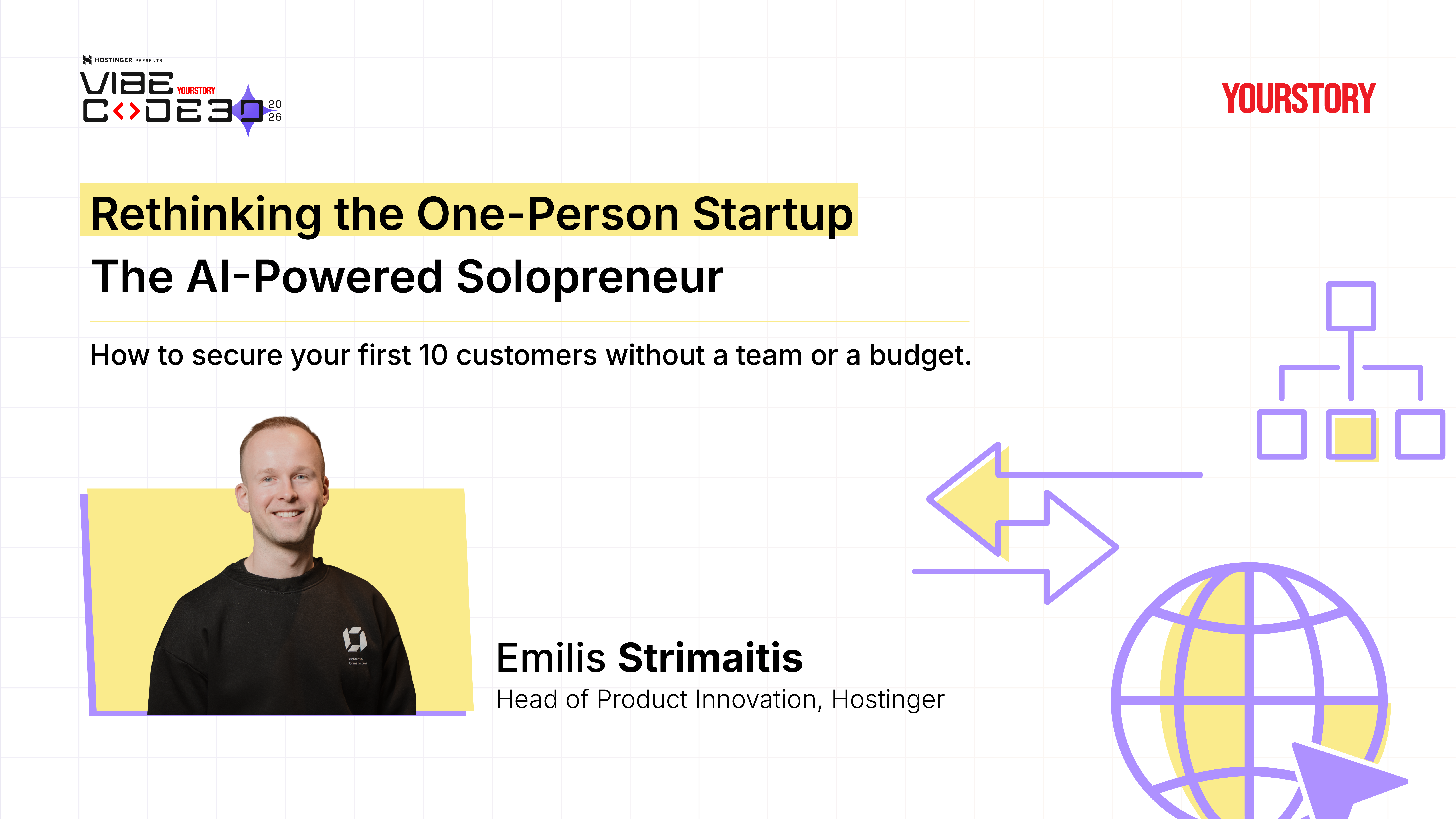
AI has made building almost effortless. In 2019, Emilis Strimaitis spent nearly a year, and the efforts of a developer agency, on a shopping app that failed. Today, he says, an AI subscription and a weekend would produce the same app, and it would fail just as surely, only 100 times faster.
Speaking at a webinar in association with Yourstory, part of VibeCode 30 at TechSparks 2026, the Head of Product Innovation at Hostinger argued that the steps founders took before AI existed have not gone away. Finding the problem, finding the people who have it and getting them to pay still come first. AI simply changes how fast you can do everything after that.
Why the product is now the cheapest part
If you can build something in a weekend, so can thousands of others. Strimaitis noted that something launched on Monday can have two or three copies by Friday, and one of them will likely be free. Getting attention, he added, has been the real problem all along, long before AI.
The trap is easy to fall into. Founders build with AI, add agents to run the product, then add more agents to run those agents, and still have zero customers. His description: a self-driving car with no roads to drive on.
The audience took part throughout the session, beginning with a live poll on their biggest struggle in launching a digital product or online business. The top answer, at 41%, was being unsure how to sell.
Sell first, build second, automate last
Strimaitis has bootstrapped around 15 businesses over 15 years, generating well over $10 million with no investors. His pattern is consistent. “Every win came from selling first, and every loss came from building it first.”
One small tool, sold before it was built, cost about $100 to develop and earned $29,000. A platform built without proof of demand cost over $40,000 and went nowhere. His rule: use the same tools, the same AI, and the same automations, but in the opposite order.
The seven-step selling machine
First, pick a niche using three checks: can you name the people, can you find them in one place online, and are they already paying for something? AI can help here by turning your skills and interests into a shortlist of ideas.
Next, read the complaints. Search reviews and communities for bad experiences with existing tools. “Somebody else’s one-star reviews are our business plan.” Collect about 50 complaints and check whether they repeat, whether the people complaining actually pay, and whether a better version is possible. An AI tool can group them into top problems in customers’ own words. The rule is not to let AI invent anything.
From there, write 10 promises, or angles, such as faster, cheaper, or done-for-you. Give each one a simple landing page with a title, a description and a button for pre-orders or a waiting list. Then pick one social platform and post daily for 30 days, assuming nobody is watching. Record one long video a week and slice it up.
People who sign up can be invited into a WhatsApp group, but only after they raise their hand. A group of 10 to 20 becomes a research team and a set of beta testers. To borrow an audience, engage genuinely with creators who have roughly 5,000 to 50,000 followers before reaching out.
After 30 days, stop what fails and grow what wins. If people paid, fulfill the first 20 or so orders by hand. Only then build the software, and automate last.
Where human effort still counts
Strimaitis was candid that AI-driven shortcuts can backfire. Cold email is losing effectiveness because everyone now sends AI-personalized messages, so he recommends engaging with 20 to 30 creators by hand instead. On LinkedIn, he said, posts flagged as AI do not rank well. His alternative is to save posts that caught your attention and remake the idea in your own voice.
For attendees using Hostinger’s tools, the session mentioned using AI Builder for landing pages, Hostinger Agent for refining prompts, and e-commerce for quick payment links.
The takeaway is simple. AI is a powerful tool, but demand still has to come first.
This content is published by YourStory and has not been created or edited by Hello Headlines. View original