These Gardeners Have Reused Their Household Items to Grow Plants: 7 Things You Can Use Too
A healthy garden does not always require expensive pots, planters, or gardening equipment. Some of the things that can help plants grow may already be sitting in your kitchen or storeroom, waiting to be thrown away.
From plastic bottles and old buckets to kitchen scraps and eggshells, everyday household items can find a second life in a garden. Indian gardeners are already putting these ideas into practice, turning discarded materials into growing spaces and organic compost.
Here are seven ways to reuse household items in your garden, inspired by people who are doing it themselves.
1. Plastic bottles can become planters
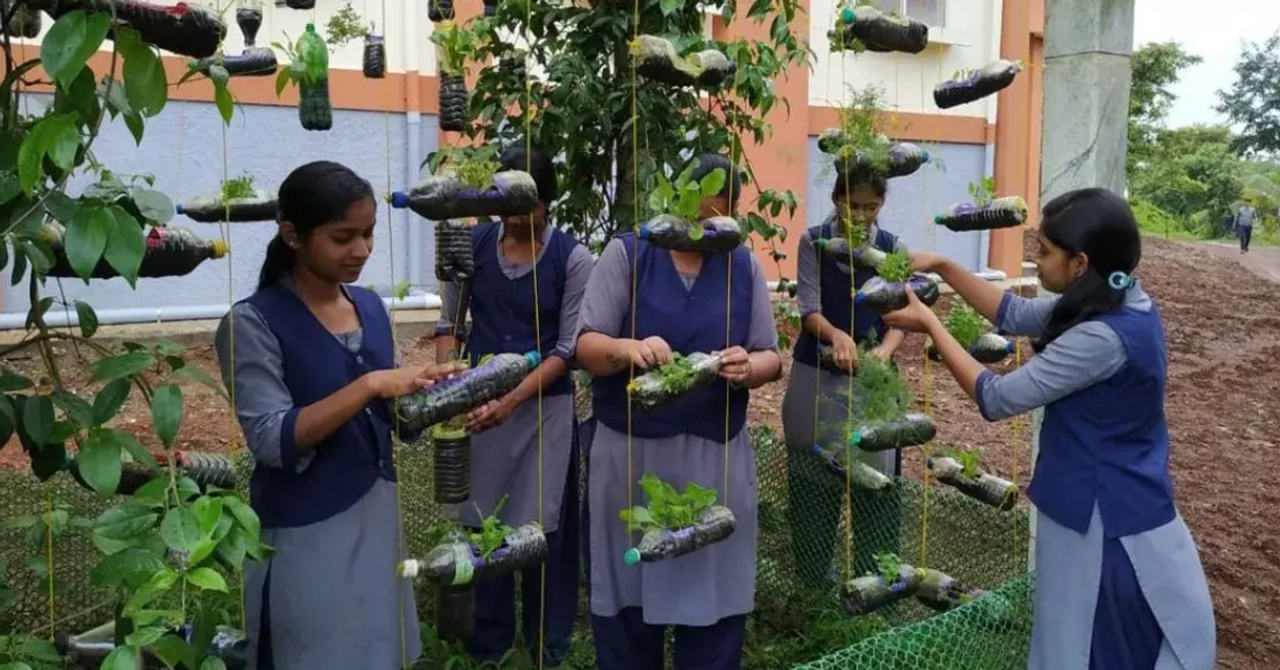
Empty plastic bottles can be turned into planters for herbs, leafy greens, and other plants that do not need much root space. Wash a bottle thoroughly, cut it to the desired size, and make drainage holes at the bottom before adding potting mix.

You can also arrange bottles vertically to make use of a small balcony wall.
Mandeep Sangwan and students in Delhi created vertical gardens using discarded plastic bottles. Their initiative shows how waste can be turned into green spaces, even where ground space is limited.
2. Old buckets and containers can grow vegetables
An unused bucket, plastic tub, or drum can provide a home for tomatoes, chillies, and leafy greens. Choose a container that is deep enough for the crop, clean it thoroughly, and make drainage holes before filling it with potting mix.
Avoid containers that previously held paint, pesticides, oils, or other chemicals, especially when growing edible plants.
Shivanand Hongal and students in Sirsi, Karnataka, found creative ways to reuse waste in their garden. Along with plastic bottles, they used broken buckets, cement bags, and tin cans to grow plants. Their work shows how discarded objects can become practical growing containers.
3. Coconut shells can become small planters
Coconut shells are sturdy and can be used as small planters for succulents, seedlings, and other compact plants. Clean the shell, make drainage holes if possible, and fill it with a suitable potting mix.
They can also add a natural touch to a balcony garden. However, their limited size makes them unsuitable for plants that need plenty of room for their roots.
Sakshi Bharadwaj from Bhopal, Madhya Pradesh, has reused materials such as coconut shells and plastic bottles in her garden, which features thousands of plants. Her approach offers inspiration for gardeners who want to make use of everyday discarded objects.
4. Vegetable peels can become compost
Fruit peels, vegetable scraps, and other suitable kitchen waste can be turned into compost. Instead of throwing away banana peels, carrot tops, and other uncooked scraps, collect them in a home compost bin.
Mix these green materials with brown materials such as dry leaves, shredded cardboard, and uncoated paper. Keep the mixture moist but not waterlogged, and turn it occasionally to allow air to circulate.

K Subbalakshmi from Vijayawada, Andhra Pradesh, uses household wet waste to make compost for her garden. Her example shows how kitchen waste can be put to use instead of being sent to landfill. Avoid adding meat, dairy products, and oils to a basic home compost pile, as these can attract pests and create unpleasant odours.
5. Eggshells can be added to compost
Eggshells contain calcium carbonate and can be added to a home compost pile. Rinse them, allow them to dry, and crush them into small pieces before mixing them with vegetable scraps and dry leaves.
Crushing the shells helps them break down more readily, although decomposition can still take time. Eggshells are not an instant fertiliser, so do not rely on them alone to address a plant’s nutritional needs.
Evangeline Wilson from Prayagraj, Uttar Pradesh, has worked to reduce household waste by composting kitchen scraps and making use of materials such as eggshells, tea leaves, and vegetable peels.
6. Used tea leaves can enrich compost
After making chai, save the used tea leaves rather than throwing them away. They can be added to compost, where they contribute organic matter as they decompose.
Let the leaves cool before collecting them and mix them with dry leaves, cardboard, or other brown materials. If you use tea bags, check whether they contain plastic and remove any non-compostable parts. Tea leaves can be useful compost ingredients, but they should not replace a balanced compost mix. Avoid piling large quantities directly around plant stems.
Evangeline Wilson’s waste-reduction efforts in Prayagraj also offer a useful example of how everyday kitchen leftovers can be diverted from the rubbish bin and put to better use.
7. Newspapers and cardboard can help suppress weeds
Plain cardboard and uncoated newspapers can help cover bare soil and suppress weeds around established plants. Remove tape, staples, and plastic labels before using them.

Lay the cardboard over the soil, leaving space around plant stems, and wet it so that it stays in place. Cover it with dry leaves or another suitable organic mulch. Shredded newspaper can also be added to compost as a source of carbon.
Avoid glossy paper and cardboard contaminated with grease or chemicals. Do not pack cardboard tightly against plant stems, as this can trap moisture and encourage rot. This is another way to reduce household waste while making garden maintenance easier. If you have old packaging or newspapers, check whether they are suitable for reuse before putting them in the bin.
Make the most of what you have
Reusing household items does not mean saving everything that might possibly be useful. The key is to choose materials that are clean, safe, and suitable for the task. Start with one or two ideas that suit your home and the plants you already grow. A few simple changes can reduce waste while making gardening more affordable. Sometimes, the next useful addition to your garden is already waiting in your kitchen or storeroom.
This content is published by The Better India and has not been created or edited by Hello Headlines. View original