Surya Grahan 2027: First Solar Eclipse On February 6, Will It Be Visible In India?
Solar Eclipse 2027: The first solar eclipse of 2027 will take place on February 6. Find out whether it will be visible in India, whether Sutak Kaal will be observed and what scientists say about this celestial event.
The year 2027 will be special in terms of astronomical events. The first solar eclipse of the year will take place on February 6, 2027, which falls on a Saturday. From a scientific point of view, it will be an annular solar eclipse, commonly known as the 'Ring of Fire'.
As with every eclipse, people have questions about whether this celestial event will be visible in India and whether the religious restrictions associated with Sutak Kaal will apply across the country. According to the National Panchang and the Meteorological Department, the situation is clear.
Solar Eclipse 2027 Date
According to the National Panchang, this astronomical event on February 6 will begin in the evening and continue until midnight, as per Indian Standard Time (IST).
- Date: February 6, 2027 (Saturday)
- Eclipse Begins: 6:28 PM (IST)
- Eclipse Ends: 12:32 AM on February 7 (IST)
- Type Of Eclipse: Annular Solar Eclipse
- Total Duration: Approximately 6 hours and 4 minutes
Since the eclipse will end after midnight, its beginning will be recorded on February 6 and its conclusion on February 7 in the calendar.
ALSO READ | Horoscope Tomorrow Friday, October 30, 2026: Astrological Predictions For All Zodiac Signs (Aries To Pisces)
Will The 'Ring Of Fire' Be Visible In India?
According to the Indian Meteorological Department's Panchang, the solar eclipse on February 6, 2027, will not be visible anywhere in India.
This spectacular celestial event will be visible in parts of South America, Antarctica and some limited regions of Africa.
The eclipse will reach its peak when it is already nighttime in India. The Sun will be below the horizon, making it impossible to observe the event from the country.
Will Sutak Kaal Be Observed In India?
According to religious beliefs, Sutak Kaal begins 12 hours before a solar eclipse. During this period, certain activities, including worship, cooking food and performing auspicious ceremonies, are traditionally avoided.
According to religious calendars, Vedic astrology follows the rule that the Sutak period and the religious effects of an eclipse are applicable only in regions where the eclipse can be seen with the naked eye.
Since the solar eclipse on February 6 will not be visible anywhere in India, Sutak Kaal will not be considered applicable in the country.
Temples will remain open, regular worship will continue without interruption, and there will be no restrictions on normal daily activities.
What Is An Annular Solar Eclipse?
A solar eclipse occurs when the Moon comes between the Sun and the Earth, temporarily blocking sunlight.
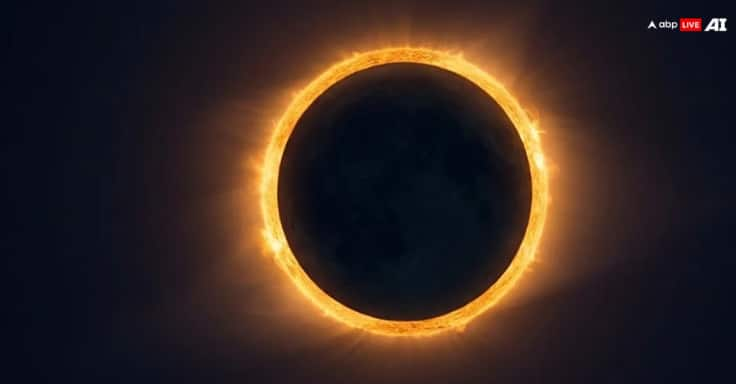
When the Moon is at its farthest point from the Earth in its orbit, it appears smaller in the sky. As a result, it cannot completely cover the Sun. Instead, it blocks only the central portion of the Sun.
This leaves the Sun's outer edge visible as a bright, golden ring. This spectacular appearance is scientifically known as the 'Ring of Fire'.
ALSO READ | Astro Analysis | What Rahul Gandhi's Horoscope Predicts Ahead Of His November 1 Delhi Rally
Second Solar Eclipse Of 2027 Will Be Visible In India On August 2
Skywatchers in India will have to wait for the second solar eclipse of the year to witness the phenomenon.
The second solar eclipse of 2027 will take place on August 2.
Globally, this will be a total solar eclipse.
In India, the eclipse will be visible as a partial solar eclipse in several parts of the country, particularly in the western and southern states.
Since the eclipse will be visible in India, Sutak Kaal rules will also apply according to the visibility of the event.
Avoid These Mistakes While Watching A Solar Eclipse
Taking care of your eyes is extremely important while watching a solar eclipse. Keep the following precautions in mind:
- Never look directly with naked eyes: The Sun's ultraviolet rays can cause permanent damage to the retina.
- Use certified eclipse glasses: Always use solar filter glasses that meet the ISO 12312-2 standard to watch a solar eclipse.
- Regular sunglasses are not enough: Ordinary sunglasses, X-ray films and camera lenses cannot block harmful solar radiation effectively.
[Disclaimer: The content of this article is based solely on astrological predictions, and should be taken as general guidance. Individual experiences may vary. ABPLive.com does not assert the accuracy or validity of any claims or information presented. It is strongly recommended to consult a qualified expert before considering or implementing any information or belief discussed herein.]
This content is published by ABP Live - Lifestyle and has not been created or edited by Hello Headlines. View original