'Ravan Was A Genius': Author Amish Gives A Different Perspective On The Mythological King
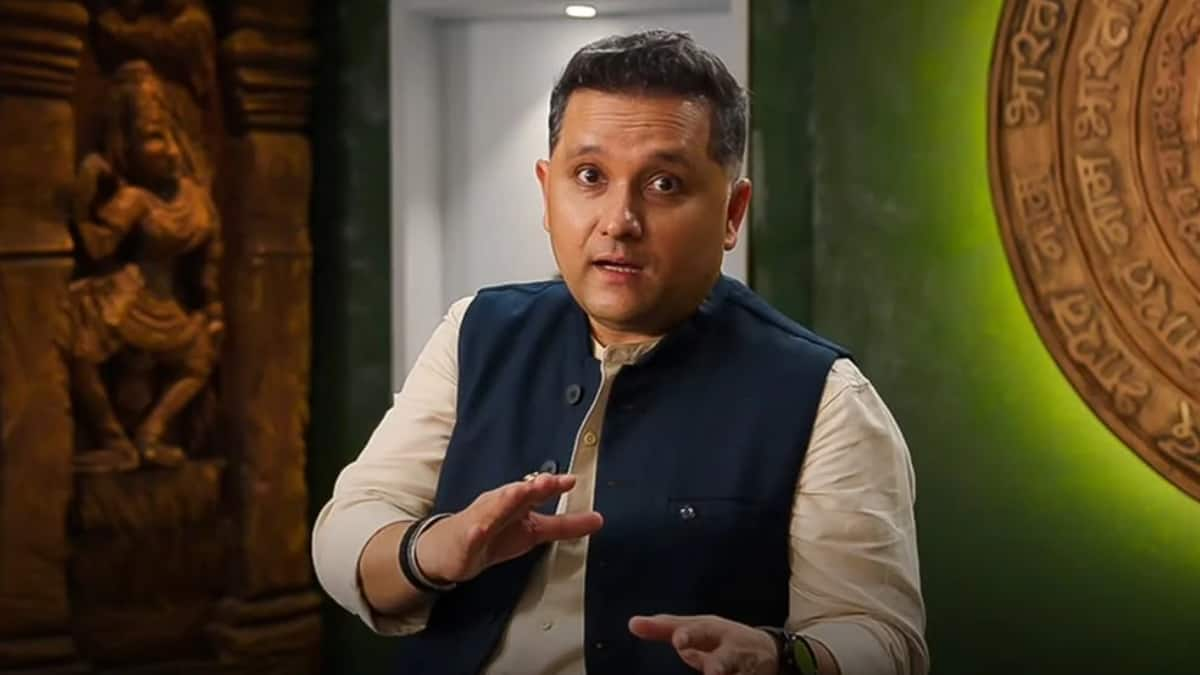
Ravan was a brilliant scholar and musician whose extraordinary talents were overshadowed by his anger and ego, bestselling author Amish said at the 11th edition of the Himalayan Echoes Festival in Nainital. Offering a more layered view of the mythological king, the author argued that traditional Indian narratives recognised both his remarkable abilities and his personal flaws.
Speaking at the literary festival, Amish highlighted Ravan's contributions to music and literature, including the invention of instruments such as the Rudra Veena and Ravan Hattha. He also referred to the Shiva Tandava Stotra, a celebrated hymn dedicated to Lord Shiva, to underline Ravan's scholarly and artistic achievements.
ALSO READ: Diwali 2026: 5 Corners Of Your Home You Must Clean To Welcome Goddess Lakshmi
Amish On Ravan's Genius, Musical Contributions And Ego
Describing Ravan as a master of the Vedas, Amish said the mythological king had created musical instruments that demanded exceptional skill to play. He pointed to the Rudra Veena, which he called one of the most complex string instruments, and the Ravan Hattha, which continues to be played in Rajasthan.
"Ravan was a genius, a master of the Vedas who invented musical instruments such as the Rudra Veena, which was perhaps the best stringed instrument ever invented and really horribly complex to play. Very few people could play it.
"He also composed hymns in praise of Lord Shiva. Our ancestors recognised his extraordinary abilities, but they also knew he had huge anger management and ego issues," Amish told the audience at the historic Abbotsford estate, with the Deopatta range forming the backdrop.
The 52-year-old author said modern interpretations, often shaped by Western thought, tend to view mythological figures through a narrow lens of good and evil. He argued that Ravan's character deserved a more nuanced reading, with his story offering a reminder of how unchecked pride can lead to destruction.
"If you control your ego, you are not doing others a favour. You are doing yourself a favour," he said.
Amish also referred to Bisrakh village in Greater Noida, which is believed to be Ravan's birthplace, challenging the popular association of the mythological king with Tamil Nadu.
"He was actually born close to Delhi, in Bisrakh, close to Noida. So he was essentially a Delhi Brahmin boy, hence the anger management issues," said the author of Raavan: Enemy of Aryavarta, the third book in his popular Ram Chandra series.
Amish Explores Mandodari's Dilemma And A Mother's Grief
The discussion also turned to Mandodari, Ravan's wife, whom Amish described as a compelling character torn between her love for her husband and her sense of right and wrong.
"She has a very clear moral sense of right and wrong. But what happens if you genuinely love someone who actually turns out to be a monster?" he said.
Amish noted that, in several versions of the Ramayana, Mandodari confronted Ravan over his actions. However, she continued to stand by him because of her belief in marital responsibilities and tradition.
He also spoke about her bond with their son, Meghnad, portraying her as a mother who took immense pride in her son for defending his father's honour, even when he did not agree with his actions.
"What goes through the heart of a mother when the son, the pride of her life, dies? He is killed with honour, but he dies brutally. What goes through the heart of a mother like this?" Amish said, explaining how he explored Mandodari's emotional journey in his book The End of the War of Lanka.
ALSO READ: Surya Grahan 2027: First Solar Eclipse On February 6, Will It Be Visible In India?
Why Amish's Popular Books Are Yet To Become Films
Asked why his bestselling mythological books have not yet been adapted for the big screen despite several reported collaborations over the years, Amish pointed to the scale of investment required. His books have sold more than eight million copies, and his best-known works include the Shiva Trilogy and the Ram Chandra series.
"The challenge with my older books is the budget required. The Shiva Trilogy will need three or four films, while the Ram Chandra series will need many more. Each film would require a huge budget," he told PTI.
However, Amish believes such projects could become more feasible as India's economy grows. He cited the upcoming Ramayana, produced by Namit Malhotra and directed by Nitesh Tiwari, as an example of an ambitious cinematic project.
"I know them and I think they are trying their best. They are doing it with a clean heart. Let us see how it does. It is possible, it will happen, it is a matter of time," he added.
Amish said he would prefer to wait for the right opportunity rather than risk a poorly executed adaptation affecting the reputation of a successful book. He also pointed out that books can continue to attract readers and sell over the years, unlike films.
The two-day Himalayan Echoes Festival, which brings together discussions on literature and nature, features speakers including Bhutanese novelist Chador Wangmo, Swiss author Benjamin Viatte, environmentalist and author Mridula Ramesh, and mythologist Sunita Pant Bansal. The festival is scheduled to conclude on Saturday.
This content is published by ABP Live - Lifestyle and has not been created or edited by Hello Headlines. View original