Supreme Court Upholds 1974 Ruling On States' Additional Sales Tax Powers
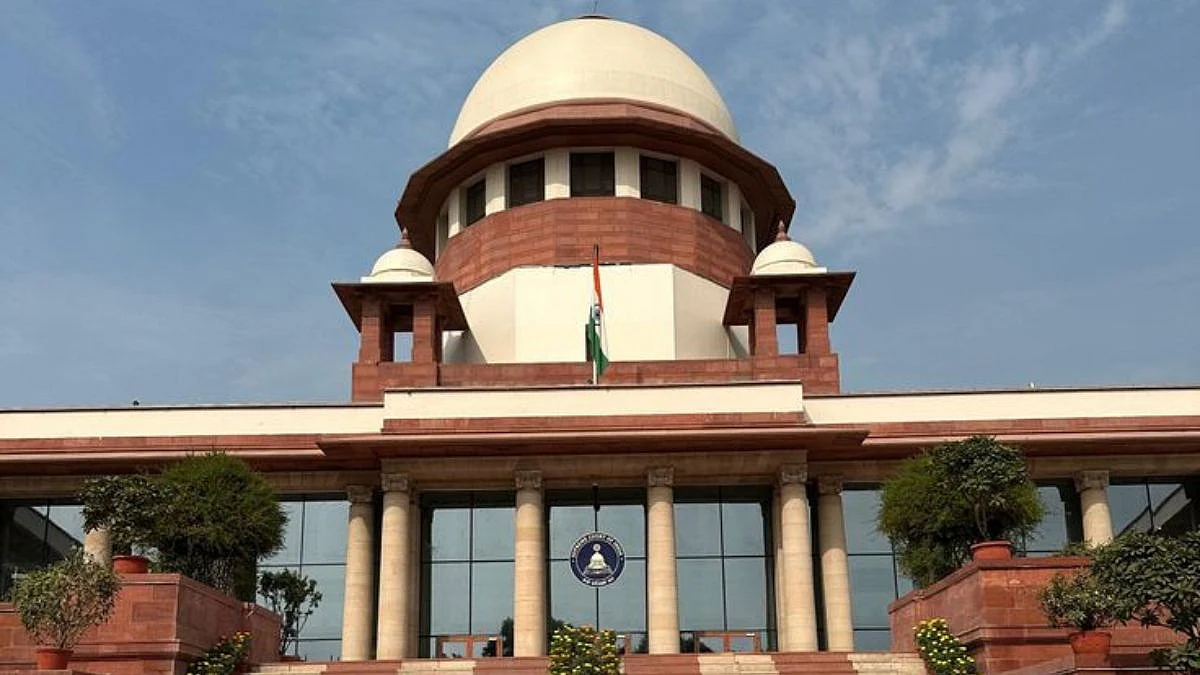
The Supreme Court on Wednesday reaffirmed a 1974 Constitution Bench ruling permitting states to levy additional sales tax or surcharges calculated as a percentage of existing sales tax.
A seven-judge Constitution Bench headed by Chief Justice of India Surya Kant unanimously held that a reference made nearly 27 years ago had become academic following legislative amendments and the introduction of the Goods and Services Tax (GST) regime.
The court declined to reconsider the underlying legal question, observing that the disputed statutory provisions had since been amended or replaced.
MTNL Board Approves ₹891.53 Crore Powai Property Sale To Income Tax Department For Asset MonetisationThe Bench clarified that the five-judge ruling in S Kodar vs State of Kerala (1974) continues to govern the legislative competence of states to impose additional sales tax.
That judgment established that a surcharge calculated on sales tax payable represents an increase in the sales tax rate rather than a tax on dealers' income.
Such levies fell within Entry 54 of List II of the Seventh Schedule to the Constitution, as it stood then.
Chief Justice Surya Kant delivered the judgment on behalf of himself and five other judges, while Justice K V Viswanathan issued a separate concurring opinion.
The Bench also included Justices S V N Bhatti, Joymalya Bagchi, N V Anjaria, Arun Palli and V Mohana.
NCLT Rules Auction Buyers Cannot Escape Municipal Property Tax Dues On ‘As Is Where Is’ Liquidation SalesThe reference originated from a challenge to Section 5A of the Orissa Sales Tax Act, 1947.
The provision imposed an additional 10% tax on dealers with annual turnover between Rs10 lakh and Rs1 crore, increasing to 15% for turnover exceeding Rs1 crore.
The appellants questioned whether states could impose such surcharges or whether they amounted to income taxation, reserved for Parliament under Entry 82 of List I.
During the Sept 22 hearing, Solicitor General Tushar Mehta argued that GST's introduction in 2017 had rendered the dispute largely academic, with few cases remaining pending.
The Supreme Court accepted that fresh adjudication was unnecessary because the relevant legal framework had substantially changed.
This content is published by Free Press Journal and has not been created or edited by Hello Headlines. View original