45-53 pc street vendors may scale back UPI use if MDR imposed: ISB study
Hyderabad: After a decade of seamless online payments, vendors will soon revert to cash payments as the majority of them are set to cut down on UPI acceptance if the Merchant Discount Rate (MDR) is levied on UPI transactions.
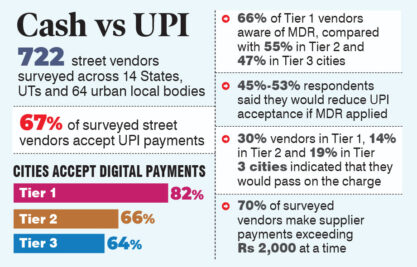
A survey by the Centre for Analytical Finance (CAF), at the Indian School of Business (ISB), revealed that 45 percent to 53 percent of street vendors would reduce payments via UPI if the MDR charges were applied.
Titled ‘UPI Utilisation and MDR Awareness Among Street Vendors’, the study was based on a survey of 722 street vendors across 14 states and union territories and 64 urban local bodies. The research examined UPI adoption, awareness of the proposed MDR framework and vendor responses to potential transaction charges.
The MDR framework proposes a 0.4 percent charge on transactions above Rs 2,000, while small merchants receiving up to Rs 1 lakh per month through QR-based payments are exempted. Originally scheduled for implementation on October 15, the rollout was postponed by the NPCI until after Diwali.
As per the study, among vendors who accept UPI payments, 64 percent were aware of the proposed charges, compared to 26 percent of those who do not accept UPI. Nearly, 70 percent of surveyed vendors make supplier payments exceeding Rs 2,000 at a time, placing these transactions within the threshold covered by the proposed framework.
Further, 10.4 percent of vendors reported that their suppliers had asked them to pay additional charges for UPI transactions in the 10 days preceding the survey. Among vendors who had already faced additional charges from suppliers, 30.8 percent indicated that they would pass on the cost to customers.
The CAF suggested that any shift away from digital transactions could have wider implications for financial inclusion, transaction transparency and access to formal credit for small businesses. It recommended introducing any proposed charges through limited pilot studies, tracking supplier demands, customer pricing and shifts to cash before a wider rollout, as well as conducting an independently reviewed account of the actual costs of operating UPI to inform decisions on how these costs should be distributed.
This content is published by Telangana Today and has not been created or edited by Hello Headlines. View original