‘Even a Cracker Bursting Several Metres Away Can Frighten a Dog’: A Vet on Keeping Street Animals Safe This Diwali
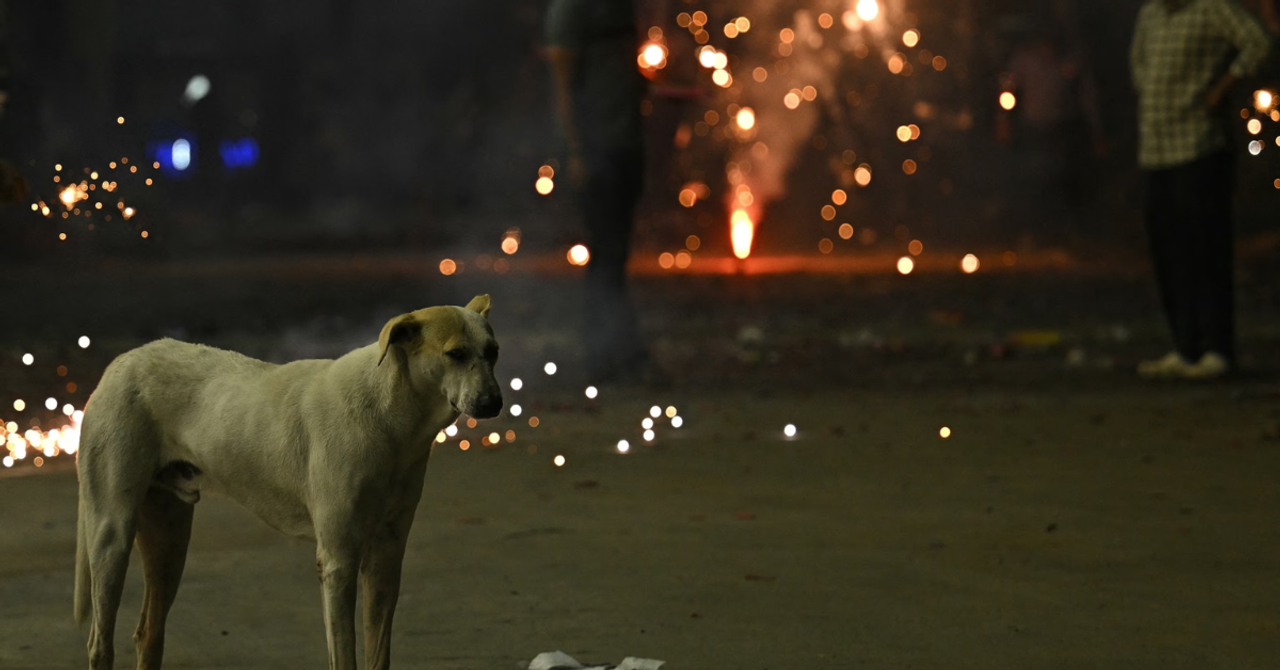
A firecracker goes off at the end of a residential lane. A dog sleeping beside a parked car suddenly gets up, its ears alert. Another blast follows.
Within seconds, the dog is running, looking for somewhere to hide. It may dart across the road, squeeze beneath a vehicle, or disappear into a nearby construction site.
While pet owners can prepare a safe space for their animals at home, street animals have no such protection. They depend on the people living around them to recognise their distress and respond.
Speaking to The Better India, Dr Vikas Godara, a small-animal veterinarian and soft-tissue surgeon with over 11 years of clinical experience in India and the United States, including emergency and critical care, explains that the impact of Diwali on animals goes beyond injuries caused directly by firecrackers.
He identifies three recurring categories of veterinary cases during the festive season: noise-induced anxiety, firecracker-related injuries, and gastrointestinal complications caused by ingesting discarded food and other objects.
Here is why community animals are particularly vulnerable, and what residents can do to make the celebrations safer for them.
When the noise becomes a source of fear
A dog's hearing is considerably more sensitive than a human's. Sounds that people may dismiss as occasional festive noise can become overwhelming for animals, particularly when firecrackers burst repeatedly and without warning.
Unlike humans, dogs cannot understand when a loud sound is likely to occur or when it will stop. The sudden blasts can trigger fear responses, including trembling, hiding, excessive barking, restlessness, and attempts to escape.
Repeated exposure to loud noise can cause extreme stress and disorientation. Vulnerable animals may also experience serious physiological distress, including shock and, in severe cases, potentially fatal cardiac complications.
Godara, who is also the founder of Vetezy, an online platform providing virtual/video vet consultations and same-day care access for pet parents in India, says, “Veterinary clinics see a noticeable increase in anxiety-related cases around Deepavali. Some dogs stop eating, while others become withdrawn or display signs of extreme fear. Puppies and community dogs can be particularly vulnerable. The impact is not limited to animals that are directly targeted by firecrackers. Even a cracker bursting several metres away can frighten a dog that has nowhere quiet to retr
Why street dogs bear the greater burden
A pet frightened by fireworks may have a family to comfort it, a familiar room to retreat to and access to veterinary care. A street dog does not necessarily have any of these.
Their vulnerability is also reflected in reports from Bengaluru during Deepavali 2025.
A report published by The New Indian Express on 24 October 2025 documented 30 – 40 cases received by Mylos Rescue over four to five days, according to its founder, Lakshmi Swaminathan. These included incidents of deliberate cruelty, with dogs' legs reportedly tied with firecrackers.
At Charlie's Animal Rescue Centre (CARE), manager Kirtan Aarti reported that seven to eight dogs had been found dead after being run over by vehicles along Ballari Main Road and the airport flyover while attempting to escape the noise.

Little Hearts Animal Healing Rescue Centre, founded by Rajkumar, received approximately 10 cases of cracker-related animal injuries. The incidents were reported from areas including Ullal, Kengeri and Banashankari.
These figures offer a glimpse of the risks animals face in urban neighbourhoods. They also point to an important distinction: the consequences of a noisy celebration are not experienced equally.
Firecracker injuries are only part of the problem
Burns, cuts and other physical injuries are among the immediate dangers of firecrackers. Crackers thrown towards animals can cause burns, while fragments and debris can injure their paws. Repeated exposure to loud blasts can also affect their hearing.
Godara says that the veterinary response depends on the nature and severity of each injury.
“Every patient needs their own tailored treatment plan,” he tells The Better India.
Dogs with physical injuries may require wound care, antibiotics and treatment for affected tissue. Animals experiencing severe anxiety need veterinary assessment and, in some cases, anti-anxiety medication.
The important thing, he explains, is that treatment cannot follow a single approach for every animal.
For residents, this means that an injured or distressed community dog should not simply be left to recover on its own. If an animal has suffered burns, is bleeding, appears disoriented or is struggling to move, people should contact a veterinarian or local animal rescue organisation.
Those attempting to help should also avoid handling a frightened or injured animal without taking precautions. An animal in pain may react defensively, even towards someone trying to assist it.
The danger that remains after the crackers stop
Once the celebrations wind down, another festive-season hazard often goes unnoticed: food waste.
“Sweets, leftover food, spoiled offerings and discarded packaging can end up in open spaces, dumping grounds and roadside bins. Community dogs and cattle searching for food may consume these without anyone knowing what they have eaten”, he explains.
Godara identifies gastrointestinal complications as another recurring concern during the festive period.

“Street dogs and cattle often forage through dumping grounds and open spaces, where they may consume spoiled food or objects that can cause toxicity and gastrointestinal complications.”
One common misconception, he says, is that feeding sweets to dogs only causes skin problems.
“There is a big myth that if you feed sweets to a dog, they would only get a skin issue. But that's not true. They can develop toxicity due to excessive sugar, gastrointestinal upset,” he explains.
This problem is not restricted to Diwali. People regularly leave household leftovers for community animals throughout the year. However, the quantity of discarded food can increase during festivals, making it more difficult to monitor what animals are consuming.
Feeding community dogs needs a little more care
Feeding street dogs is often one of the first ways residents express concern for animals in their neighbourhood. But good intentions do not always translate into safe feeding practices.
In residential areas, several people may feed the same dogs without coordinating with one another. Food may be left in different locations, sometimes without attention to its ingredients, freshness, or quantity.
Godara believes housing societies and neighbourhood groups need to take greater responsibility for monitoring these practices.
Referring to designated feeding areas, he says that such spaces need to be monitored to ensure people do not leave sweets, spoiled food or other potentially harmful leftovers.
“Even if the laws are in place, how much of them are followed? If somebody is feeding animals at designated areas, you can have someone who actually monitors what is being offered. But the answer is not always yes. Even people who love stray dogs do not necessarily follow these designated feeding practices,” he tells The Better India.
For him, enforcement alone is not enough. Residents must also understand what constitutes safe feeding.
Cruelty is another danger residents must recognise
Not every injury suffered by a street animal is accidental.
Godara draws attention to cases of deliberate harm and mishandling, including tying rubber bands around animals' limbs, throwing firecrackers at them and physically assaulting them.
He describes cases where rubber bands remain embedded in a dog's skin over time, eventually causing wounds as the animal grows. Community dogs may tolerate human handling, but that does not mean they are comfortable or unable to experience pain.
“These are injuries induced by human beings. I have seen many horrible examples of mishandling of street dogs. It comes in all forms and shapes,” he says.
Long guidelines may not always reach the people who interact with street animals every day. Instead, he suggests using short, memorable messages in regional languages that people can understand and repeat.
“Once we start talking about awareness, we cannot essentially force it upon anybody. It has to come from within. Something concise, something that sticks in people's heads and gets repeated over and over again, might help,” he explains.
Such campaigns, he adds, must reach beyond residents who regularly interact with street dogs. Domestic workers, security guards, gardeners, delivery personnel, dog walkers and families living in neighbouring localities are often among those who encounter community animals most frequently.
Their participation can make a difference, particularly on nights when firecrackers are being burst across several streets simultaneously.
What residents can do for pets and community animals
Protecting animals during Diwali does not always require specialist intervention. A few precautions taken before and during the celebrations can reduce their exposure to harm.
-
Alert neighbourhood residents: Inform security guards, domestic workers, delivery personnel and other residents about the risks of bursting crackers near animals.
-
Keep resting spaces safe: Avoid bursting crackers near places where dogs usually sleep or seek shelter. Check beneath parked vehicles before starting them.
-
Provide safe, suitable food and water: Do not feed community dogs sweets, spoiled food or festive leftovers. Ensure that food and water are placed in appropriate, monitored locations.
-
Watch for injured animals: If a dog is bleeding, burnt, limping or showing signs of severe distress, contact a veterinarian or animal rescue group rather than leaving it untreated.
-
Dispose of firecracker waste responsibly: Remove discarded cracker remains and packaging from places where animals forage or walk, while ensuring that debris is handled safely.
-
Coordinate with local feeders and rescuers: Neighbourhood groups can identify vulnerable animals, share emergency contact details and arrange help when required.
Collective care can make neighbourhoods safer
Godara believes neighbourhood-level participation is essential, including exploring temporary shelters or community-supported spaces where animals can receive care.
“Adoption is the only permanent solution, but not everyone will be willing or able to bring a community dog into their home. However, neighbourhoods can still contribute through collective care and support,” he says.
He emphasises that this cannot be achieved through a single institutional directive. It requires grassroots participation and cooperation.
There are already examples of residents and animal welfare groups taking this concern into public spaces.
In Kolkata, the West Bengal Animal Rights Activists' Front (WBARAF), a city-based forum of animal lovers that works to protect, rescue and advocate for community animals, organised a march against the use of illegal and loud firecrackers.
More than 100 members, led by the forum's president, actor Sreelekha Mitra, gathered outside the Academy of Fine Arts and marched towards Rashbehari More. Participants carried placards reading 'Let animals live in peace', 'Say no to firecrackers' and 'Celebrate kindness, not noise'.
The march highlighted the psychological and physical harm caused to community dogs, cats and birds by loud firecrackers, including hearing damage, disorientation and accidents.

Godara has also noticed a change in the number of injured community animals reaching veterinary clinics over the years.
“Initially, I used to see three dogs at my clinic after Diwali. Currently, what I am seeing is 30 dogs. That does not necessarily mean the problem has become worse. The dog population has also increased, and more people are now aware enough to bring them to a veterinarian,” he explains.
He believes awareness, social media documentation and greater public scrutiny have encouraged people to report cruelty and seek medical attention for injured animals. However, increased reporting does not mean the underlying problems have disappeared.
For a street dog, a neighbourhood is its home. Its resting place may be a pavement, a space beneath a staircase, or the corner of a residential lane.
It cannot choose to leave when the noise begins.
A celebration need not come at the cost of another living being's safety. Sometimes, making room for animals to live through the night in peace begins with not bursting a cracker where they sleep.
Sources:
'Deepavali celebrations cause rise in animal abuse, injuries in Bengaluru rescue centres': By Gayathri M Kurup, Publsihed on 24 October 2025
'Concern for pets dogs humans a week before festival of lights': By Suman.Chakraborti, Published on 1 November 2026
This content is published by The Better India and has not been created or edited by Hello Headlines. View original