Diwali pollution clouds Delhi as 45 monitors miss readings
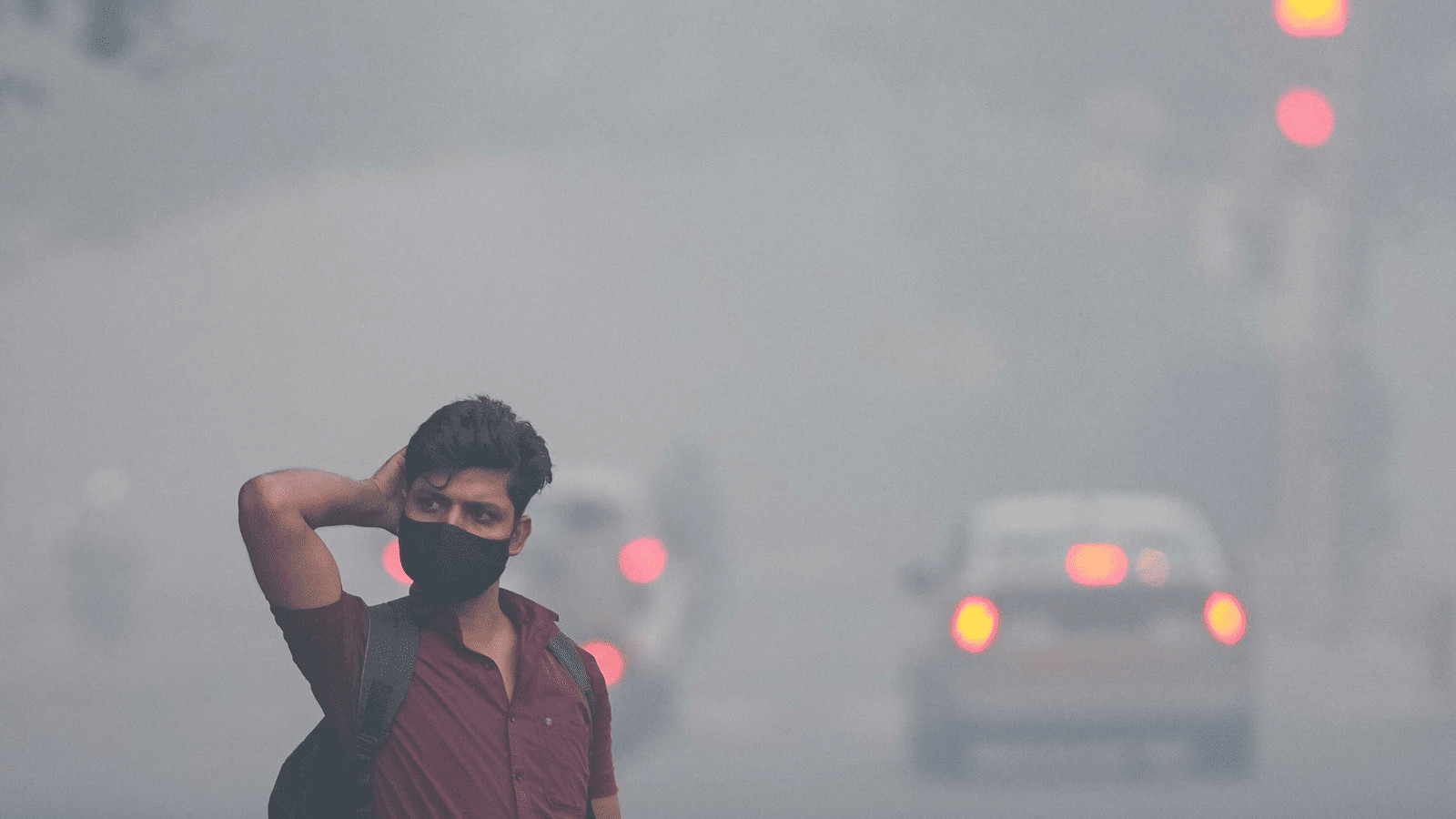
New Delhi: Delhi recorded its worst Diwali-night air quality in five years on Sunday, November 8. The following day, reports said 45 of the city’s 59 monitoring stations had missing hourly readings for at least one pollutant.
According to The Indian Express, Lodhi Road (IITM) had the most missing data, with 96 of the 192 expected hourly readings unavailable across eight monitored parameters. IIT Delhi (IITM) recorded 63 missing readings, followed by Burari Crossing (62), North Campus (55), Pusa (52) and CRRI Mathura Road (51).
Among pollutants, PM10 had the highest number of missing readings at 116, followed by PM2.5 at 55.
The gaps in particulate matter data were concentrated at stations including IIT Delhi, Burari Crossing, North Campus, Sonia Vihar and NSIT Dwarka for PM10, and DTU, Burari Crossing and NSIT Dwarka for PM 2.5.
Sulphur dioxide (SO₂) had the most missing hourly readings among individual pollutants, at 253, followed by ammonia (NH₃) with 221.
Missing data could mask pollution peaks
Manoj Kumar, lead pollution analyst at the Centre for Research on Energy and Clean Air (CREA), said several missing readings coincided with pollutant concentrations nearing the instruments’ upper measurement limit of 1,000 µg/m³.
With only 14 stations reporting complete data, treating these gaps as ordinary missing data while calculating hourly or daily averages and deriving the AQI could lead to an underestimation of pollution levels, he warned.
“A more conservative approach would be to flag these instances as potentially exceeding the instruments’ measurement range and use 1,000 µg/m³ as a lower-bound estimate, rather than treating them as zero or excluding them from calculations…,” Kumar said to The Indian Express.
‘Delhi’s polluted baseline will stay all winter’
Sunil Dahiya, lead analyst and founder at think tank Envirocatalysts, said what happened on Diwali night must be used to improve policy and enforcement in the city. “The bigger problem is what lies ahead. Delhi was already breathing more than twice the safe limit before a single cracker was burst. That polluted baseline will stay with us all winter unless we cut emissions at source across sectors (transport, industry, power, waste, construction and crop residue) throughout the wider airshed, not just within Delhi’s borders,” he said.
He said Diwali showed us how firecracker smoke, combined with stagnant winter air, can push the capital city’s pollution to hazardous levels. The CPCB’s official citywide PM2.5 average peaked at 592 µg/m³ at 1 am, nearly 10 times the 24-hour standard, he pointed out.
The real peak must have been higher. “Many monitors went silent after readings close to 1,000 µg/m³, the most they can record, and several stayed offline for five hours or more. Following the stations that kept reporting, we estimate the city peaked near 800 µg/m³,” Dahiya said.
“Firecrackers drove most of the spike. SO₂ nearly quadrupled, and most of the rise came after the 10 pm deadline. Even at 8 am on Monday, PM 2.5 was still close to 350 µg/m³,” he said.
Get the latest updates in Hyderabad City News, Technology, Entertainment, Sports, Politics and Top Stories on WhatsApp & Telegram by subscribing to our channels. You can also download our app for Android and iOS.
This content is published by The Siasat Daily and has not been created or edited by Hello Headlines. View original