Sonia Gandhi recounts why she chose Manmohan Singh to lead UPA government
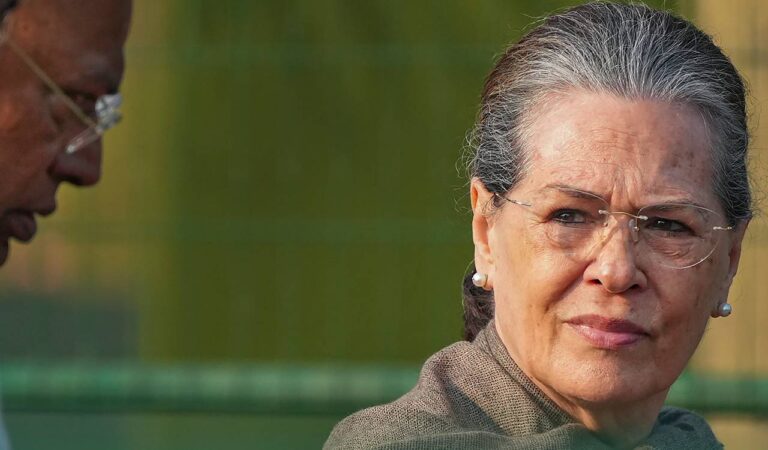
New Delhi: Then Congress president Sonia Gandhi picked Manmohan Singh to lead the country in 2004 as she thought of him as a person of “unquestionable” integrity with a deep understanding of governance, and that he would also assuage the doubts of many about the UPA’s ability to manage and continue the policies that began years ago.
Gandhi gives an insight into the decision in her long-awaited memoir — “Belonging: A Journey of Love”, published by HarperCollins India, that hit the stands on Tuesday.
After she finally decided to turn down the post of prime minister, a call had to be taken on who indeed would assume the office and take the oath of allegiance the following day.
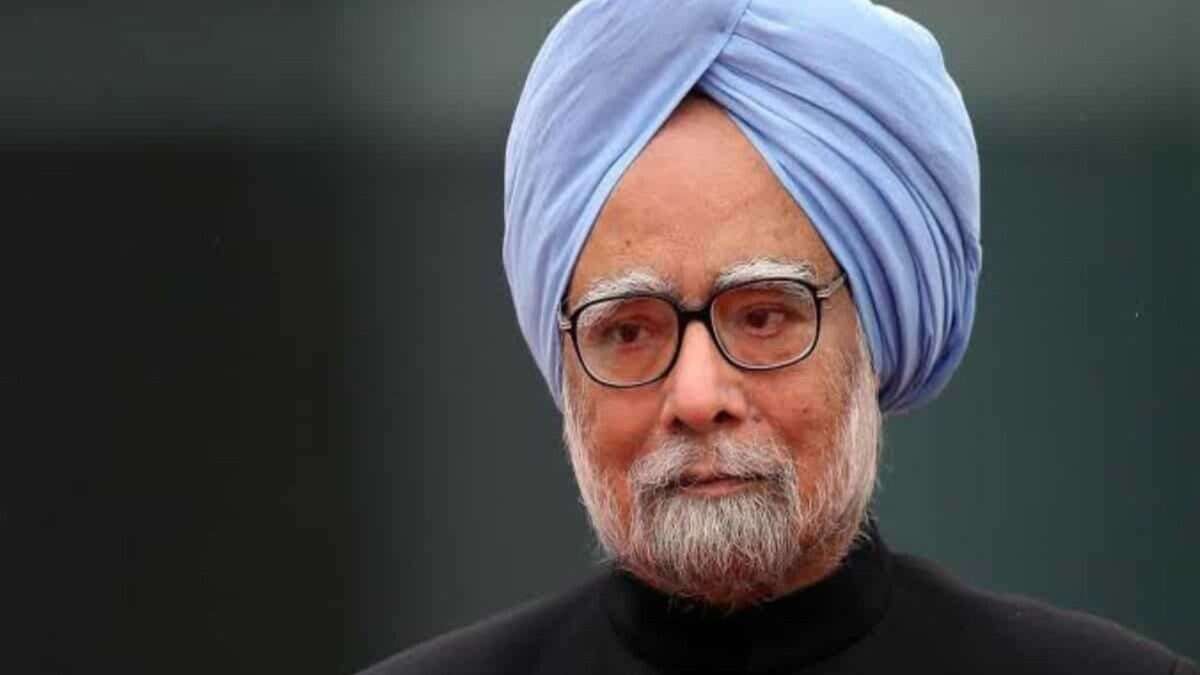
“There were several senior colleagues, seasoned and qualified for the post, who would have been more than willing to accept it but amongst all of them was one who had long been in my sight as a person above reproach, and possessed a deep and consummate understanding of governance. That was Dr Manmohan Singh, a member of the Congress Working Committee,” Gandhi says in the book.
An experienced economist, he had as minister of finance in the early 1990s who introduced economic reforms in India under the then prime minister P V Narasimha Rao, she points out.
“He was not allied to any camp in the party. Over a period of time, the Congress had been painted as being left of centre, and our government would now be supported by the Communist parties as well. I thought Dr Manmohan Singh would assuage the doubts of many about our ability to manage and continue the policies that had been begun years ago,” she says, elaborating on the reasons why Singh was chosen to lead the country.
Singh was born into a Sikh family in a village in Punjab that is now part of Pakistan, and having lost his mother at an early age, he knew hardship and struggle well, Gandhi says.
“His keen intellect and hard work had taken him from a remote village school to the universities of Oxford and Cambridge, and on from there to international fora. Aside from all his accomplishments as a scholar and technocrat, what I knew best about Dr Singh was that he had a kind and compassionate heart, and his integrity unquestionable,” she says.
“I knew that our beloved country would be safe in his hands. I held consultations with my senior colleagues, and they seemed more reconciled to my decision now. They didn’t oppose Dr Manmohan Singh’s name when I suggested it to them; no one could contest the depth of his experience or his reputation as an honourable man who would do right by India,” she says.
He was sounded out privately on whether he would accept the post and after an initial refusal, his hesitation was overcome and he was persuaded to agree, Gandhi recalls.
Earlier, as the leader of my party and as the chairperson of the Congress Parliamentary Party, it was her duty to call on the president and stake claim to form the next government.
“I asked my colleague Dr Manmohan Singh to accompany me. It was May 18 when we arrived at Rashtrapati Bhawan. Its vast imposing walls stood tall against the sweltering sun. A flock of pigeons flitted about a large sandstone fountain at the centre of what is called the Eastern Court of the palatial building.
“I felt a sudden surge of emotion as our cars pulled up at the entrance. I’d been there many times before with my mother-in-law and with Rajiv, but this time I was walking through the long, dark corridors of Rashtrapati Bhawan for a different purpose,” she says in the book.
“We returned from Rashtrapati Bhawan to my home at 10, Janpath. I saw Dr Singh to his car. There had been no discussion about the prime ministership between the two of us on the drive back nor had there been before that. I said nothing to him even now. He had quite naturally assumed, like everyone else, that it would be me,” she says and then goes on to narrate how she remained internally conflicted on whether she should take up the PM post or not until she went by her “inner voice”.
The memoir recounts her marriage to Rajiv Gandhi and her introduction to her mother-in-law, former prime minister Indira Gandhi, as well as her efforts to adjust to life in India, including learning Hindi, wearing saris and adapting to Indian food and culture.
It covers the major tragedies that transformed the Gandhi family, including the death of Sanjay Gandhi in a plane crash, Indira Gandhi’s assassination in 1984 and Rajiv Gandhi’s assassination in 1991.
The memoir also delves into political events surrounding the Congress-led alliance’s victory in the 2004 elections, when Sonia Gandhi declined to become prime minister and instead led the party and its alliance, which governed India for a decade.
This content is published by Telangana Today and has not been created or edited by Hello Headlines. View original