Chhath Puja 2026: Why Women Wear Yellow, Orange And Red Sarees During The Festival
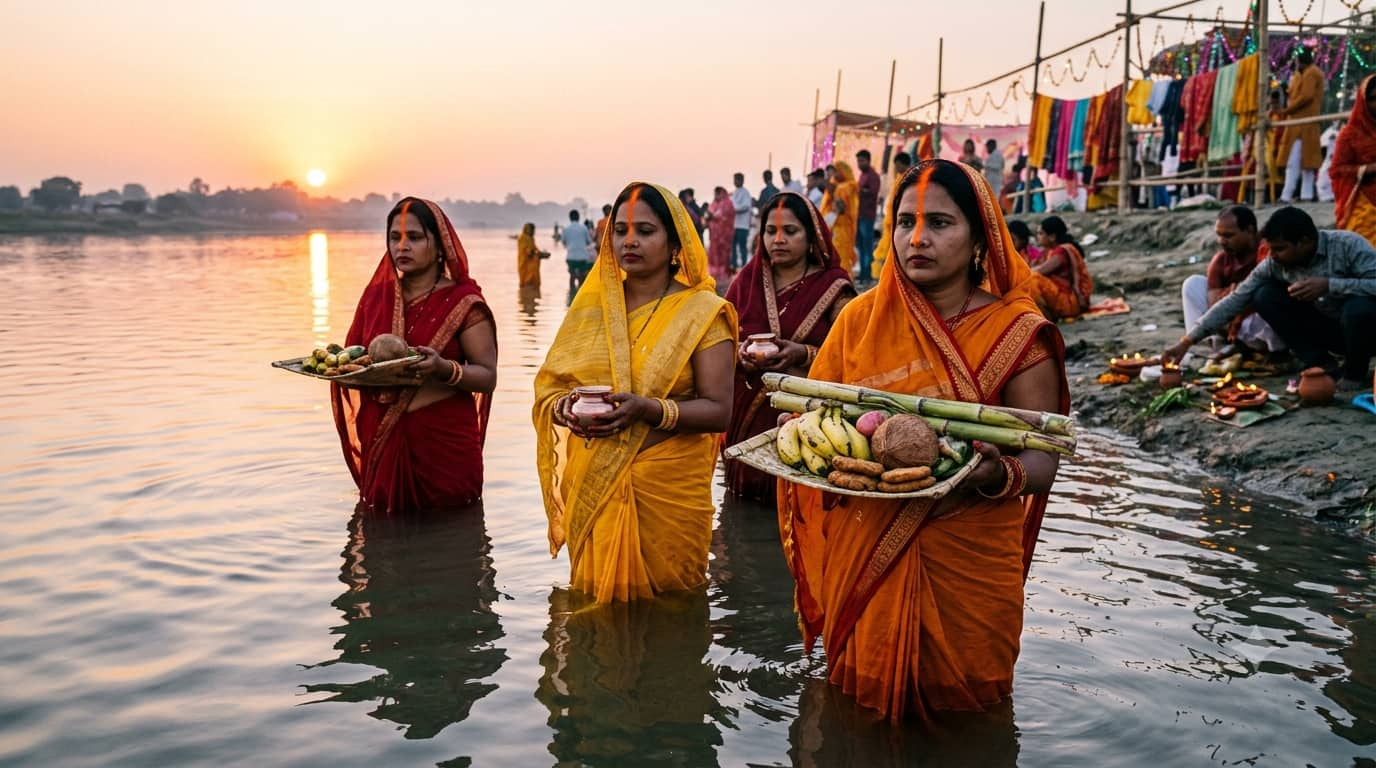
Chhath Puja is known for its strict rituals, traditional offerings, and distinctive festive attire. During the four-day celebration, women observing the vrat are often seen wearing yellow, orange, red, or maroon sarees while offering prayers to Surya Dev and Chhathi Maiya. These colours are not always chosen for their appearance; each has a place in Hindu customs and carries a traditional association with faith, purity, or marital well-being. The saree, sindoor, and other elements of the attire also reflect regional practices, particularly in Bihar and eastern Uttar Pradesh. Here is a closer look at the significance behind these Chhath traditions.
Chhath Puja: Significance Of Yellow And Orange Sarees
Why Is Yellow Considered Auspicious?
Yellow is traditionally associated with sunlight, prosperity, purity, and fresh beginnings. Since Chhath Puja is dedicated to Surya Dev, many women choose this colour as a mark of respect for the Sun God.
The shade is also linked to haldi (turmeric), which is widely used in Hindu religious ceremonies. Turmeric is considered auspicious and is associated with purification and protection. Yellow sarees, particularly those with golden tones, are therefore a popular choice for the evening and morning Arghya rituals.
ALSO READ | Why Chhath Puja Is More Than A Festival For Bihar's Migrants Living Away From Home
What Does Orange Represent During Chhath?
Orange, often referred to as kesariya or saffron, is associated with devotion, sacrifice, and spiritual discipline in Hindu traditions. The colour also resembles the shades of the sky during sunrise and sunset, the two important occasions when devotees offer Arghya to Surya Dev. This connection makes orange a meaningful choice for the festival.
Women often opt for saffron, kesariya, and other orange shades for their traditional Chhath outfits, combining festive dressing with religious customs.
ALSO READ | Chhath Puja 2026: Why Is Bottle Gourd Rice A Must-Have On Nahay-Khay? Know Religious And Scientific Reasons
Why Do Married Women Wear Red?
Red holds an important place in Hindu marriage traditions. It is associated with saubhagya, which refers to the good fortune and well-being of a married woman. The colour is also linked with Shakti, prosperity, and auspicious beginnings. During Chhath, many married women wear red or maroon sarees while observing the fast. Their prayers are traditionally associated with the well-being of their children and families.
However, wearing red is not compulsory, and clothing preferences can differ between households and regions.
Why Is Long Sindoor Applied During Chhath?
One of the recognisable customs followed by married women during Chhath is applying sindoor along the hair parting, sometimes extending the line towards the tip of the nose. According to popular belief in Bihar and eastern Uttar Pradesh, a long line of sindoor represents prayers for the husband's long life and the family's well-being. Red and orange sindoor are commonly associated with marital auspiciousness.
What Is The Significance Of Wearing A Saree?
The saree is a traditional choice of clothing for women observing Chhath, particularly in Bihar and neighbouring regions. Many vratins wear a new or freshly washed saree during the festival as part of their household customs. Some families prefer unstitched garments, while others follow different clothing practices. Cotton sarees are also popular because they are comfortable to wear while preparing prasad, carrying offerings, and standing in water during the Arghya rituals.
Chhath Puja 2026: What The Traditional Colours Represent
Yellow, orange, and red each have a distinct cultural association during Chhath Puja. Yellow is linked with Surya Dev and purity, orange represents devotion and spiritual discipline, while red is associated with marital well-being and auspiciousness. These customs reflect the regional traditions followed by families during the festival. Chhath Puja 2026 will be observed from November 13 to 16, with Sandhya Arghya on November 15 and Usha Arghya on November 16.
This content is published by ABP Live - Lifestyle and has not been created or edited by Hello Headlines. View original