Children's Day 2026: 10 Interesting Facts About Jawaharlal Nehru You May Not Know
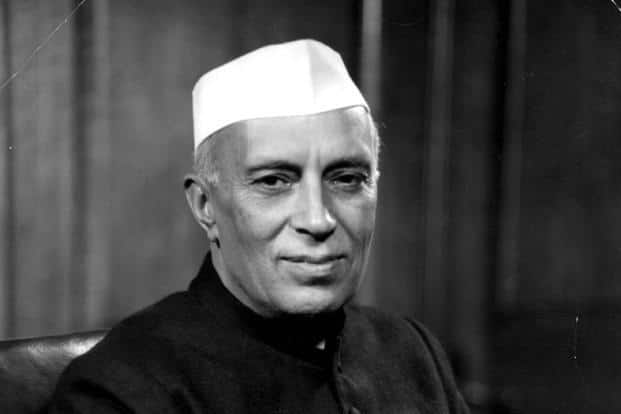
Jawaharlal Nehru, India's first Prime Minister, is remembered for shaping the country after Independence and for his affection for children, which earned him the name ‘Chacha Nehru’. India observes his birth anniversary, November 14, as Children's Day. Beyond his public image, Nehru's life included years in prison during the freedom struggle, a long-standing interest in books and writing, and relationships that have remained subjects of historical discussion. Some stories about him are well documented, while others are disputed or difficult to verify. Here are 10 lesser-known facts, with the claims and context explained here too.
Nehru's Early Life And Freedom Struggle
1. Nominated For The Nobel Peace Prize 11 Times
Jawaharlal Nehru was reportedly nominated for the Nobel Peace Prize 11 times, although some accounts suggest the number could be higher. His name was considered several times during the 1950s, reportedly in recognition of his contribution to building an independent and modern India. However, he never received the prestigious award.
Interestingly, Mahatma Gandhi, Nehru's political mentor, was also nominated for the Nobel Peace Prize five times but never won it.
2. Received His Early Education At Home
Before attending schools in England, Nehru was educated at home until he was around 15 years old. His father, Motilal Nehru, a prominent barrister and political leader, took a keen interest in his son's education. He arranged for private tutors and governesses to teach Nehru, ensuring that he received a broad academic foundation.
Nehru later attended Harrow School in England before studying at Trinity College, Cambridge.
3. Spent Almost A Decade In British Prisons
Nehru's involvement in India's freedom struggle came at a considerable personal cost. He was arrested nine times by the British authorities and spent a total of 3,259 days in prison, according to accounts cited in the original list compiled by PSU Watch.
This amounts to almost nine years of imprisonment. His time behind bars did not stop him from writing, reading, and documenting his thoughts on India's political and social future.
ALSO READ | Chhath Puja 2026: Why Do Devotees Sleep On The Floor During The Four-Day Festival?
Nehru's Personal Life And Lesser-Known Stories
4. His Interview Appeared In Playboy Magazine
One of the more unusual stories associated with Nehru concerns an interview published in the October 1963 edition of Playboy magazine. The publication featured his picture on its cover, making him one of the first Indians to appear in the magazine.
The authenticity of the interview, however, has remained disputed. Although it was presented in a question-and-answer format, it is unclear whether Nehru personally spoke to the magazine or whether the answers were compiled from his earlier speeches and public statements.
The published conversation covered subjects including Mahatma Gandhi, Rabindranath Tagore, Chinese aggression, and the Non-Aligned Movement. The question of whether Nehru actually gave the interview remains unresolved.
5. Nehru Was Reportedly Fond Of 555 Cigarettes
Nehru was known to smoke, and several photographs of him show him holding cigarettes. According to popular accounts, the former Prime Minister particularly favoured the cigarette brand 555. Although this detail has often featured in stories about his personal habits, the claim about 555 being his preferred brand is not firmly established.
6. His Close Bond With Edwina Mountbatten
Nehru's relationship with Edwina Mountbatten, wife of India's last Viceroy, Lord Louis Mountbatten, has been discussed for decades.
In her 2012 book Daughter of Empire: Life as a Mountbatten, Edwina's daughter Pamela Hicks wrote about the deep affection and respect shared by her mother and Nehru. She described their bond as a "profound relationship" that developed after the Mountbattens arrived in India in 1947.
Pamela also maintained that the two shared a close emotional connection but did not have a physical relationship. Their correspondence, which included numerous letters, reflected the importance they attached to each other. Whether their relationship was platonic or romantic has remained a subject of historical discussion.
ALSO READ | Children's Day 2026: 100+ Wishes, Messages And Greetings To Share With Kids
Nehru's Political Legacy, Books And Final Journey
7. His Role In India's Secular Identity
Nehru strongly supported secularism and believed that India should remain a country where people of different religions could live together. His political outlook influenced the direction of the newly independent nation.
However, an important constitutional distinction needs to be noted. Article 44 of the Indian Constitution, which deals with the Uniform Civil Code, was part of the original Constitution and was not introduced by Nehru as an article declaring India a secular state. The word 'secular' was added to the Preamble through the 42nd Constitutional Amendment in 1976. Nehru's contribution to India's secular outlook is better understood through his political philosophy and policies.
8. Survived Four Assassination Attempts
Nehru reportedly survived four attempts on his life during his political career. According to accounts cited by PSU Watch, these incidents took place in 1947, 1955, 1956, and 1961.
One of the reported incidents involved a rickshaw puller in 1955. The other alleged attempts were linked to the turbulent political environment of the period. Despite these threats, Nehru continued his public engagements and political responsibilities.
9. Wrote His Autobiography During His Prison Years
Nehru was not just a political leader but also an accomplished writer. He wrote his autobiography, Toward Freedom, during his imprisonment in the 1930s. The book offered an account of his childhood, political journey, experiences in the freedom movement, and views on India's future.
His writing continued to attract readers long after Independence. Some of his other notable works include The Discovery of India and Glimpses of World History.
10. More Than 1.5 Million People Attended His Cremation
Nehru died on May 27, 1964, following a heart attack. His death marked the end of an important chapter in India's political history.
According to historical accounts, more than 1.5 million people gathered to witness his cremation in New Delhi. The enormous turnout reflected the public attention and emotional response surrounding the death of the country's first Prime Minister. His funeral procession and cremation were among the largest public gatherings witnessed in independent India.
This content is published by ABP Live - Lifestyle and has not been created or edited by Hello Headlines. View original