Why Everybody Loves a Good Drought is a must-read book
What does poverty look like beyond the statistics, government reports and economic discussions?
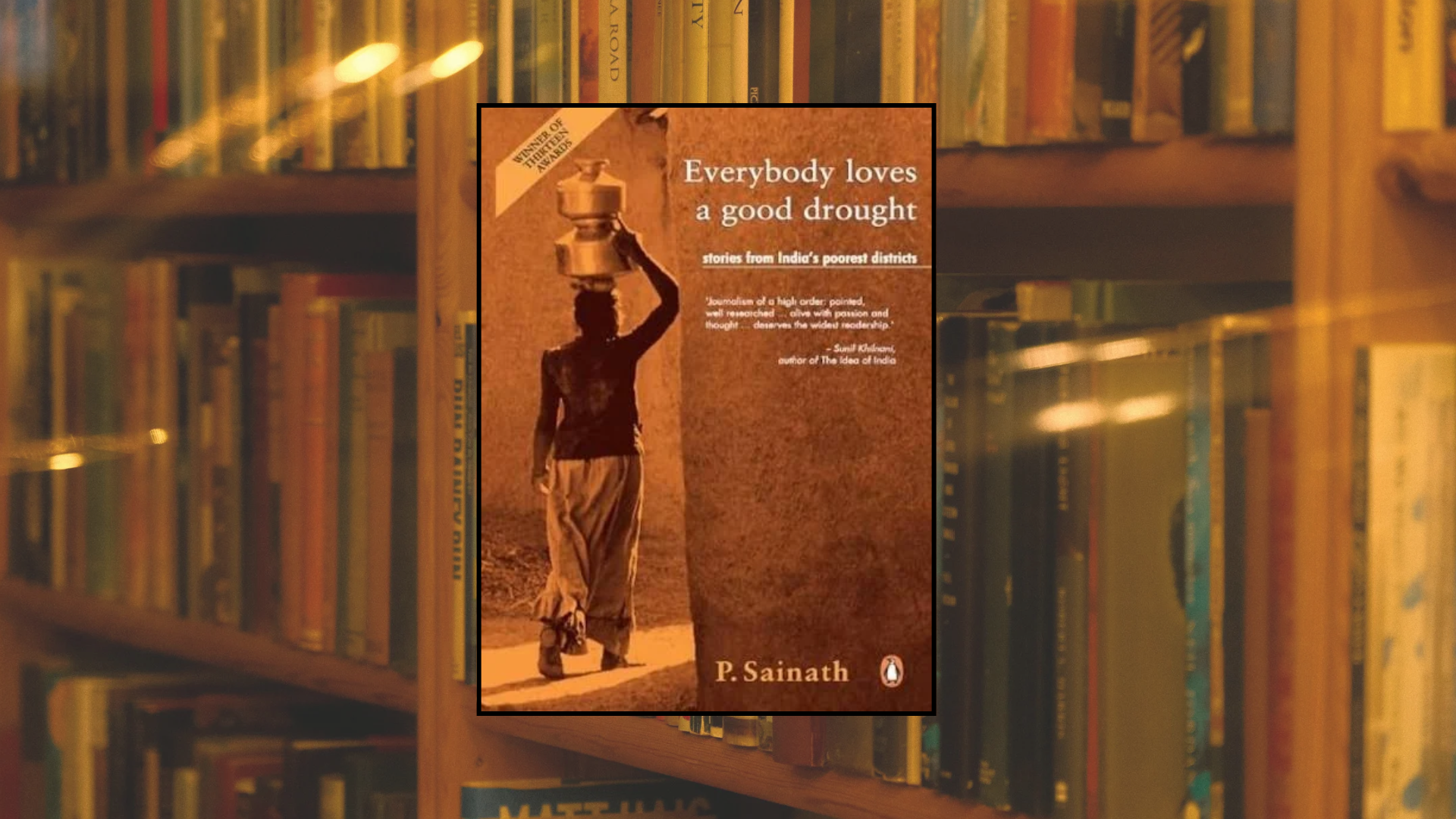
What happens when development projects promise progress but leave the poorest communities struggling to access basic necessities? These are some of the difficult questions explored in Everybody Loves a Good Drought: Stories from India's Poorest Districts by Palagummi Sainath.
First published in 1996, this landmark work of investigative journalism examines rural poverty, inequality and the realities of development in India.
Through deeply researched reportage and stories from some of the country's poorest districts, Sainath brings attention to communities that often remain overlooked in mainstream discussions.
Rather than presenting poverty through numbers alone, the book focuses on the people living through it. It explores their everyday struggles with healthcare, education, displacement, debt and government policies.
5 Reasons why Everybody Loves a Good Drought deserves a place on your reading list
1. It shows the human face of poverty
Poverty is often discussed through statistics, income levels and economic indicators. However, these numbers rarely capture the everyday experiences of people struggling to access food, healthcare, education and other necessities.
In Everybody Loves a Good Drought, Sainath moves beyond these figures to document the lives of India's rural communities. Through his reporting, readers encounter people whose circumstances reveal the difficulties of living in regions affected by economic hardship and inadequate public services.
The book explores how poverty influences nearly every aspect of life, from children's education to access to medical treatment and opportunities for employment.
By focusing on individual experiences, Sainath makes an important point: poverty is not simply an economic condition but a reality that shapes people's choices, opportunities and futures.
2. It questions what development really means
Development is generally associated with better infrastructure, economic growth, government schemes and improved living standards. But what happens when the benefits of development fail to reach the people who need them most?
This is one of the central questions explored throughout the book.
Sainath investigates how development initiatives and government programmes sometimes fail to address the actual needs of rural communities. He highlights the gap between official promises and the experiences of people living in the affected regions.
The book also examines displacement caused by development projects, showing how communities can lose their homes, livelihoods and connections to their surroundings in the name of progress.
It encourages readers to question whether development can truly be considered successful when its benefits are unevenly distributed.
3. It exposes the gaps in India's rural healthcare and education
Access to healthcare and education plays a significant role in determining the opportunities available to individuals and communities. Yet, for many rural families, these basic services can remain difficult to access.
Sainath dedicates considerable attention to the challenges surrounding rural healthcare and education.
The book documents issues such as inadequate medical facilities, preventable illnesses, shortages of resources and the difficulties faced by children trying to access meaningful education.
It also explores the distance between government policies and the conditions experienced by ordinary people.
These accounts highlight how a lack of essential services can reinforce cycles of poverty, making it harder for future generations to improve their circumstances.
4. It reveals how poverty and inequality are connected to power
One of the book's most important themes is the relationship between poverty, political power and economic inequality.
Sainath examines how local power structures, corruption, debt and exploitation affect vulnerable communities. He explores the circumstances of people who depend on landlords, moneylenders, contractors and government institutions for their livelihoods.
The book also questions why development resources and public assistance do not always reach their intended beneficiaries.
By examining these interconnected problems, Sainath shows that poverty cannot be understood simply as a lack of money. It is also connected to unequal access to resources, opportunities and decision-making power.
This perspective makes the book particularly relevant to readers interested in understanding the deeper causes of social and economic inequality.
5. It demonstrates why ground-level journalism matters
Perhaps the most important reason to read Everybody Loves a Good Drought is its approach to journalism.
Instead of relying entirely on official statements and government reports, Sainath travels to rural communities, meets people and documents their experiences firsthand.
His reporting brings attention to individuals and communities that are often missing from mainstream news coverage. Their stories reveal the realities behind policies, development programmes and economic decisions.
The book also raises questions about the responsibility of the media to report on issues affecting marginalised communities.
For aspiring journalists, writers and readers interested in public affairs, it offers an important example of how patient, field-based reporting can uncover stories that deserve wider attention.
About the Author: Palagummi Sainath
Palagummi Sainath is an Indian journalist, author and rural affairs expert known for his extensive reporting on poverty, inequality and rural communities.
He previously served as the Rural Affairs Editor of The Hindu, where he spent years reporting on the challenges faced by people across rural India.
In 2007, he received the Ramon Magsaysay Award for Journalism, Literature and Creative Communication Arts in recognition of his contribution to journalism.
In 2014, Sainath founded the People's Archive of Rural India (PARI), an independent multimedia platform documenting the lives, livelihoods and challenges of rural communities across the country.
His work has consistently focused on bringing the experiences of underrepresented communities into public conversations.
Final thoughts
Everybody Loves a Good Drought is more than a book about rural poverty. It is an examination of the systems, policies and inequalities that shape the lives of millions of people.
Through detailed reporting and human stories, Palagummi Sainath challenges readers to look beyond economic statistics and question what development means for those who remain at the margins.
Although the book was first published in 1996, its central concerns about poverty, governance, healthcare, education and inequality continue to make it an important work of Indian journalism.
For anyone interested in understanding rural India, social justice, public policy or investigative journalism, this book is an essential addition to their reading list.
This content is published by YourStory and has not been created or edited by Hello Headlines. View original