Gaza to Dublin, Texas to Hyderabad: Voices of Palestine solidarity
Hyderabad: For some, standing with Palestine is a matter of faith. For others, it is about humanity, justice and the belief that everyone deserves to live in freedom and safety. Around the world, people have taken to the streets, joined campaigns and spoken out in support of Palestinians.
Solidarity with Palestinians did not begin in October 2023. For decades, people have campaigned against the occupation, displacement and denial of Palestinian rights. However, Israel’s war on Gaza since October 7, 2023, has brought the issue to the centre of public debate in many countries, including India.
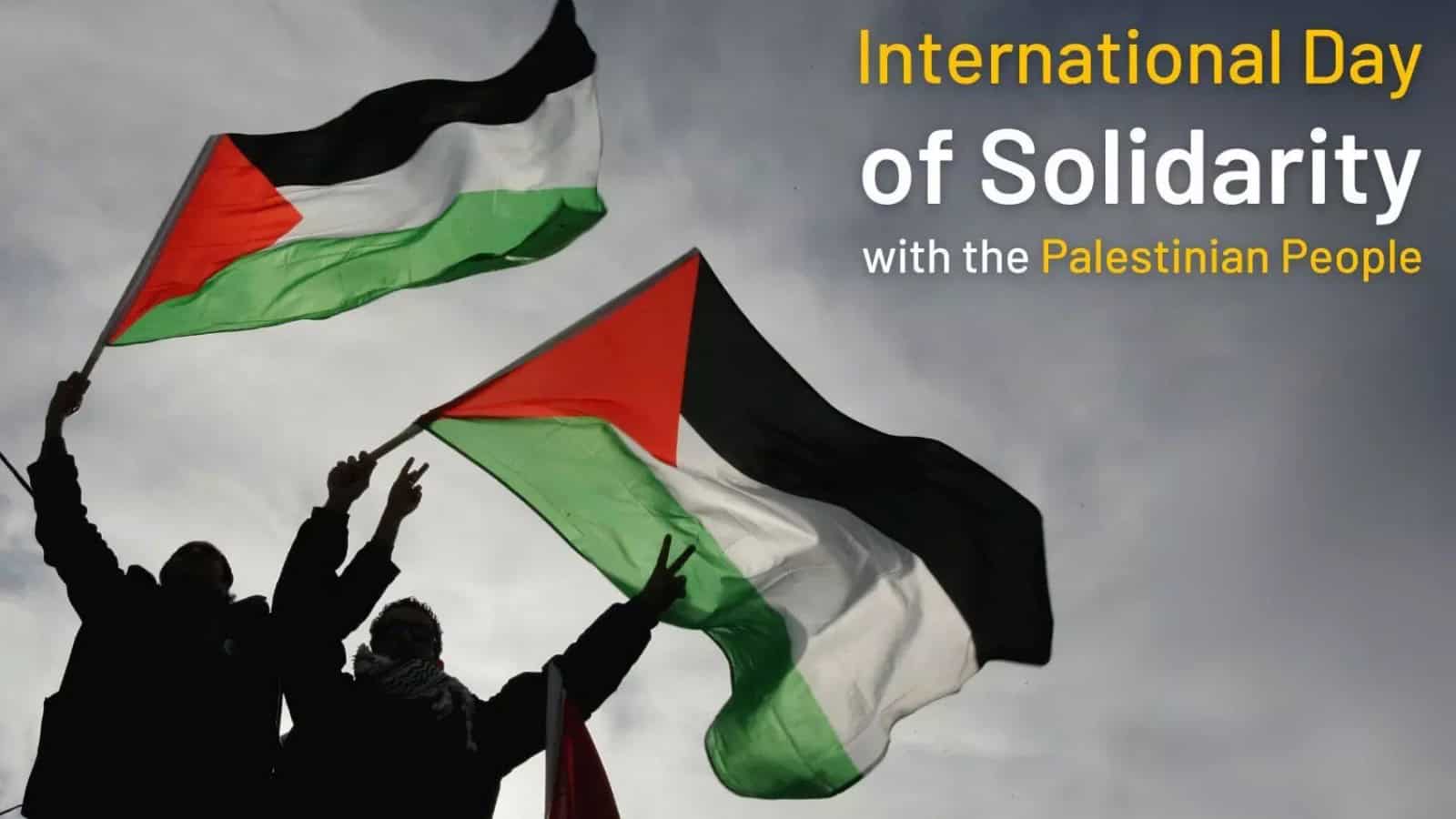
On the International Day of Solidarity with the Palestinian People, observed on November 29, Siasat.cominterviewed researchers, journalists, activists, students and general people from different countries to understand why they stand with Palestinians, how their views have changed and whether growing public support has made a difference to government decisions.
Why November 29 matters
The UN General Assembly established the day in 1977, and it has been observed since 1978. November 29 marks the anniversary of Resolution 181 (II) of 1947, which proposed dividing British Mandate Palestine into separate Arab and Jewish states.
What do the polls say?
Views have changed in several parts of the world, but each survey measures something different. An unfavourable view of Israel does not automatically mean support for Palestinian statehood, just as sympathy for Palestinian civilians does not necessarily indicate support for a particular political organisation.
A February 2026 Gallup survey found that 41 per cent of Americans sympathised more with Palestinians, compared with 36 per cent who sympathised more with Israelis. In 2023, 31 per cent sympathised more with Palestinians, while 54 per cent favoured Israelis.
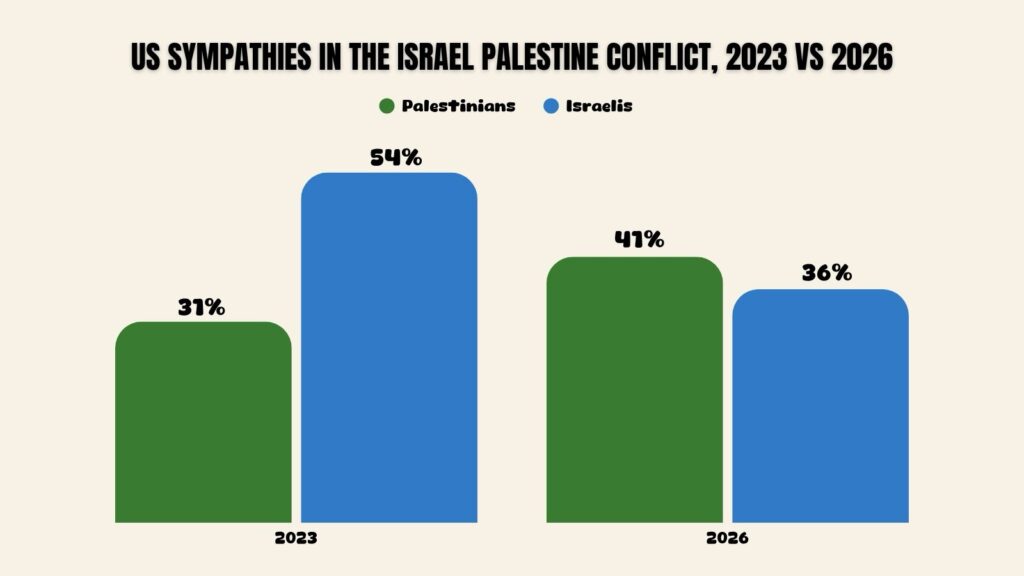
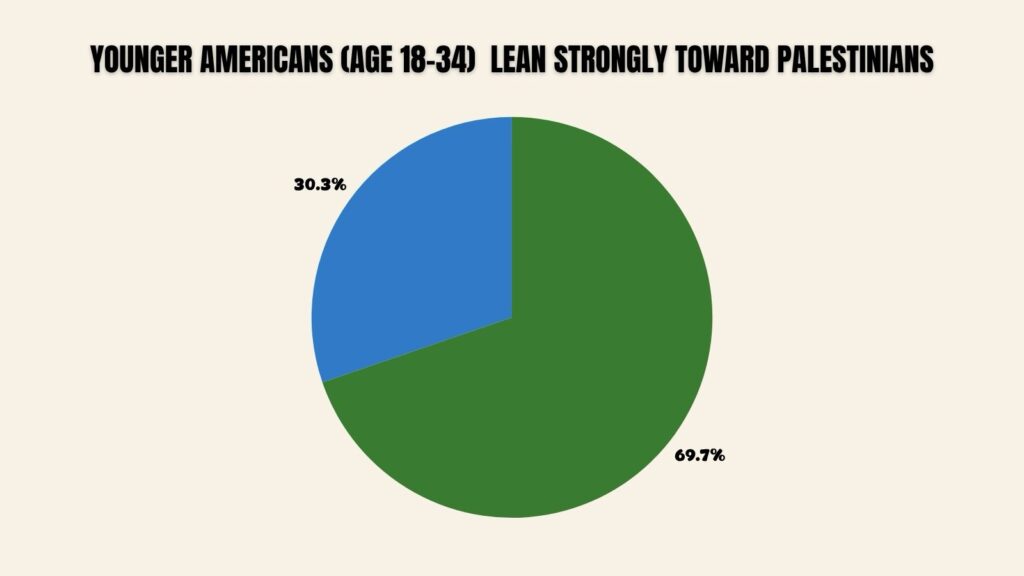
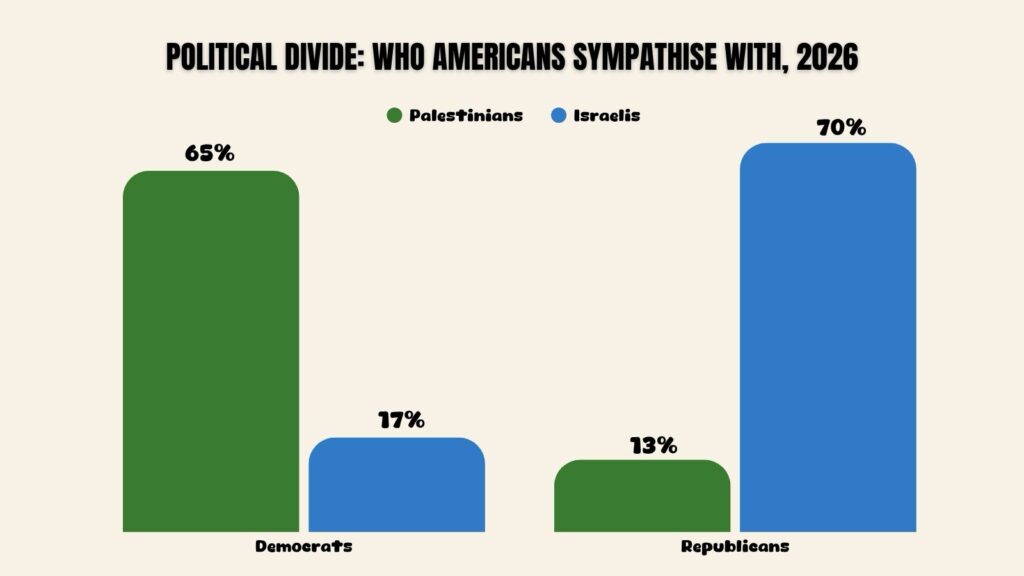
Among adults aged 18 to 34 in the 2026 survey, 53 per cent sympathised more with Palestinians and 23 per cent with Israelis. Political divides remained, with 65 per cent of Democrats sympathising more with Palestinians and 70 per cent of Republicans choosing to side with Israelis.
A Pew Research Center survey of 44,657 adults in 36 countries, conducted between February 8 and May 13, 2026, found that a median of 67 per cent had an unfavourable view of Israel. In the United Kingdom, the figure was 69 per cent, up from 61 per cent in 2025. In Germany, it rose to 73 per cent from 64 per cent.
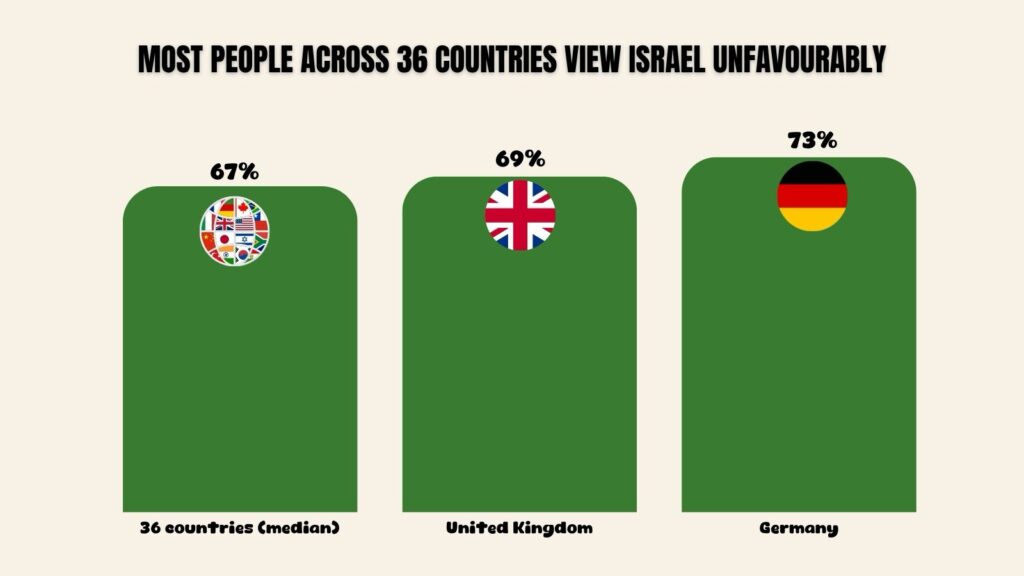
These figures measure attitudes towards Israel, not support for Palestinian rights or an independent Palestinian state.
The Palestinian perspective
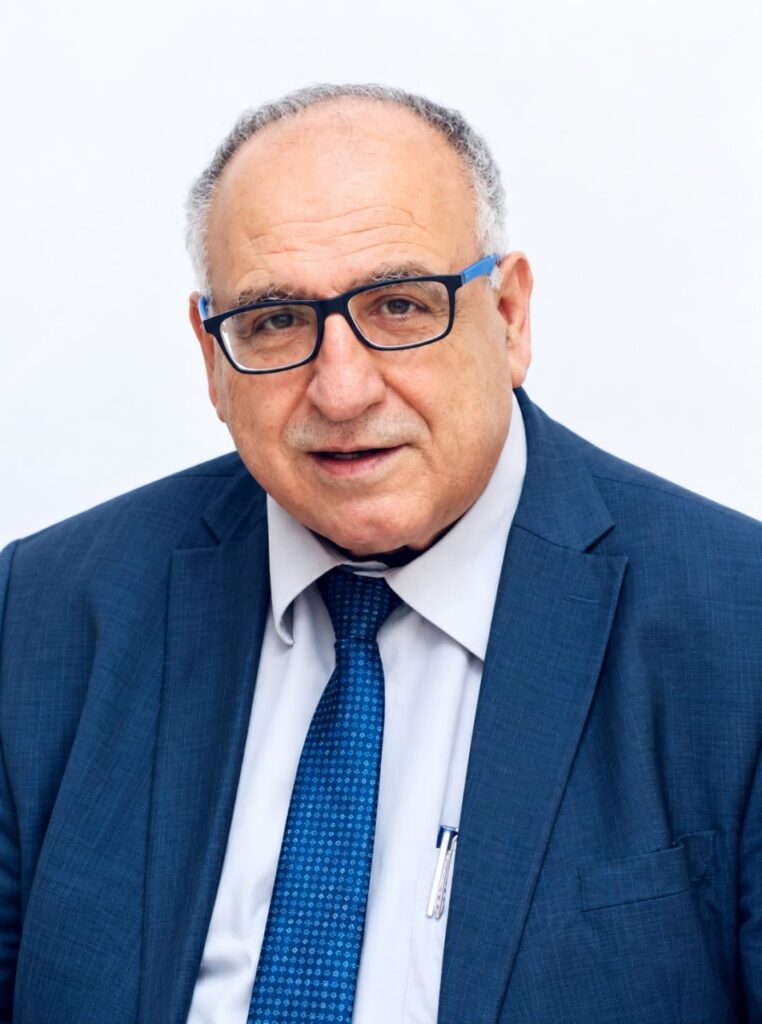
Dr Nabil Kukali, founder and president of the Palestinian Center for Public Opinion (PCPO), told Siasat.com that understanding international attitudes toward Palestine “requires us to begin with the perspectives of Palestinians themselves.”
A PCPO survey of 442 Palestinian adults in the West Bank, including East Jerusalem, and Gaza, conducted from October 1 to 18, 2026, found that 74.4 per cent supported an independent Palestinian state alongside Israel, and 60.4 per cent supported a binational state in which both people would have full and equal rights. These were separate questions, not competing choices.
“These findings suggest that Palestinian political aspirations cannot be reduced to a single institutional formula,” Kukali said.
In a November 2025 survey, 53.6 per cent of Palestinians said they were less or much less convinced that peace was possible than before October 7, 2023. As many as 26.7 per cent were more convinced and 17.6 per cent said their views had not changed.
“Public opinion does not automatically govern foreign policy, but neither can governments assume that established public attitudes will remain unchanged indefinitely,” he cautioned.
Across the Middle East
Dr Michael Robbins, director and co-principal investigator of Arab Barometer, told Siasat.com, “The Palestinian issue is central to the views of citizens across the Middle East and North Africa.”
Opinion shifted sharply after the Gaza campaign began and President Joe Biden pledged “ironclad” US support for Israel. In Tunisia, favourable views of the United States fell from 40 per cent on October 6, 2023, to 10 per cent three weeks later. In Jordan, they fell from 51 per cent in 2021–22 to 26 per cent in 2025; in Lebanon, from 42 to 27 per cent.
Rising favourable views of China in some countries, he said, “may reflect less China’s support for the Palestinian cause than the logic of ‘my enemy’s enemy is my friend.’”
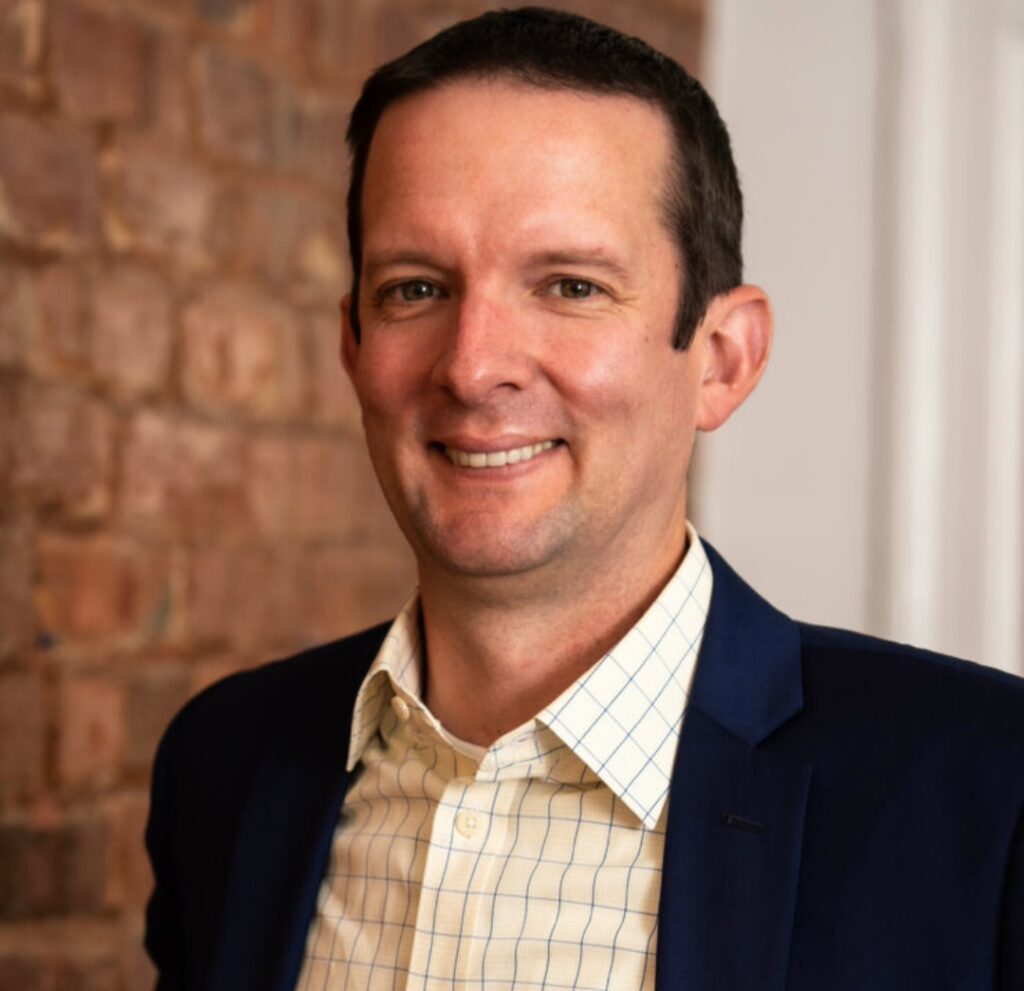
Support for normalisation with Israel remains low in Lebanon, Morocco, Iraq and Syria, but rises if Israel were to recognise a Palestinian state. “The data strongly suggest that Arab public would prefer their governments to take stronger action toward Israel,” Robbins said, adding that “anger at Israel’s actions in Gaza transcends age divides.”
Palestinians say solidarity has given them hope
Shuruq Asad, a West Bank-based journalist and founder of the Palestine Journalism Hub, said international solidarity grew after October 2023, though restrictions and censorship on social media held it back. “For us, this solidarity is more than a political statement. It is a reminder that our humanity is seen, that our voices matter,” she told Siasat.com.
But she does not believe it has moved governments. “Honestly, I don’t think it has changed their decisions. If it had, we would not still be witnessing the genocide in Gaza.”
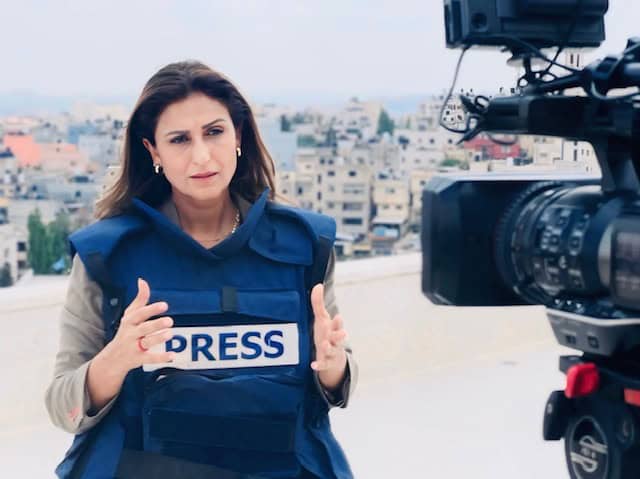
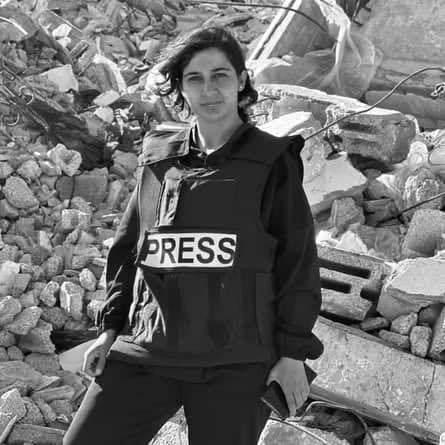
Salma Kaddoumi, a journalist displaced from northern Gaza and now in Deir al-Balah, said awareness has grown, but warned that attention has shifted as the conflict expanded across the region.
“This shift has allowed Israel to continue its violations and crimes in Gaza while the suffering of Palestinians receives less attention,” she said. “Solidarity should not be limited to commemorative occasions.”
Why people in Germany are speaking out
Palestinian filmmaker Dima Hamdan, who lived in Germany for 10 years and now lives in Jordan, recalled artists and academics being disinvited from events after refusing to state their positions on the Boycott, Divestment and Sanctions (BDS) movement.
“What I found interesting about German society is that the working class, who often don’t even speak English, are very supportive of Palestine because they feel it’s common sense,” she told Siasat.com. “Public opinion is shifting everywhere, and I believe this is the case in Germany too, but people are too afraid to openly express this.” Her comments reflect her personal experience.
Solidarity in Ireland
Several Irish contributors connected their support to their country’s history of colonialism and dispossession.
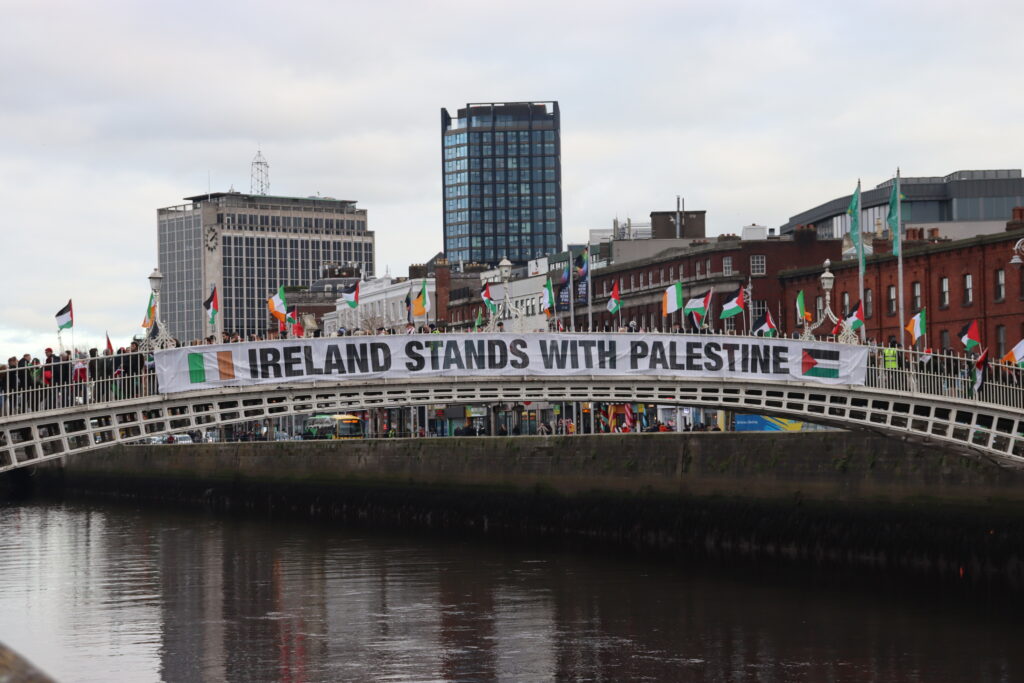
Niamh, a 29-year-old doctor, said, “I see the echoes of my ancestor’s suffering in the experiences of the Palestinian people.” She urged governments to “move beyond words of condemnation and finally place sanctions on Israel.”
Betty Purcell, a 70-year-old retired television producer, became an activist after helping Palestinian farmers with the olive harvest in 2014. “While there, I saw apartheid up close, the separate roads and hospitals and water.”
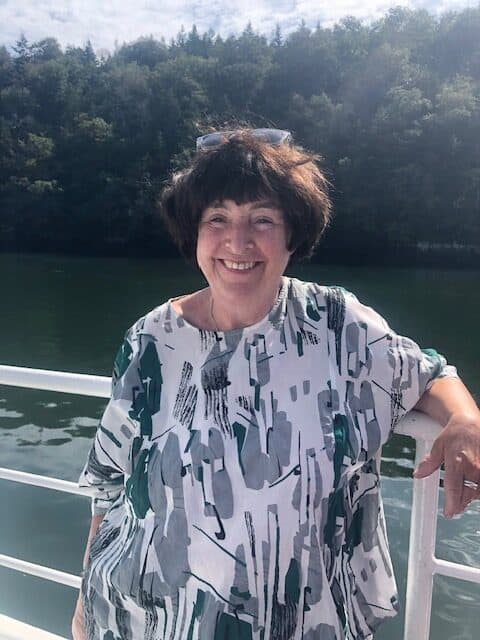
Dr Angy Skuce, a general physician, told Saisat.com, “My views on Palestine have changed significantly since October 2023. I am much better informed now.” She has called on the Irish government and health service to support BDS measures.
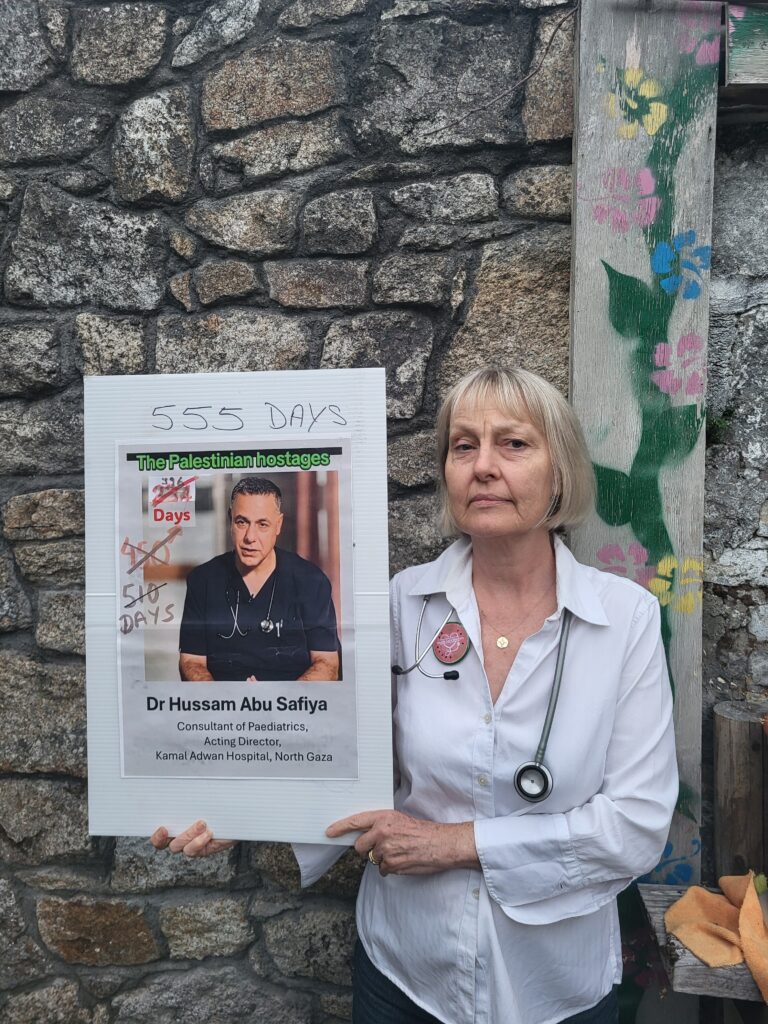
Bronadh, a 42-year-old social care worker who visited the West Bank in 2019, became more active in the Ireland-Palestine Solidarity Campaign (IPSC) after 2023, describing solidarity as turning “care, compassion and empathy” into action.
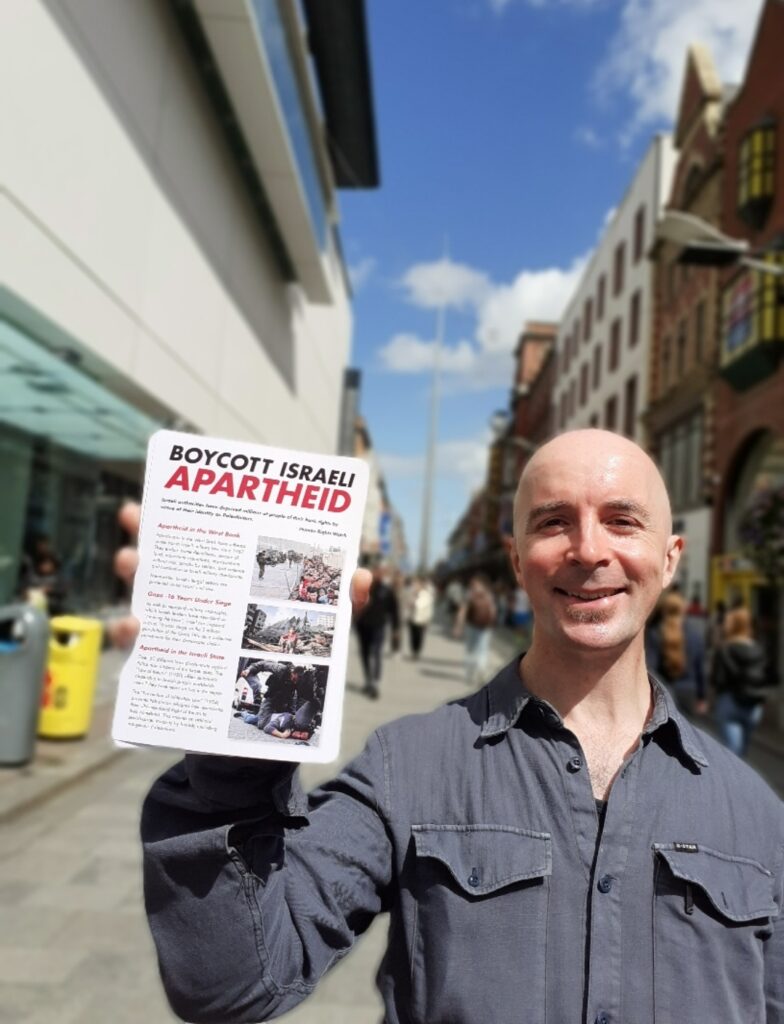
Conall O Dufaigh, a 36-year-old schoolteacher active since Operation Cast Lead in 2008, said, “We need to educate people on the issue and the fundamental disparity between the colonising nation and the victims of colonisation.”
Operation Cast Lead was a 22-day military campaign conducted by the Israel Defense Forces (IDF) in the Gaza Strip from December 27, 2008, to January 18, 2009.

Brian O Eigeartaigh, a 46-year-old librarian and IPSC media officer, said campaigners were focusing on “pressure points to force the Irish government to apply sanctions, and to pressurise companies like Allianz to divest from the Israeli state,” including urging schools, churches and the Gaelic Athletic Association (GAA) to drop the insurer.
Students say solidarity must lead to action
At the University of Helsinki, Students for Palestine organisers said their campaign grew from the gap between the values their university teaches and its response to Gaza. “As students we have a lot more political power than we are led to believe. And the way to use that power is by organising collectively,” a student, who did not want to be named, said.
The organisers say they are pushing university leaders to end or review partnerships with Israeli institutions. These are the group’s claims, not confirmed university decisions. “It is not just feeling bad, not mere emotions about a faraway tragedy,” another student said. “Our solidarity has to be constantly organised and translated into material political consequences.”
Faith and humanity
Mohammed Asif Hussain Sohail, a 45-year-old Indian philanthropist and humanitarian activist, told Siasat.com that his support was rooted in faith and justice. “Today, you don’t have to be a Muslim to stand with Palestine; you have to be human.”
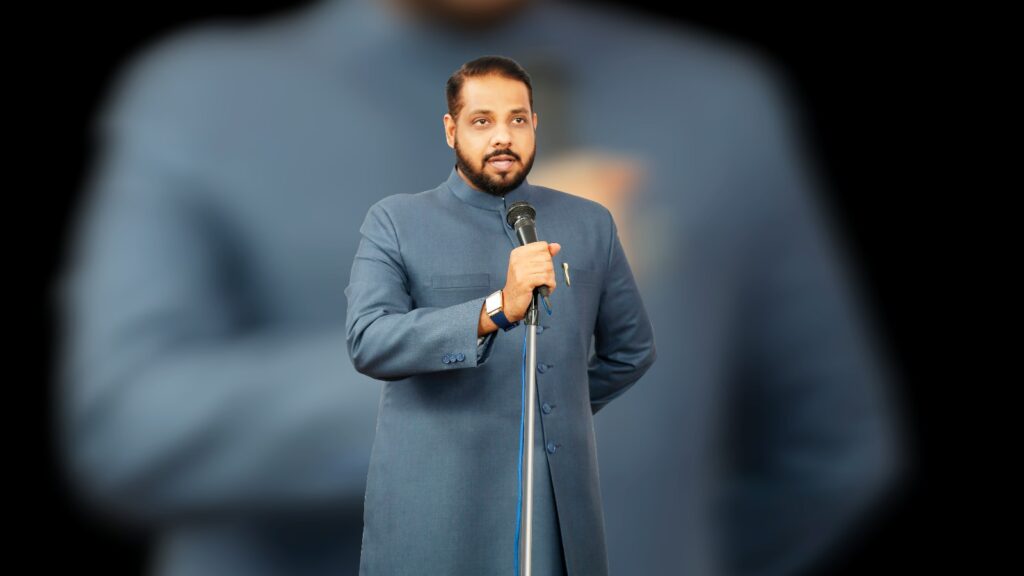
Ameen Mirza, founder of House of Happiness in Hyderabad, has spent three to four years organising fundraising drives. “For me, this goes beyond Palestine, religion or nationality. Everyone deserves freedom,” he said. “For me, Palestine is not a temporary cause or a social media trend.”

Syeda Tazyeen Riaz, a London-based positive psychology practitioner, said, “Psychological well-being isn’t possible without basic autonomy and freedom from chronic fear.” She called for a permanent ceasefire, unrestricted humanitarian aid and investment in Palestinian-led healthcare and education.
Voices from Saudi Arabia and the US
Imaan, a corporate lawyer in Saudi Arabia, said, “I stand firmly against oppression and injustice,” and called for contributions to organised relief, continued awareness and remembering Palestinians in prayers. Zuha, a 32-year-old lawyer also in Saudi Arabia, said, “Yes, from the river to the sea, Palestine will be free,” and called for economic sanctions against the US and boycotts of companies funding Israel.
Maria Khan, from Texas, has taken her children to demonstrations, saying progress is measured “by whether we find the courage to act when it is easier to look away.” Asma Khan, from Albany, New York, said her support long predates October 2023 “because this is not something new.”
An Indian perspective
Dr Srinivas Junuguru, associate professor and academic coordinator at the Centre for Economic and Social Studies, told Siasat.com that shared colonial experience has shaped solidarity in the Global South, and described India’s position as “a blend of pragmatism and a balancing act.”
Public sentiment and policy, he said, “operate in different domains,” with decisions shaped by trade, diplomacy, back-channel talks and intelligence, though public pressure can still matter.

Shruthi Apparasu, an Indian respondent, said reading history changed her view. “I no longer look at this merely as a territorial dispute or a religious conflict. I see a much longer history of displacement, competing national claims, occupation and an increasingly severe asymmetry of power.”
Across faiths and borders
A Jewish respondent, a descendant of Holocaust survivors and victims, told Siasat.com, “I respect all faiths and reject the claim that standing up for human rights is somehow antisemitic.” A British respondent who wished to remain anonymous said, “We oppose genocide. We are sick, angry and ashamed.”
British activist Chris Kunzler said UK schools leave out the Nakba. “You’re not taught that an indigenous population was forcibly dispossessed, or that they’ve been systematically oppressed ever since.”
Has public solidarity changed anything?
The responses reveal a gap between public opinion and government policy. People have protested and students have challenged university links, but governments continue to decide based on political, economic and security interests.
As Kukali put it, “The real test of changing international public opinion is not simply whether sympathy for Palestinians has increased, but whether that concern can help establish the political conditions in which Palestinians and Israelis can live in freedom, security, dignity and peace.”
For those who spoke to Siasat.com, standing with Palestine may begin with faith, opposition to injustice or a demand for equal rights. But they share one message: solidarity should not end with words. It must also be reflected in the decisions taken by those with the power to bring change.
Get the latest updates in Hyderabad City News, Technology, Entertainment, Sports, Politics and Top Stories on WhatsApp & Telegram by subscribing to our channels. You can also download our app for Android and iOS.
This content is published by The Siasat Daily and has not been created or edited by Hello Headlines. View original