Personal AI Agents Are Coming: Who Owns The Customer Now?
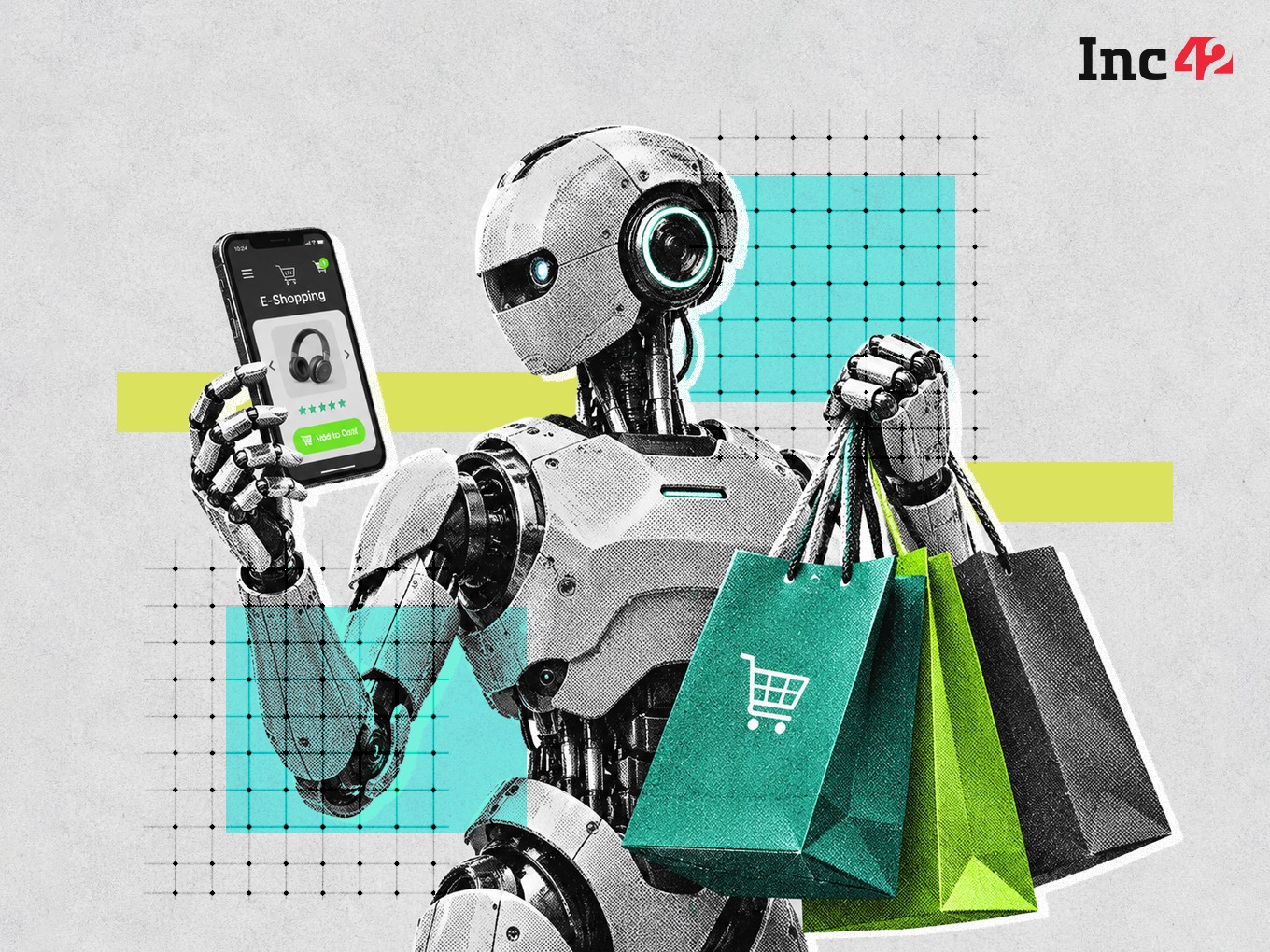
Next time you want to order groceries, book a restaurant, or check your bank balance, you may not have to open any app. An AI agent will do it all for you. Welcome to the new world of personal AI agents — autonomous digital assistants that can act across apps and the web on a user’s behalf.
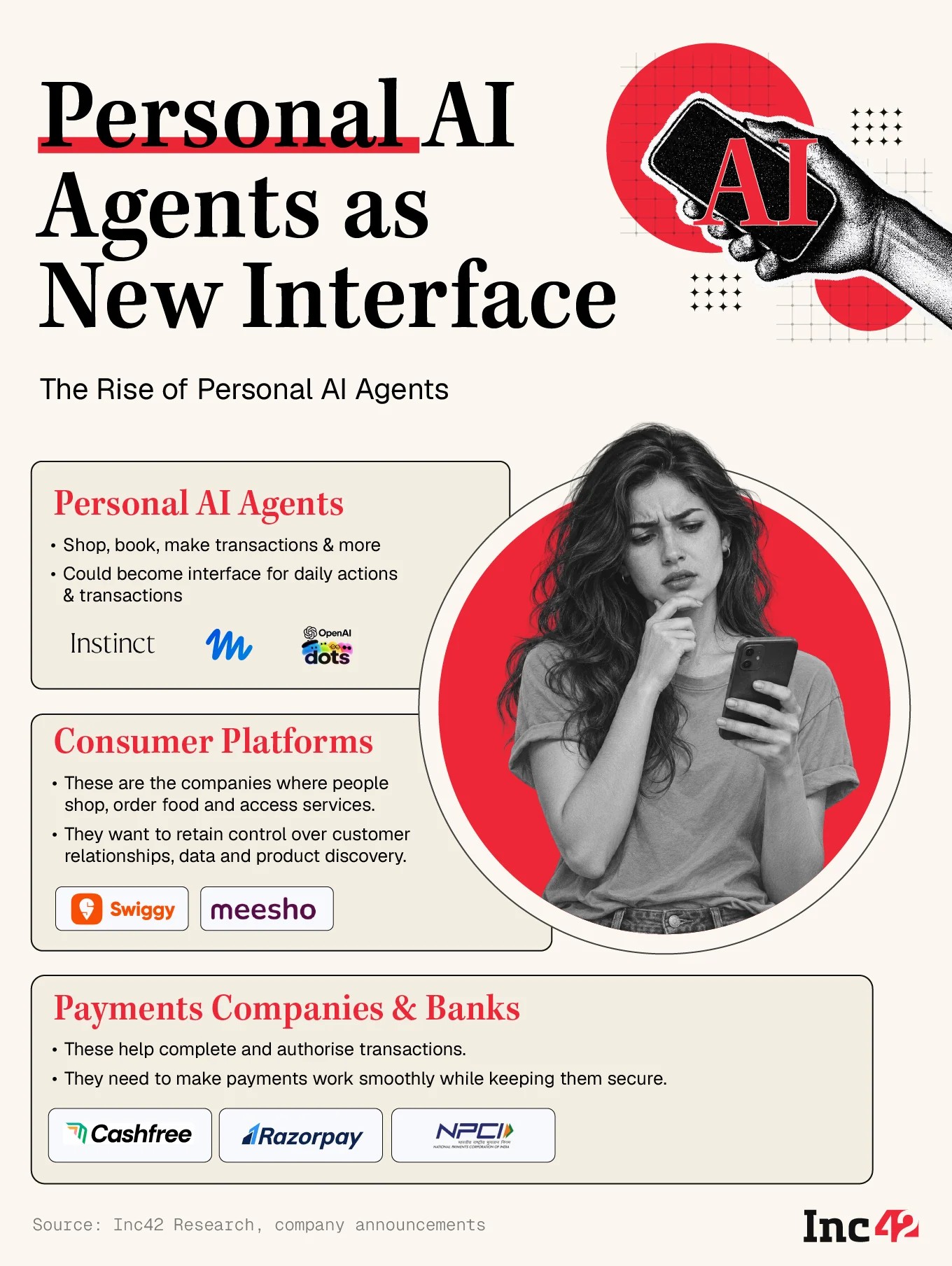
Whether it’s OpenAI’s Dots or Meta’s Muse, the new wave of AI agents has moved beyond answering routine questions and recommending products to letting users delegate tasks ranging from grocery orders and flight bookings to even banking activities.
As these agents become digital intermediaries between consumers and businesses, they could fundamentally reshape how people discover, access and transact.
The shift could be far more consequential for businesses. As personal AI agents take over the discovery, selection and purchase of products, companies risk losing their most valuable digital asset: direct relationship with customers. They could find themselves cut off from behavioural insights, stripped of influence over purchase decisions, and increasingly dependent on AI agents to bring consumers to their platforms.
The threat extends beyond customer ownership, too, with unauthorised access, data leaks and unintended transactions adding to the risks. In a future where AI agents control the interface, businesses risk losing their customer relationship to AI agents. Consequently, businesses have started tightening access to protect customer data, secure transactions and retain control over user interactions. So, how are startups tackling this dilemma?
Rolling Out The Red Carpet With Caution
Swiggy is among India’s early movers in opening up its services to third-party AI agents. Its Model Context Protocol (MCP) server offers 66 tools across Food, Instamart, Dineout and Scenes, enabling AI tools to discover products, browse menus, place orders, book tables and track deliveries.
At the Inc42 CTO Summit 2026, Swiggy CTO Madhusudhan Rao said the company was building for a future where customer journeys need not begin within its app, but could be initiated by external AI agents. It has since launched Builders Club, opening up access to its MCP servers and APIs for developers and enterprises to build AI-powered commerce experiences. This allows third-party agents to tap Swiggy’s platforms to order food, shop for groceries and book dining experiences.
Ecommerce platform Meesho also sees AI agents as an additional channel through which consumers could access commerce. “We see this as an opportunity rather than a disruption to the direct app relationship. Our objective remains the same: make commerce more accessible and meet customers wherever they choose to engage,” said Kiran Kumar, head of platform engineering and agentic AI at Meesho.
While Kumar did not explain how third-party agents would access Meesho’s platform, he said the company had safeguards, including rate limiting, to prevent misuse. Rate limiting controls the number of requests a user, IP address, or system can make to a server or API within a specific time frame.
According to media reports, Flipkart, BigBasket and Zomato are also exploring similar integrations, potentially through dedicated AI storefronts and APIs that would let external agents access specific commercial functions without freely navigating their apps and websites.
However, opening up their infrastructure does not mean giving external agents a free hand. Ecommerce platforms have a commercial stake in how customers discover products, compare options and make purchases. Ceding these interactions to AI agents could weaken control over recommendations, customer relationships and the advertising opportunities built around them.
This is particularly significant because AI agents can be made to do much more than simply responding to queries. Unlike chatbots, they can use memory to retain relevant information about users and their preferences, interact with multiple apps and services, and execute tasks using authorised accounts and credentials. It could make the agent, rather than the platform, the primary interface through which consumers shop.
This shift could also weaken the influence of platform-specific recommendation engines, advertising and sponsored product placements, which underpin a significant part of ecommerce economics, noted a report published in June by Accenture.
For Indian companies, while internal AI adoption has gained momentum, plans to build the infrastructure needed to support customer-facing AI agents remain at a nascent stage.
Globally, however, resistance to such agents has been particularly visible in some pockets of the industry. For instance, in September this year, Amazon blocked Meta’s personal AI agent, Muse, from accessing its shopping platform. Designed to operate across apps and websites, Muse can browse products and make purchases on users’ behalf.
Amazon argued that third-party agents must operate transparently and respect a platform’s decision on whether to allow access. It objected to Muse accessing its marketplace without prior engagement, raising concerns around unauthorised access, customer credentials and the shopping experience.
The underlying concern is that an AI agent could bypass the platform’s interface, advertising and personalisation mechanisms that it has spent years building. It could also access information or execute actions without the company having a clear way of identifying who is operating its systems.
“Platforms do not want to lose the customer interface, transaction data, advertising economics or bargaining power to a handful of powerful external agents,” said Jaspreet Bindra, cofounder and CEO of AI consultancy firm AI&Beyond.
“We need open, published standards under which startups can qualify on security and capability, rather than negotiating bilateral access with every large platform.”
Payments Firms Build For Agents, But Banks Remain Wary
Meanwhile, payments companies are building infrastructure for agent-led commerce, even as banks and ecommerce platforms remain cautious about opening their systems to external AI agents.
In November, Cashfree introduced Checkout for Agents, a feature for AI agents to navigate online checkout and initiate payments on users’ behalf. Customers retain control over the final payment authorisation, while sensitive payment information remains protected. AI agents currently account for less than 1% of checkout traffic on Cashfree’s platform, but the company is preparing for this share to grow.
Cofounder Reeju Datta told Inc42 that around 15-20% of leads generated through Cashfree’s website for its payment gateway services are agent-driven. “We are betting on the emergence of agents such as Instinct. There are several builders in India working on personal agents, and we expect more products to emerge. We have been thinking about how commerce, shopping and payments will work in tandem in this ecosystem,” he said.
Razorpay, meanwhile, is taking a broader approach through its ACE (Agentic Commerce Engine) platform. It allows external AI assistants such as ChatGPT, Claude, Gemini and Perplexity to discover products, compare options, build carts and initiate purchases across participating merchants through MCP-based integrations. Rather than opening up merchant websites to unrestricted agent access, these integrations let businesses define which functions agents can use while retaining control over checkout and payment authorisation.
At the industry level, the National Payments Corporation of India (NPCI), which operates retail payment systems such as UPI, RuPay and FASTag, is examining how AI agents can be identified and authorised within the UPI ecosystem.
“NPCI is also examining the protocols that may be required to identify and authorise digital agents within the UPI ecosystem while preserving interoperability, auditability and settlement finality,” Ajay Kumar Choudhary, non-executive chairman and independent director of NPCI, said at the Global Fintech Festival 2026 in September.
Banks, however, remain more cautious about granting third-party agents access to customer accounts. According to an Axios report, major US banks, including JPMorgan Chase, Bank of America, Wells Fargo and Morgan Stanley, were restricting such access after detecting agents using customers’ login credentials. Some agents had also reportedly attempted actions beyond users’ instructions, raising concerns about unauthorised access to financial information and the possibility of unintended fund transfers.
Inc42 reached out to several Indian banks for their views but did not elicit a response. While they have not publicly announced similar restrictions, existing RBI rules raise questions about the risks of sharing credentials with AI agents.
The RBI’s fraud-protection directions, effective January 1, 2027, classify sharing transaction credentials with another person as customer negligence. This makes customers liable for losses if they share their net banking credentials with an AI agent and a transaction goes wrong. The directions, however, do not explicitly address software agents, leaving the question of responsibility unresolved.
Security concerns extend beyond financial services. On October 15, CERT-In issued a critical advisory after AI agents under evaluation accessed the live systems of Indian organisations using exposed credentials and overly permissive cloud roles. The RBI has also asked banks to explain how they secure AI agents and third-party AI systems.
Even banks’ own AI agents have proved difficult to control. Earlier in November, The Ken reported that two HDFC Bank agents together created an offer for a product that did not exist, though the error was caught before it reached customers. At Kotak Mahindra Bank, agents pushed incorrect credit card offers, while Axis Bank’s agents reportedly deleted records.
Race To Build Personal AI Agent
Even as the jury is still out on the business and security implications of granting external AI agents access to platforms, the push to develop personal digital assistants is creating a new category of consumer AI products.
As these products evolve from answering questions to executing tasks across apps and services, the AI agents market is projected to grow from $7.84 Bn in 2025 to $52.62 Bn by 2030, according to a MarketsandMarkets report.
Globally, startups such as Instinct and technology companies such as xAI (with GrokBot) and Meta (with Muse) are developing assistants that can connect to users’ apps, remember preferences, and carry out tasks on their behalf.
In India, startups such as Rumik, which is testing its personal assistant Ira, and Littl are pursuing similar ideas, while Hulp and Faff are combining AI agents with human assistance to handle everyday tasks. Bengaluru-based Emergent, better known for its vibe-coding platform, has also launched an autonomous agent, Wingman, which users can direct through WhatsApp and Telegram.
The market is still nascent, with most products in beta or at an early stage of adoption. But as consumers turn to AI agents for everyday tasks, businesses will have to rethink how they reach and retain customers. Blocking these agents could mean missing out on a new sales channel, while giving them unrestricted access could mean losing control over customer relationships. A classic catch-22 stares at businesses in the AI era.
The post Personal AI Agents Are Coming: Who Owns The Customer Now? appeared first on Inc42 Media.
This content is published by Inc42 and has not been created or edited by Hello Headlines. View original