From Homemade Badi to GomatiRoots: Shital Kumari Secures Funding
Key Takeaways
- GomatiRoots is building a brand around Bihar's traditional badi.
- The startup received Rs 1 lakh in funding through YourStory's Shuru Kar initiative.
- Shital Kumari's startup is connecting rural women with markets.
- The company generated Rs 32 lakh in revenue in its first financial year.
Last September, in 2025, the Bihar Idea Festival concluded at Bapu Sabhagar in Patna. YourStory launched the festival under its initiative, The Bharat Project, in collaboration with the Bihar Industries Department and the Chandragupt Institute of Management, Patna (CIMP). The objective was to take entrepreneurship beyond metropolitan cities and select groups of people, reaching young people in smaller towns and villages and helping them turn their business ideas into reality.
Shital Kumari was among those present at the event. She wanted to start her own business but had several questions. What business should she start? How would she get started? Where would the money come from? And what would happen if her efforts failed?
Life had already exposed her to numerous challenges. Taking the risk of starting a business was not easy, but she decided to take a step towards turning her idea into reality.
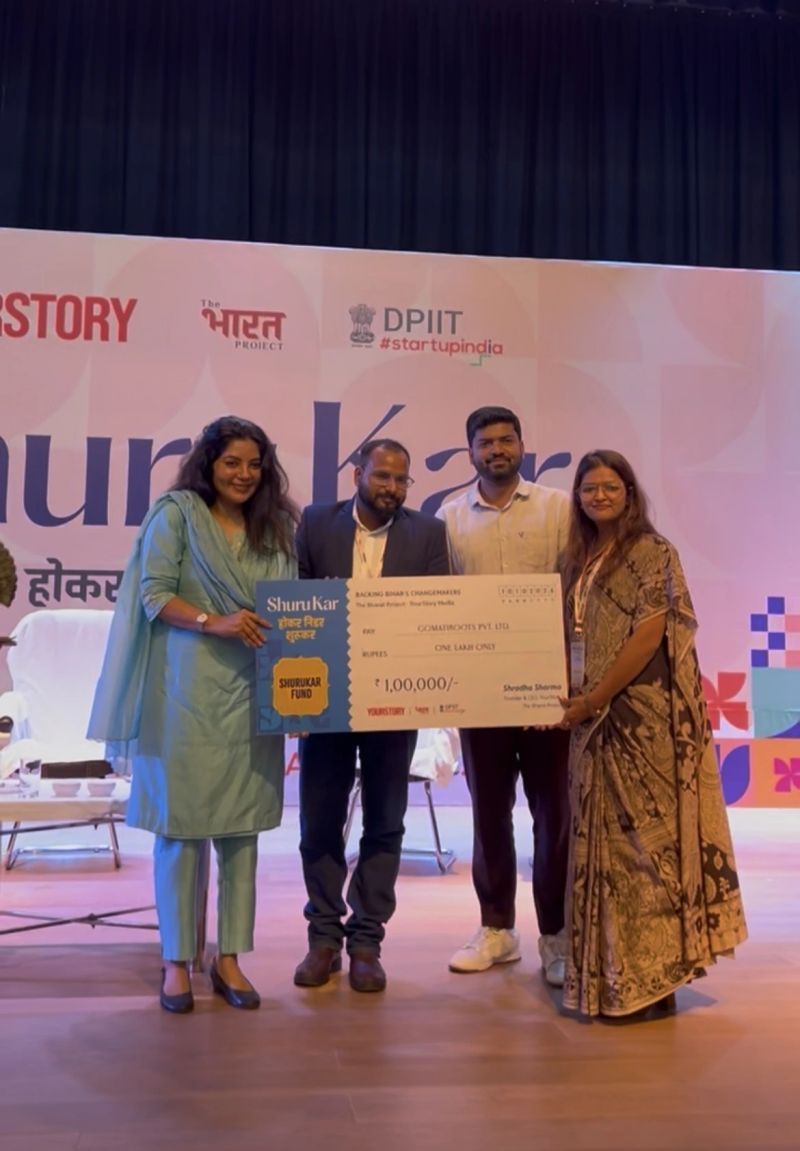
Nearly a year later, Shital's efforts reached an important milestone. Through YourStory's Shuru Kar initiative, she received funding of Rs 1 lakh for her startup, GomatiRoots. The funding came from Shradha Sharma, Founder and CEO of YourStory and The Bharat Project. For Shital, the amount represented more than financial support; it was also a sign of confidence in her idea.
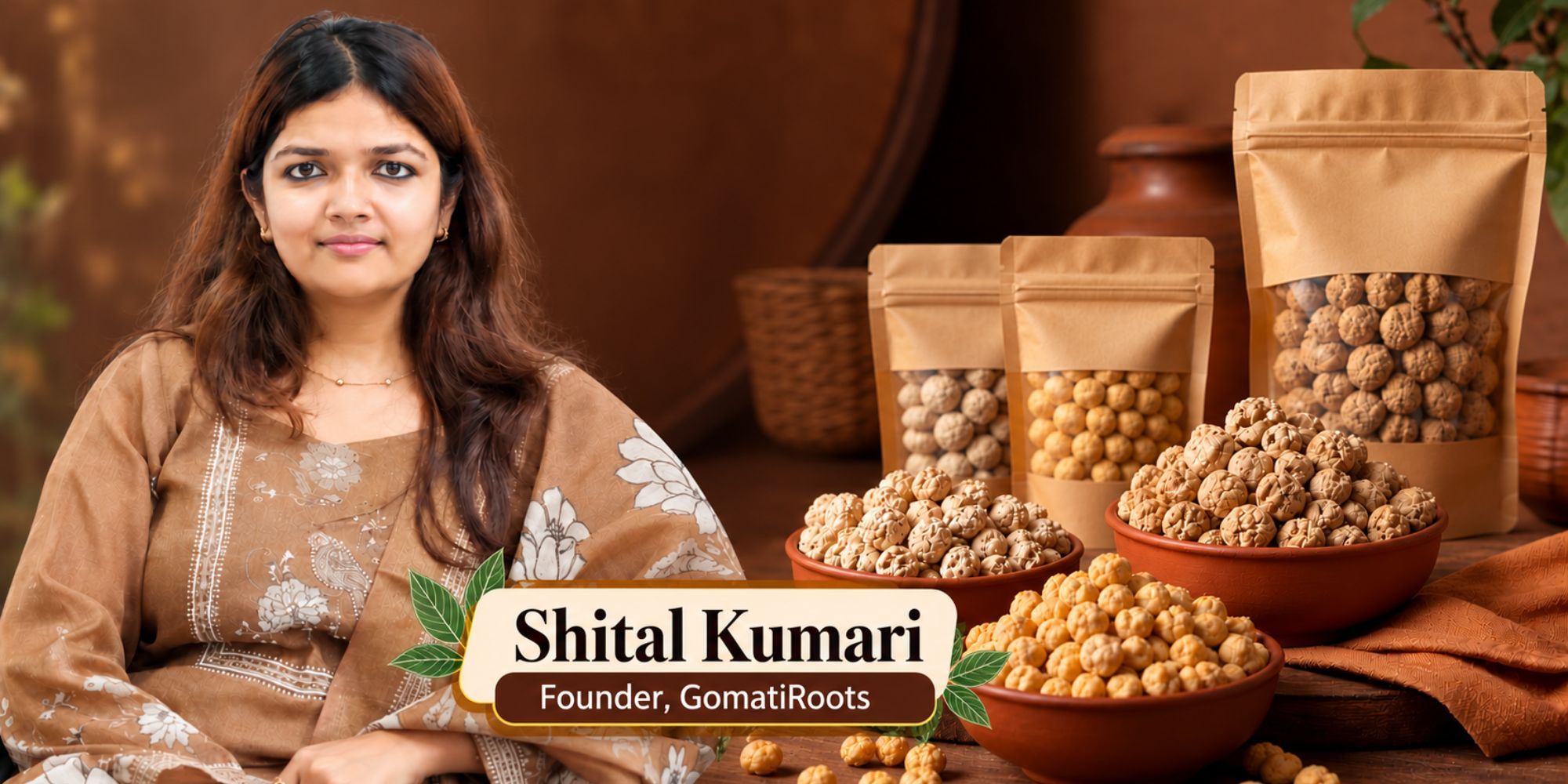
Through GomatiRoots, Shital aims to give Bihar's traditional badi and other indigenous food products a distinct identity. She wants badi, a traditional lentil-based food product that has been part of Indian households for generations, to establish itself as a trusted brand in the market.
Building a Business Amid Challenges
To understand Shital's entrepreneurial journey, it is important to look back at her early life.
She grew up in Bihar and completed her education at government institutions. She studied up to Class 10 at Shri Guru Gobind Singh Girls High School, completed her intermediate education at RPM College, and earned an honours degree in Physics from the College of Commerce.
She wanted to pursue a BTech degree, but that dream did not materialise. Nevertheless, she continued her education and later completed an MA from Nalanda Open University. A friend helped her with Rs 4,500 to pursue her studies.
In 2018, her life took a major turn when she lost her younger brother. Following his death, her family moved to Muzaffarpur. As the family struggled to cope with the loss, Shital lost her mother during the COVID-19 pandemic.
After her mother's death, the responsibility of caring for her younger siblings fell on her shoulders. She moved to Patna to support her family and began looking for work. Over the next two to three years, she took up video editing, taught children, and even sold lychees whenever necessary. Throughout this period, she continued preparing for the Union Public Service Commission (UPSC) examination.
During this time, she learned about the Bihar Laghu Udyami Yojana, a state government initiative designed to support small entrepreneurs. She applied for the scheme and received Rs 50,000 as the first instalment. She also received training to start her business.
Later, she received a second instalment of Rs 1 lakh. In addition, she took a loan of Rs 2 lakh and laid the foundation for GomatiRoots in Patna.
Speaking to YourStory, Shital says, "There were several phases in my life when taking care of my family was the most important responsibility. After my mother passed away, looking after my younger siblings became my priority. I worked in video editing, taught children, and even sold lychees. At the same time, I continued preparing for the UPSC examination. When I learned about the Bihar Laghu Udyami Yojana, I felt that perhaps I finally had an opportunity to start something of my own. I did not have much money, but I decided to begin with whatever resources I had."
How Her Mother's Homemade Badi Inspired a Business
GomatiRoots did not begin with a long-standing business ambition. Instead, the idea emerged from a deeply personal experience.
After her mother's death, Shital often missed the badi her mother used to make. When she began looking for a similar product in the market, she could not find one that matched the taste and quality she remembered. Some products raised concerns about adulteration, while others did not offer the varieties she preferred.
What began as a personal search soon revealed a potential business opportunity.
Shital started researching the market, speaking to people, and learning more about badi. During her research, she observed that while India had several well-established pickle and papad brands, badi had not achieved the same level of recognition.
Yet, in Bihar and many other parts of India, lentil-based badi is a regular part of everyday meals. It is eaten with lentils, vegetables, and other dishes, and the tradition of making it at home has continued for generations.
Despite its popularity, badi often remains a locally produced food item rather than a recognised packaged brand.
Shital believed that the product could establish a stronger market presence if it were made available throughout the year with consistent quality and better packaging. This insight gradually shaped the idea behind GomatiRoots.
For her, badi was more than a food product. It represented memories of her mother, the taste of home, and an opportunity to bring Bihar's culinary traditions to a wider audience.
Shital says, "The idea of building a brand around badi was not something I had thought about since childhood. After my mother passed away, I looked for a product in the market that tasted like the badi she used to make. That was when I realised there was a need for a reliable brand. I studied the market and spoke to people. There are several pickle and papad brands, but I did not see the same kind of identity for badi. I felt that if we could make it available throughout the year with consistent quality, people would embrace it."
Turning Traditional Flavours Into a Brand
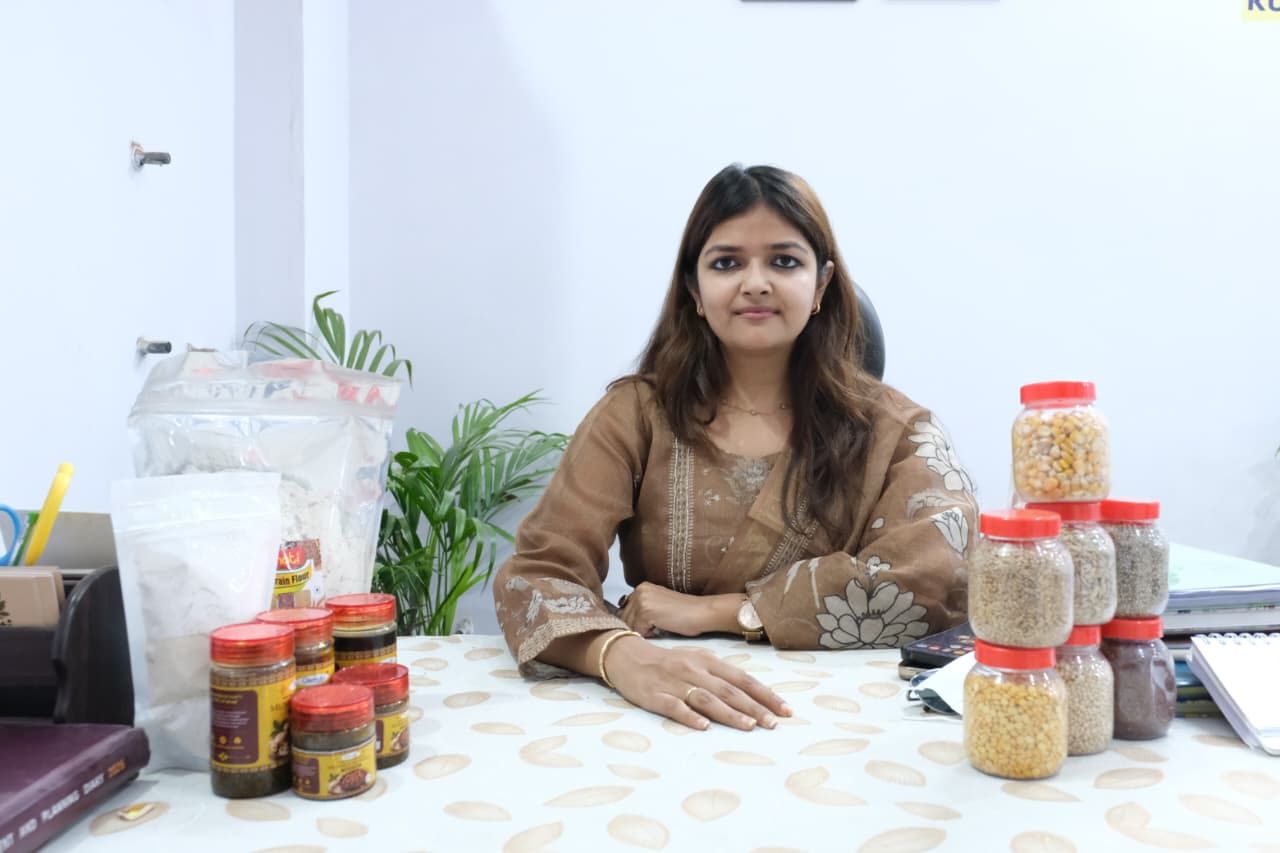
GomatiRoots started with badi, but its product range has since expanded to include several traditional varieties.
These include urad dal badi, moongori, chana dal badi, Bihari masala badi, and kohrauri. The company also offers traditional fryums such as tisiyori and tilauri.
Through these products, Shital aims to bring greater recognition to flavours that have long been part of households and local communities.
One of the biggest challenges in this business is the seasonal nature of badi production. Traditionally, making badi depends heavily on sunlight and weather conditions. Unfavourable weather can affect both production and product quality.
Ensuring that customers receive a consistent product throughout the year is therefore not easy.
Shital has tried to address this challenge through research and experimentation. Her goal is to ensure that customers receive the same quality every time they purchase a product, regardless of the season.
According to Shital, the business has received encouraging customer feedback within its first year of operations. Repeat orders from retail shopkeepers, in particular, have strengthened her confidence. These orders indicate that customers are not simply trying the product once but are willing to buy it again.
However, maintaining this trust requires continuous improvements in production, packaging, and storage.
Shital says, "Making badi available throughout the year is one of our most important priorities. Traditionally, it has been prepared according to the weather and availability of sunlight. But if we want to build a brand, customers must receive consistent quality every time. We have conducted research at our level and improved our production methods. Over the past year, we have received repeat orders from shopkeepers. When customers tell us that our products taste like homemade food, that means a lot to us."
Limited Capital, a Larger Market, and New Challenges
GomatiRoots initially relied on government scheme assistance and a loan to get its operations started. With limited resources, Shital had to account for every expense carefully.
Purchasing raw materials, developing packaging, delivering products to retail outlets, and building brand awareness all required money. Rather than expanding in multiple directions at once, she chose to grow the business gradually.
The company currently generates revenue by supplying products to retail stores, restaurants, and cloud kitchens, as well as selling directly to customers.
GomatiRoots products are available at more than 50 stores in Patna. The company is also working to expand its presence in other districts of Bihar through distributors.
Its products are available on Amazon, Flipkart, and JioMart. Customers can also place orders through the company's website, gomatiroots.com.
In addition, the business reaches customers directly through exhibitions, fairs, and canopy stalls.
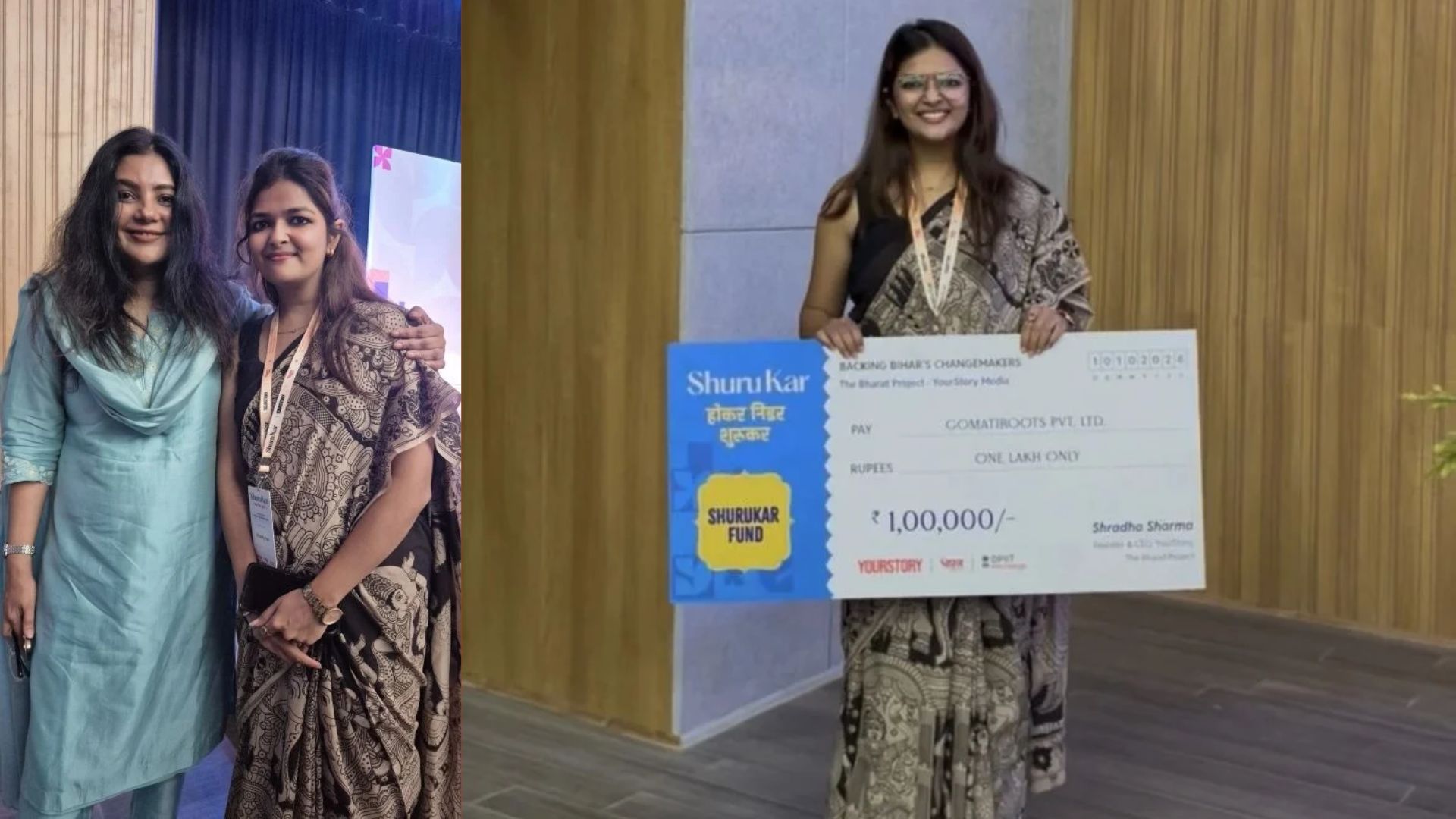
Funding Through YourStory's Shuru Kar Initiative
During its first financial year of operations, GomatiRoots generated revenue of Rs 32 lakh. Shital is now looking to expand into larger retail networks and quick-commerce platforms.
However, entering large retail stores and organised markets requires a reliable supply chain. The business must also address product shelf life, packaging, and storage requirements.
Shital is working to overcome these challenges. She also plans to bring more people on board to strengthen e-commerce operations and direct-to-consumer sales.
She says, "We started the business with very limited capital. In the beginning, we had to account for every rupee. We had production and packaging expenses on one side and the challenge of reaching retail stores on the other. Large retail companies also want to know whether a brand can maintain a consistent supply. We are gradually strengthening our sales record and distributor network. We intend to use the Rs 1 lakh funding received through YourStory's Shuru Kar initiative for working capital and marketing as well."
Connecting Women's Work With Market Opportunities
GomatiRoots' ambitions extend beyond increasing product sales. Shital wants women and small producers who make traditional food products in Bihar to benefit from access to larger markets.
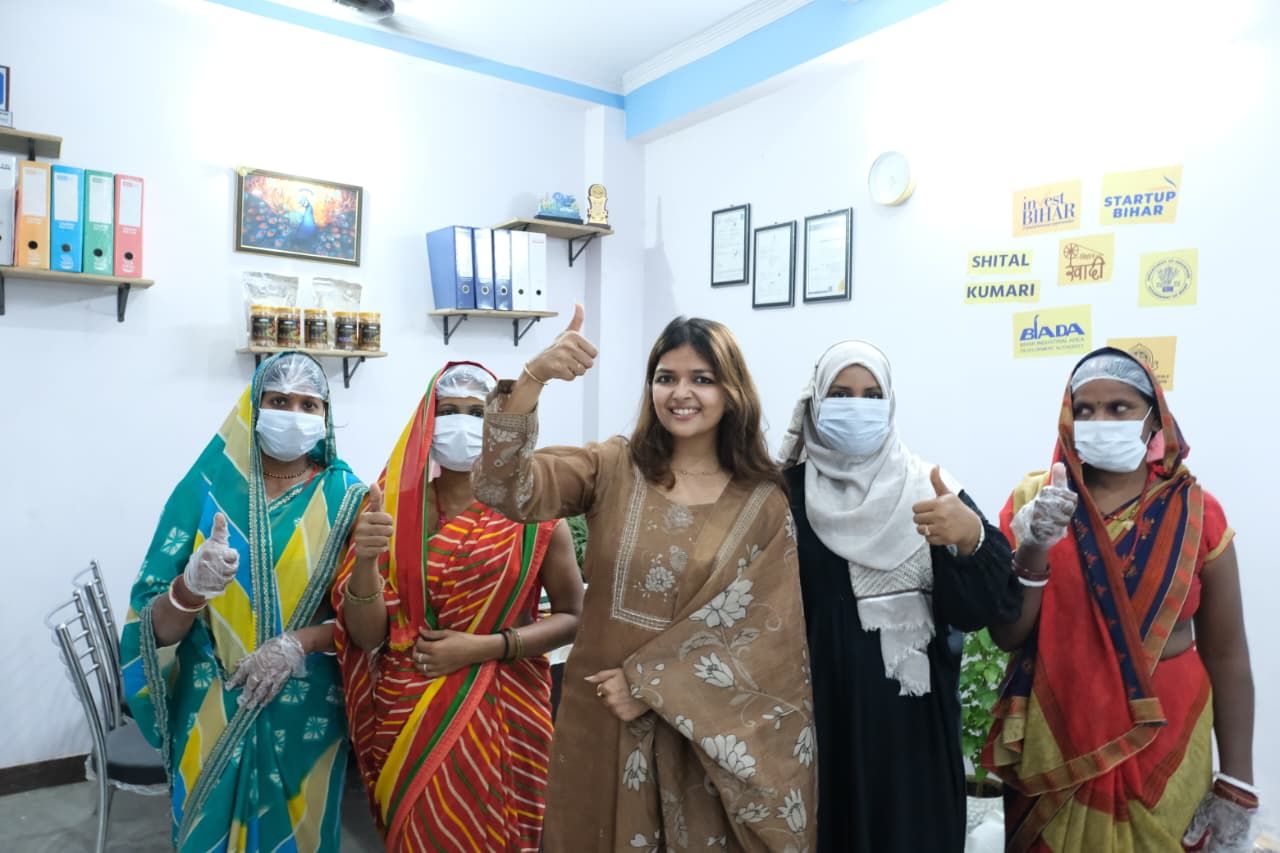
Some of the company's products are prepared in collaboration with rural women's self-help groups (SHGs). These include different varieties of tisiyori made with flaxseed, potatoes, and rice, along with rice-based tilauri and kohrauri.
The women already have experience preparing these traditional foods. GomatiRoots aims to help them connect with buyers and access wider markets.
Shital is also in discussions with JEEViKA, Bihar's rural livelihoods initiative. She was invited as a buyer to the Saras Mela and now hopes to establish long-term partnerships to source traditional products directly from JEEViKA Didis.
Her objective is to ensure that the women receive fair prices for their products and gain access to regular income opportunities.
In the future, she also wants to work with farmers in Bihar so that the lentils used to make badi can be cultivated locally, allowing farmers to benefit from the business.
Over the next three to five years, Shital hopes to take GomatiRoots beyond Bihar and into major cities across India. Her plans include expanding into large retail stores, online marketplaces, and quick-commerce platforms.
The company also hopes to open its own store and eventually export its products internationally.
Alongside expansion, Shital wants to formalise business operations, obtain the necessary licences, increase production capacity, and make better use of available business support schemes.
One of her long-term goals is to create year-round work opportunities for up to one lakh women associated with JEEViKA's self-help groups. For now, this remains an ambition that she hopes to pursue as the business grows.
Shital says, "I want the growth of GomatiRoots to translate into higher incomes for women in Bihar. Many women here have excellent skills in preparing traditional food products, but they lack the means to reach larger markets. If they receive regular work and fair prices, their efforts can gain greater recognition. We also want to work with farmers so that the lentils used in badi can be grown in Bihar itself. My dream is to take these flavours across the country and around the world."
The Road Ahead
Shital Kumari's story is not about building a business with abundant capital, an established market, and plenty of resources from the outset. She found her way forward while managing family responsibilities, took up different jobs, and used support from a government scheme to establish her business.
The Rs 1 lakh funding she subsequently received through YourStory's Shuru Kar initiative has further strengthened confidence in her idea.
Her search for the badi her mother used to make helped her identify a gap in the market, one she is now working to address through her brand.
GomatiRoots still faces several challenges. It must increase production while maintaining quality, strengthen customer trust, and build a more organised business to compete in larger markets.
However, Shital has a clear goal: she wants badi to become more than a product associated with a particular household or region. She wants customers to recognise the brand by name and purchase it with confidence.
Entrepreneurship in India is often associated with large investments and technology startups. But the story of GomatiRoots, which emerged from Bihar, offers a different perspective. Its foundation is not a new technology but a traditional food product that has been part of everyday meals for generations.
The real challenge lies in adapting that product to market requirements, building a trusted identity, and creating income opportunities for the people involved in its production.
For Shital, the journey is still in its early stages. She dreams of a day when someone in any part of India looking to buy lentil-based badi will think of GomatiRoots.
The coming years will determine how far this ambition takes her. For now, her journey demonstrates that entrepreneurship does not always require an entirely new idea. Sometimes, the beginnings of a business can be found in the familiar flavours of home.
Hokar Nidar Shuru Kar.
Also Read Taruwar Agro: Three Bihar Friends Built a Rs 2.5 Crore Business from Banana Waste
This content is published by YourStory and has not been created or edited by Hello Headlines. View original