Why better data could be the key to AI-driven food R&D
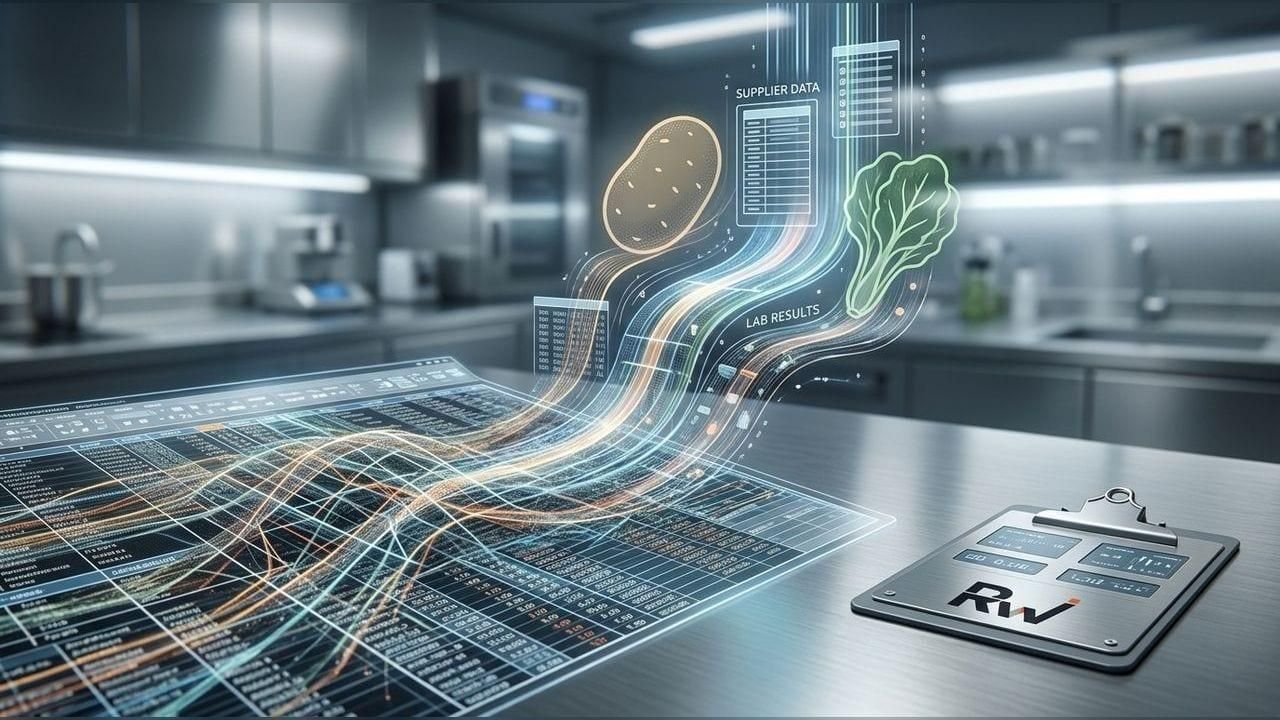
Picture a product developer creating a plant-based protein drink for three different markets. The product concept is clear; the information needed to build it is not. Supplier specifications are locked inside PDFs. Trial results sit in spreadsheets. Regulatory requirements arrive by email. Even a single ingredient can carry a different name in each document: “haldi” in one file, “turmeric” in another and “Curcuma longa” in a regulatory note. None of these files is wrong. The problem is that the information is scattered.
As a result, the developer spends more time searching, matching, and verifying data than working on the product itself. This has become common across food, beverage, and wellness R&D. Creating a product is no longer only about getting the taste and texture right. It is also about managing and connecting an ever-growing volume of data.
Why the data load keeps growing
Food product development is becoming more complex, and food safety sits at the centre of that complexity. The World Health Organization’s 2026 estimates, which cover 42 foodborne hazards, found that unsafe food caused an estimated 866 million illnesses and 1.5 million deaths worldwide in 2021. Chemical hazards accounted for 73% of these deaths, with inorganic arsenic and lead alone responsible for 42% and 31% of chemical-related deaths, respectively. The economic toll is just as stark: WHO puts the productivity lost to foodborne disease at $310 billion in 2021.
The challenge multiplies when companies develop products for several markets at once. Each market brings its own allergen rules, contaminant limits, permitted claims and labelling norms, and the ingredients themselves vary. In wellness products, for instance, the composition of a botanical can shift with its source, harvest season and processing. With every new ingredient, supplier and market, the volume of information that must be checked and connected keeps growing.
Giving data a common language
The answer is not another database. It is a shared vocabulary with the relationships built in, which is exactly what an ontology provides. FoodOn, an open food ontology described in npj Science of Food in 2018, was created to tackle a familiar problem: food data siloed across disparate languages and data dictionaries. Still actively maintained, it now contains tens of thousands of classes covering food products, their plant and animal sources, and the processes used to make them.
Inside a company, the principle is simple. Turmeric is turmeric, whatever name appears in a spreadsheet, supplier document or regulatory file. An ontology can link that one ingredient to its specification, supplier lot, test results, claims and market requirements. Instead of merely matching keywords across thousands of documents, AI can recognise that different names refer to the same ingredient and connect it to the details that matter. A question such as “Which approved ingredients could breach the lead limit in Market B?” then shifts from a slow, manual exercise to a rapid, data-driven check.
Where GenAI fits
Generative AI can read supplier documents, scan scientific literature, suggest alternative ingredients and help draft R&D reports. But when information is fragmented, AI can miss important connections or produce answers that are hard to verify. In some cases, it may generate details that sound plausible but are simply not true.
An ontology can help address this by grounding GenAI in structured, connected facts. Rather than guessing from loose text, the model can draw on linked information about an ingredient, its supplier, its test history, the rules it must satisfy and the claims made for it, and show where each answer came from. This makes AI outputs easier to check and, ultimately, easier to trust. The ontology provides the map; GenAI makes that map usable.
Safety built in, not bolted on
In most organisations, even when quality checks run throughout development, some risks only become visible late, once a finished batch reaches the lab. Connected data can bring those risks into view at the design stage. If a developer selects a rice-based protein, the system can flag a potential inorganic arsenic risk well before a pilot batch is made, since rice absorbs arsenic from soil and water more readily than most other cereals. If a recipe changes, implications for allergens and cross-contact can surface immediately. This matters because many foodborne illnesses are preventable, and catching risks upstream reduces rework, delays and costly product recalls.
The scientist stays in the loop
AI can produce a formulation that is confident and wrong. It cannot taste bitterness, feel grittiness or predict how a blend will behave after months in a humid warehouse.
Consider one high-protein beverage project. The AI recommended a pea protein isolate with added calcium and a stabiliser system, a combination that met every target for protein, nutrition and ingredient constraints on paper. In the lab, however, the proteins aggregated after heat processing, leading to visible settling and a chalky mouthfeel. The team had to rework the mineral load and the stabiliser system before the formulation could move forward.
The working rule is simple: AI proposes; scientists decide. Every suggestion should trace back to a source, be tested at the bench and be signed off by a qualified person. This matters most in safety and regulatory decisions, where accountability cannot be delegated to software.
What comes next
The future of food R&D is not about robot chefs. It is about shorter development cycles, because no one has to waste time hunting for information. It is about keeping institutional knowledge within the organisation, even after a scientist moves on. And it is about building safety and compliance into a product from day one, rather than adding them at the end.
The messy, unglamorous work of cleaning, naming and connecting data will decide who gets real value from AI. The advantage may not go to the company with the most powerful model, but to the one whose data both people and machines can understand.
(Vicky Dodani is the Co-founder of Agrizy)
(Disclaimer: The views and opinions expressed in this article are those of the author and do not necessarily reflect the views of YourStory.)
This content is published by YourStory and has not been created or edited by Hello Headlines. View original