From the 1999 Super Cyclone to Today: How Odisha Prepares for Disasters
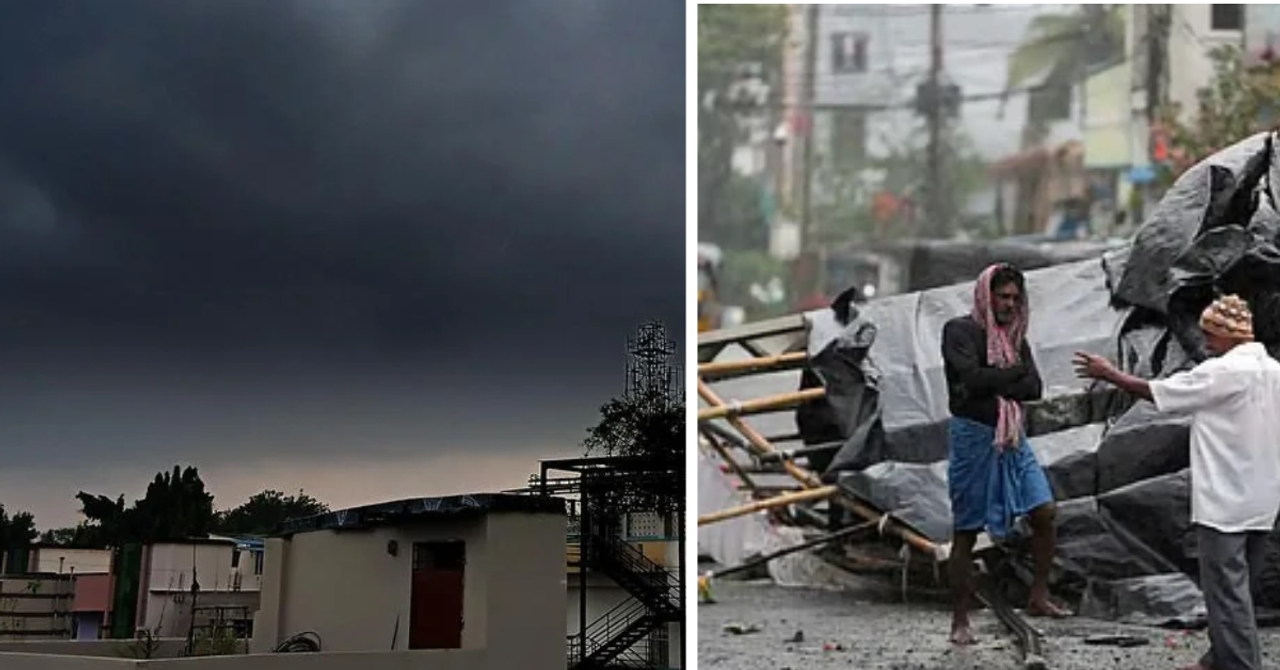
As the wind gathers speed along Odisha’s coast, preparedness begins long before the first tree falls or the first road floods.
For a family living in a low-lying village, it could mean knowing which shelter to reach. For a pregnant woman, it could mean moving closer to a health centre before roads become impassable.
Cyclone Arnab has caused extensive damage along the Andhra Pradesh coast, while parts of Odisha continue to experience intermittent rainfall and strong winds. The India Meteorological Department (IMD) has warned that the next 24 hours will be crucial, with the storm expected to move across Odisha towards southern Chhattisgarh, bringing heavy to very heavy rainfall and strong winds.
The immediate priority is to protect lives. But Odisha’s response also reflects a decade of learning to live with cyclones. What does that learning look like on the ground?
When the warning turns into action
The IMD has issued a red warning for six Odisha districts: Nabarangpur, Rayagada, Koraput, Malkangiri, Gajapati and Ganjam. Extremely heavy to very heavy rainfall, accompanied by strong winds, is forecast in these areas.
The initial alert cited wind speeds of 50–70 kmph in the six districts, while broader forecasts for the affected areas have indicated the possibility of stronger winds.

Bargarh, Subarnapur, Boudh, Nuapada, Balangir, Kalahandi, Kandhamal, Puri, Khordha and Nayagarh are also expected to receive heavy to very heavy rainfall, with winds reaching 40–60 kmph.
Here is what Odisha has done so far:
-
Rail services have been disrupted, with more than 60 services reportedly cancelled across the affected network and others modified. Distant Warning Signal Number Two has been hoisted at Paradip and Dhamra ports, while Puri and Gopalpur ports have Local Cautionary Signal Number Three.
-
Fishermen have been advised not to venture into the sea as conditions turn rough to very rough, with high seas expected along the southern Odisha coast.
-
Schools and other educational institutions in affected areas have been closed, beaches shut to visitors, and restrictions on coastal road movement planned as part of the precautionary measures.
The rescue teams waiting before disaster strikes
One important part of cyclone preparedness is ensuring that help does not have to travel from scratch after the storm hits.
Odisha has reportedly deployed 313 response teams: 60 Odisha Disaster Rapid Action Force (ODRAF) teams, nine National Disaster Response Force (NDRF) teams and 244 Fire and Emergency Services teams. Personnel from these agencies, alongside the police, have been positioned in vulnerable areas to respond to emergencies.
For now, the immediate task is to keep people away from dangerous coastlines, move vulnerable residents to safety and ensure rescue teams can reach those who need help.
But these preparations are part of a much longer journey, shaped by disasters that exposed the cost of inadequate warning systems and limited evacuation infrastructure.
A decade of lessons, tested by every storm
On 29 October 1999, a super cyclone struck Odisha’s coast near Paradip with wind speeds estimated at 260–270 kmph. A storm surge more than 20 feet high, torrential rain, and widespread flooding battered coastal districts, washing away homes and cutting off communities from the outside world. Nearly 10,000 people died.
Warnings did not reliably reach everyone who needed them, evacuation was limited, and there were too few shelters along the coast.
In December 1999, Odisha established the Odisha State Disaster Management Authority. The Odisha Disaster Rapid Action Force followed in 2001, creating a specialised force for rescue and emergency response. Over the following years, disaster planning increasingly involved identifying vulnerable villages, mapping evacuation routes, building shelters and preparing communities before a storm arrived.
The difference became visible in October 2013, when Cyclone Phailin approached the coast. The storm was powerful, with winds reaching around 200 kmph or more, but the response was markedly different from 1999.
VIDEO | Cyclone Arnab: Visuals from Gopalpur Beach in Ganjam, Odisha (11:08 pm, Tuesday). (Full video available on PTI Videos - https://t.co/d8jp61yd2p) https://t.co/qWTTHHfRX1
— Press Trust of India (@PTI_News) October 27, 2026
Authorities evacuated more than one million people across Odisha and Andhra Pradesh, moving residents away from vulnerable coastal areas and into shelters and other safe buildings. In Odisha, the reported death toll was far lower than during the super cyclone, although fallen trees, damaged homes and disrupted infrastructure still left a substantial recovery effort.
Six years later, Cyclone Fani offered another test. The IMD began tracking the developing storm days before it made landfall near Puri on 3 May 2019, giving authorities time to issue warnings and organise evacuations. More than 1.4 million people were evacuated in Odisha. Fani still caused widespread destruction, with powerful winds damaging homes, electricity infrastructure and trees, but the death toll was contained to dozens.
What preparedness looks like for people on the ground
The measure of preparedness must go beyond the number of people evacuated or rescue teams deployed.
For a family living in a low-lying village, preparedness could mean knowing which shelter to reach. For a pregnant woman, it could mean moving closer to a health centre before roads become impassable.
As Odisha braces for the storm, the immediate task is to ensure that warnings translate into action across vulnerable areas. Rescue teams must be able to reach those who need help, and residents must be able to move to safety before conditions deteriorate.
A decade of cyclone learning is not a story of better forecasts or more teams on standby. It is measured in the time a family has to leave before floodwater rises, the distance a pregnant woman must travel to reach medical care, and whether a village can get help when roads are cut off.
The storm may pass. For the people living in its path, the quality of preparedness can shape what happens for months afterwards.
Sources:
‘Odisha, Andhra shut schools, ban fishing as Cyclone Arnab nears; Centre stresses zero casualty’: By Press Trust of India, Published on 27 October 2026
‘Cyclone Arnab impact: Red warning for six Odisha districts, heavy rain to continue’: By Poonam Singh, Published on 28 Oct 2026
‘Cyclone Phailin triggers India's biggest evacuation operation in 23 years’: By Press Trust of India, Published on 12 October 2013
‘Orissa super cyclone – A Synopsis’: By S.R. Kalsi, India Meteorological Department, Published in 2006
This content is published by The Better India and has not been created or edited by Hello Headlines. View original