Ban on new borewells threatens construction activity, livelihoods
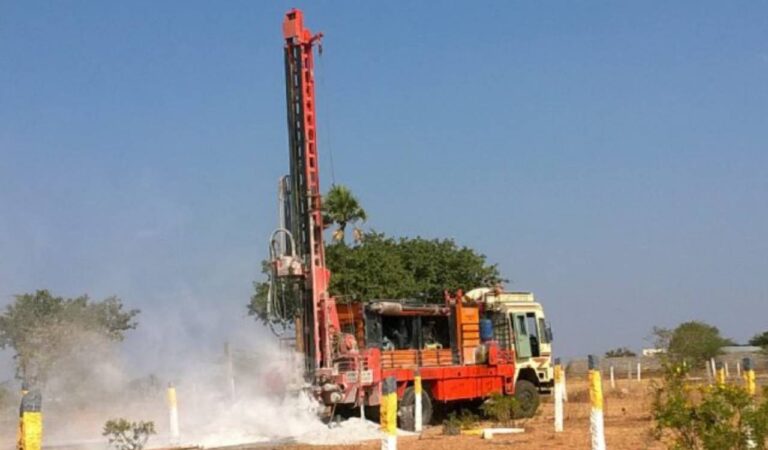
Hyderabad: The State government’s decision to prohibit the sinking of new borewells for construction and other purposes from November 1 has triggered concerns among builders, daily wage labourers and borewell rig operators, who fear mounting financial losses, disruption of construction activity and loss of livelihood.
While builders are worried about delays in water supply pushing up project costs, thousands of workers dependent on construction activity fear losing their daily earnings. Borewell rig owners, meanwhile, are concerned about repaying bank loans and paying salaries to their employees.
The restrictions, introduced as part of the government’s contingency measures to tackle the anticipated El Nino-induced water crisis, have also raised concerns about the possibility of workers and rig operators migrating to neighbouring States in search of employment.
Last week, Chief Secretary Sanjay Jaju directed officials to prepare micro-level contingency plans to prevent drinking water and electricity shortages. He said department-wise plans had already been prepared to address the severe conditions expected due to El Nino.
Government offices were also instructed to use electricity economically, with air conditioners to be operated at 25 degrees Celsius only when necessary during the daytime and their use significantly reduced after 6 pm.
With water supplies from the Manjeera and Singur reservoirs unavailable, officials said the usual 110 million gallons per day (MGD) supply was being supplemented through alternative sources, including 60 MGD from Mission Bhagiratha and additional supplies from the Krishna river and other sources.
As part of water conservation measures, Special Chief Secretary Jayesh Ranjan said permission for drilling borewells in Hyderabad should be restricted to drinking water requirements, subject to existing regulations. No new borewells would be permitted for construction or other activities.
However, deepening of existing borewells would be allowed exclusively for drinking water requirements. From November 1, treated water from Sewage Treatment Plants (STPs) would be supplied to construction sites through green water tankers.
Builders fear 2-3% increase in project costs
Builders, particularly those constructing conventional apartments and individual houses, are questioning whether sufficient treated water would be available to meet the construction industry’s requirements.
A member of the Telangana Builders Federation (TBF) said transporting treated water from the plant at Ramanthapur to construction sites would substantially increase expenditure.
He also raised concerns about the suitability of treated water for construction, claiming that its use could cause corrosion of cement and steel and that structural engineers did not recommend it.
Any disruption in water supply would delay construction schedules and increase expenditure, he said.
“Even if water availability is reduced, the workforce at construction sites cannot be cut immediately. Such delays could increase project costs by at least two to three per cent. Depending on the project size, the additional expenditure could be substantial,” he explained.
The TBF member warned that prohibiting borewell drilling at construction sites could hamper building activity across Hyderabad.
“This is going to be a challenging situation for builders. We will take up the matter with the government,” he said.
Daily wage workers fear loss of livelihood
For thousands of construction workers, the restrictions have raised concerns about their immediate livelihood.
Skilled workers earn between Rs 1,000 and Rs 1,500 a day, while semi-skilled workers receive Rs 400 to Rs 500. Most are hired and paid on a daily basis, leaving them vulnerable to any slowdown in construction activity.
Their concerns have intensified following Chief Minister A Revanth Reddy‘s warning that the State could face water and power supply challenges for the next eight to ten months.
“If builders reduce the workforce or delay construction citing water shortages, how will we manage our daily needs? Prices of essential commodities are already rising sharply. We migrated from our native villages to Hyderabad in search of work and cannot afford to sit idle,” said Narasimha, a daily wage worker at Yousufguda.
Workers fear that a prolonged slowdown could force them to return to their villages or move elsewhere in search of employment.
Rig owners worried about EMIs, contemplate migration
Borewell rig operators are equally concerned about the financial implications of the restrictions.
Though official figures are unavailable, Greater Hyderabad is estimated to have around 250 borewell operating firms.
According to the Greater Hyderabad Rig Owners Association, each borewell drilling truck supports around eight workers. Besides paying their salaries, operators must meet equipment maintenance expenses and substantial bank loan repayments.
Depending on the size, a borewell drilling truck costs between Rs 1.5 crore and Rs 2 crore, with most operators purchasing the vehicles through bank loans.
The association fears that a prolonged ban could leave operators struggling to pay their equated monthly instalments (EMIs), exposing them to the risk of vehicle repossession by banks.
“Water conservation is essential, but we also have bank installments to pay. If the government bans borewell drilling, we will be forced to migrate to Karnataka, Maharashtra and Andhra Pradesh in search of business,” said a member of the association.
Unlike the lockdown imposed during the Covid-19 pandemic, the present water and power crisis could continue until the next monsoon, he pointed out.
The association has already raised the issue with Rajya Sabha MP Vem Narender Reddy and other Congress leaders.
It urged the government to act firmly against unauthorised borewell drilling while exempting genuine requirements, particularly at construction sites.
High-rise builders concerned about water for workers’ quarters
Builders undertaking high-rise projects have raised another concern: ensuring adequate water supply to workers living at construction sites.
Although advances in cement manufacturing technology have reduced water requirements for curing, providing water to labour quarters remains a major challenge.
According to industry representatives, an estimated 15 lakh to 20 lakh migrant workers, including civil workers, electricians and plumbers, are engaged at construction sites. Many reside in temporary quarters at these locations.
A member of CREDAI Hyderabad said treated water could not meet all the requirements of workers living at construction sites.
“Treated water cannot be used for workers’ quarters. If water supply to these quarters is affected, workers will return to their native places. This will delay projects, and we will have to answer to customers and banks,” he said.
With the water crisis expected to persist for several months, builders and borewell operators are seeking exemptions and alternative arrangements to prevent construction activity from coming to a standstill.
This content is published by Telangana Today and has not been created or edited by Hello Headlines. View original