Dosas, Diwali, Temple Visits: How US Midterm Candidates Are Wooing Indian-American Voters
With Indian-American voters emerging as an influential constituency in closely contested US midterm election races, candidates are stepping up their outreach efforts, from trying their hand at making dosas at Indian restaurants to attending Diwali celebrations and visiting Hindu temples.
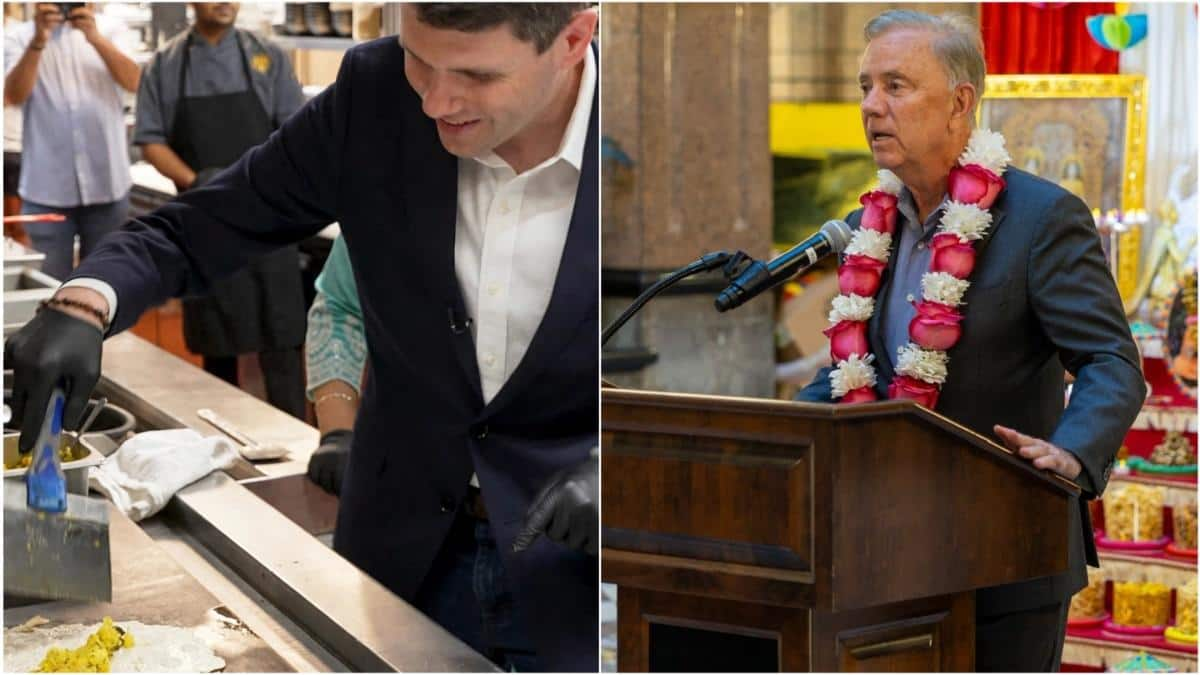
Democratic Senate nominee James Talarico recently tried his hand at preparing dosas at an Indian restaurant in Irving, a Dallas suburb with a sizeable Indian-American population. Dressed in a black suit and white shirt, Talarico scooped dosa batter from a bowl, spread it evenly on a hot pan and topped it with a spicy potato mixture.
He then folded the crispy dosa and served it on a banana leaf placed on a plate, drawing applause from those present.
The gesture received a warm response from members of the Indian-American community in Texas, which has faced racist attacks from a section of Republicans. Talarico is mounting a strong challenge to Republican nominee Ken Paxton in the Senate race in the traditionally Republican state.
Dosa Outreach Draws Attention In Texas Senate Race
Reacting to Talarico's outreach, businessman James Blunt highlighted the contrast between the Democratic candidate's gesture and remarks targeting the Indian-American community by some Republican-linked influencers.
“James Talarico is seizing the moment. The contrast couldn’t be clearer. Paxton surrounds himself with influencers calling Indians scammers and saying Indian food stinks, intimidating Indian Texans. Talarico wears a suit and makes dosas,” Blunt said in a post on X.
“One party serves up division. The other is serving Indian rice crepes, which, by the way, taste freaking amazing,” he added.
James Talarico is seizing the moment. The contrast couldn’t be clearer. Paxton surrounds himself with influencers calling Indians scammers and saying Indian food stinks, intimidating Indian Texans. Talarico wears a suit and makes dosas. One party serves up division. The other is serving Indian rice crepes, which, by the way, taste freaking amazing. Go vote for @jamestalarico.
— James Blunt (@JBlunt1018) October 30, 2026
ALSO READ: US To Deport 150 Afghan Refugees To Pakistan In First-Ever Flight, Fears Of Taliban Reprisals Grow
US Candidates Attend Diwali Celebrations, Visit Hindu Temples
Indian temples and Diwali celebrations have also become important stops in candidates' outreach efforts, particularly in states with sizeable Indian-American populations.
Connecticut Governor Ned Lamont, who is seeking another term, attended Diwali celebrations organised at the State Capitol alongside his Deputy Secretary of State, Jennifer Barahona.
The spirit of Diwali illuminated the Connecticut State Capitol! Within the halls where Connecticut’s history is shaped, the @BAPS community came together to share a tradition that celebrates light, faith, and the power of bringing people together. We were honored to welcome @GovNedLamont and CT Deputy Secretary of State, Jennifer Barahona, to our Diwali celebration, sharing the joy of the festival and the values that continue to connect communities across generations.
— BAPS Public Affairs (@BAPS_PubAffairs) October 25, 2026
In Ohio, Congressman Greg Landsman joined the 11th Patotsav celebrations at the BAPS Swaminarayan Temple in Sharonville, marking the anniversary of the temple's consecration.
US Senator Cory Booker of New Jersey also attended Diwali celebrations at the Akshardham temple.
Meanwhile, Congressmen Randy Fine and Scott Perry visited a temple in Harrisburg, Pennsylvania, as part of their outreach to the community.
Congressman John James visited a Swaminarayan temple in Michigan, where he learnt about its traditions and the spirit of service associated with the Hindu American community.
ALSO READ: Tanker Carrying 27 Indians Targeted In First-Ever Limpet Mine Attack In Strait Of Hormuz
Why Indian-American Voters Matter In US Midterm Elections
The Indian-American community has a significant presence in several US states, including California, Texas, New Jersey, New York, Washington, Illinois, Pennsylvania and Georgia.
Their electoral influence is particularly relevant in closely contested battleground states such as Georgia, Pennsylvania, Michigan and North Carolina, where even a one or two percentage-point difference in the vote could tilt an election in favour of a candidate.
With several races expected to be closely fought, candidates are making efforts to connect with Indian-American voters through cultural events, temple visits and community interactions.
(With agency inputs)
This content is published by ABP Live - World and has not been created or edited by Hello Headlines. View original