NFR Signs MoU with IIT Roorkee to Develop Advanced Crack Detection and Residual Fatigue Life Assessment Methodology for Railway Steel Bridges
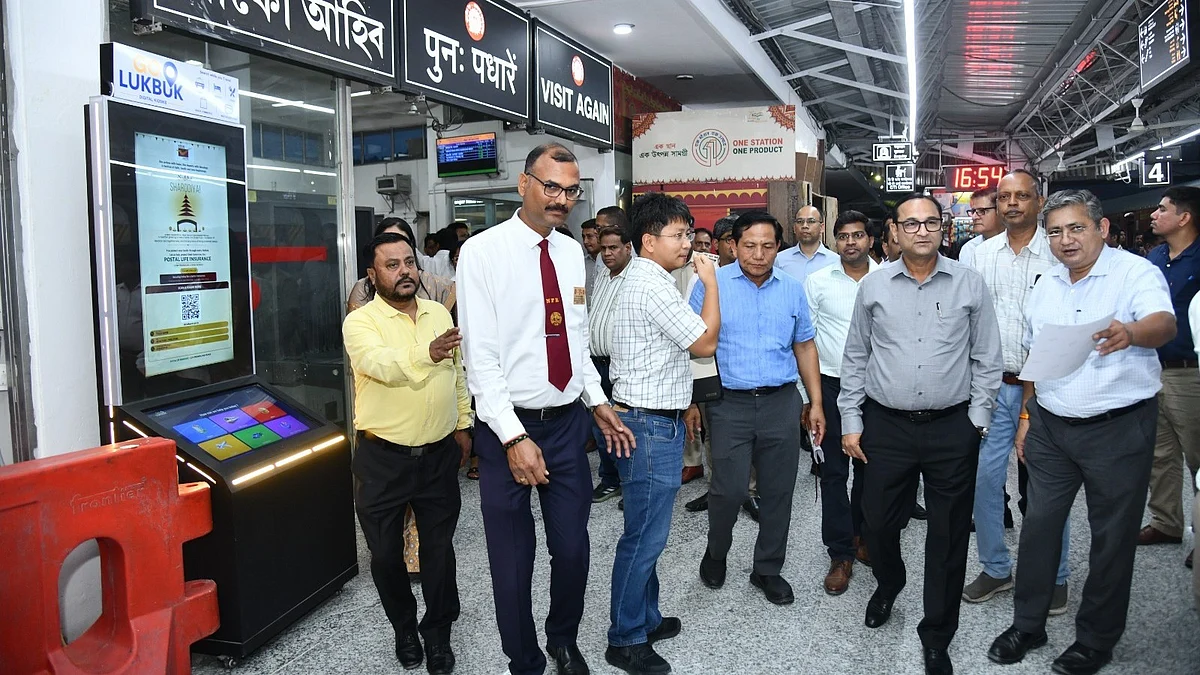
Northeast Frontier Railway (NFR) has signed a Memorandum of Understanding (MoU) with the Indian Institute of Technology (IIT), Roorkee, on 27th October 2026 for the “Development of Hybrid Crack Detection Methodology including Assessment of Residual Fatigue Life in Railway Steel Bridges.” The initiative aims to strengthen the scientific assessment of ageing steel bridges through a combination of conventional inspection techniques, non-destructive evaluation (NDE), artificial intelligence (AI), material testing and advanced structural analysis.
The initiative assumes significance in view of the ageing steel bridge infrastructure across Indian Railways, including bridges on NFR that have been in service for more than 50 years. Increasing train speeds, heavier loads and repeated movement of trains has warrant for fatigue analysis and accordingly all the welded joints, holes and other vulnerable parts of a bridge will be studied in details by IIT Roorkee. Although regular inspections are carried out as per established railway standards, conventional visual checks and testing methods may not always detect very small or hidden cracks. The project aims to strengthen existing inspection practices through a combination of visual inspection, advanced testing and AI-based technology.
The project will focus on two key areas: improving crack detection if any and assessing the remaining service life of steel bridges. High-resolution images captured during inspections will be analysed using InfraDocT, an AI-based tool developed by the project team, to help identify cracks and other signs of damage at an early stage. These findings will be combined with suitable Non-Destructive Evaluation (NDE) techniques, which help identify defects without damaging the structure. The project will also use computer-based modelling and laboratory tests to identify vulnerable parts of steel truss and girder bridges and understand how different types of steel and welded joints respond to repeated loading. High-resolution images, including those captured using 4K cameras mounted on drones, will also be used. The information collected from these inspections and instruments will help verify the computer-based models and assess the remaining fatigue life of the selected bridge.
Laboratory tests will examine the strength and fatigue behaviour of steel, including its base material, welded joints and the areas affected by welding. The study will assess how factors such as corrosion, temperature changes, humidity and repeated loading affect the development and growth of flaws. These findings will be used to develop a scientific model to estimate the residual fatigue life, or the remaining service life of bridge components under repeated loading. This will help provide a better understanding of how ageing and deteriorating steel structures respond to continued use.
The project also aims to develop a real-time fatigue damage assessment system with an alert-based decision-support mechanism. By bringing together inspection results, laboratory findings and data collected from the bridge, the system will help assess the gradual build-up of damage and provide alerts to support timely maintenance decisions. This is expected to help railway authorities identify vulnerable areas, prioritise inspections and plan maintenance more effectively.
Through this collaboration with IIT Roorkee, Northeast Frontier Railway aims to strengthen bridge inspection and maintenance through research, AI-based technology and scientific assessment. The initiative is expected to supplement existing inspection practices, improve the early detection of flaws and support better assessment of the condition and remaining service life of steel bridges, contributing to the long-term reliability and safety of railway infrastructure.
This content is published by Free Press Journal and has not been created or edited by Hello Headlines. View original