Deeptech startups gain VC attention as India’s investment landscape evolves
India’s deeptech startup ecosystem is witnessing growing investor interest, with themes such as technological sovereignty, import substitution, AI infrastructure and advanced manufacturing emerging as key investment opportunities. After years of limited access to early-stage capital, deeptech ventures are increasingly attracting funds willing to back them from the pre-seed stage, signalling a shift in the country’s venture capital landscape.
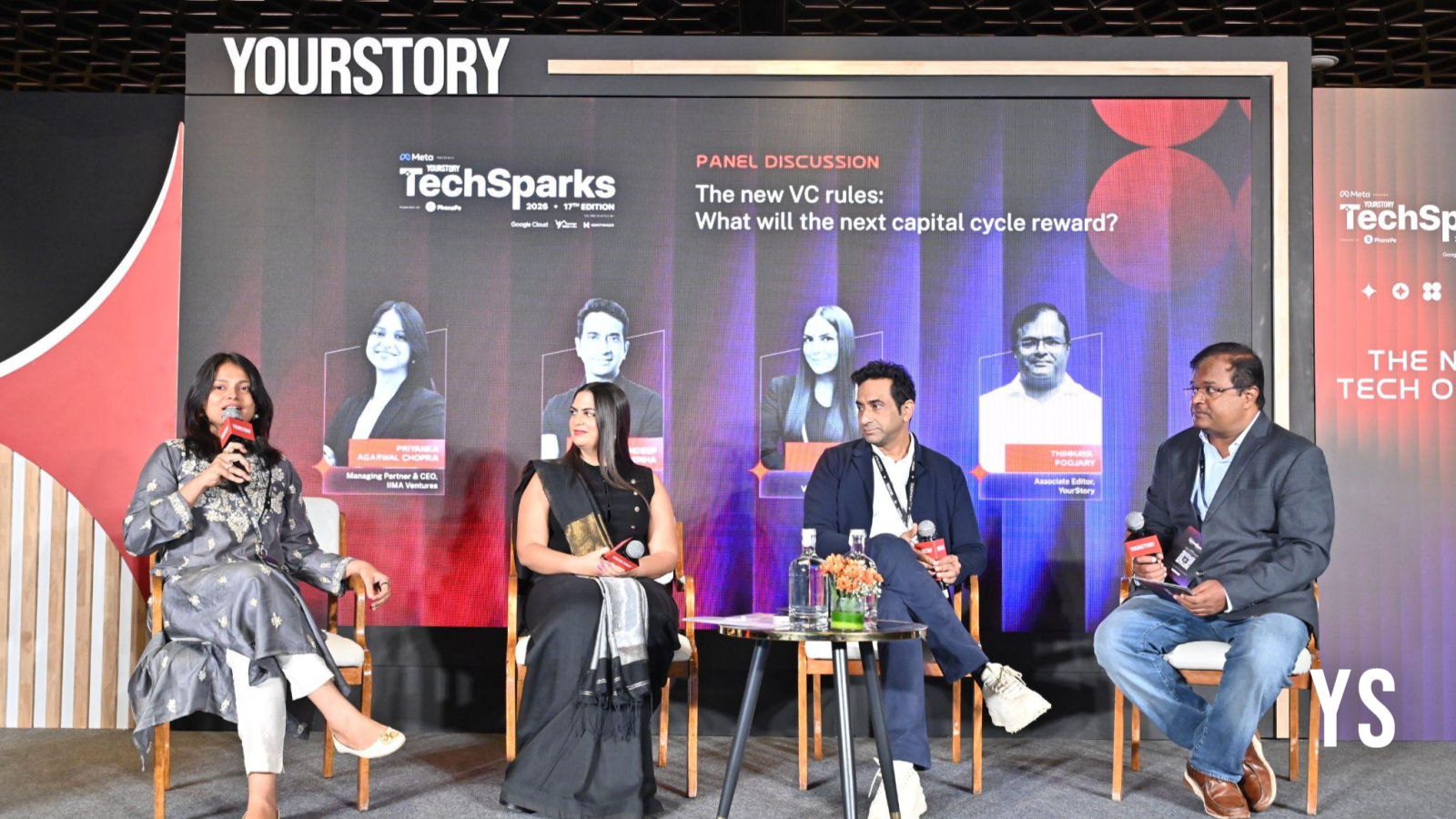
During a panel discussion at TechSparks 2026, an incubator, early stage venture capital firm and a late stage investor provided interesting perspectives on the evolving investment landscape in India, particularly in the areas of artificial intelligence and deeptech.
Priyanka Agarwal Chopra, Managing Partner and CEO of IIMA Ventures, said deeptech had traditionally been a challenging investment segment because of its high risks and longer gestation periods, which often did not align with conventional venture capital timelines.
“When we started, our founding vision was to address gaps in India's innovation and entrepreneurship ecosystem, particularly in markets and sectors where private sector capital was not available,” she said.
IIMA Ventures was among the early investors in India's deeptech ecosystem, supporting companies in areas that were then categorised as high technology. Chopra said two major themes currently driving deeptech innovation in India are technological sovereignty and import substitution.
She added that while investing in deeptech at the early stages was once a relatively isolated proposition, more funds are now showing interest in supporting companies even at the pre-seed stage.
The growing focus on building indigenous technology capabilities is also creating opportunities for Indian startups to address domestic requirements while developing products for global markets.
Anaina Malik, Partner at VU Venture Partners, said AI infrastructure would be an important investment opportunity as India expands its AI application ecosystem. She emphasised that infrastructure development should receive attention alongside application-led innovation.
Malik also identified agriculture and advanced manufacturing as underserved sectors with considerable potential for technological disruption. She said the firm was looking at startups addressing India's domestic requirements as well as companies building products and solutions for international markets.
According to her, the boundaries between domestic and global markets are increasingly dissolving, with international capital also showing greater interest in investment opportunities emerging from India.
Meanwhile, Sandeep Sinha, Co-founder and Co-CEO of Oister Global, said India's deeptech ecosystem had matured considerably, with several companies that began their journeys eight to 10 years ago now reaching commercial readiness.
He pointed out that many of these ventures had already addressed significant technology and research and development risks and were generating revenues from both domestic and international markets.
Sinha said deeptech companies were increasingly demonstrating the ability to create value through revenue growth, margin expansion and market expansion. The emergence of commercially viable businesses with greater revenue visibility represents an important development for investors evaluating the sector.
While acknowledging that the funding ecosystem remains somewhat fragmented, he described the current activity as 'chaos by design', adding that the increased movement of capital and investors over the past 18-24 months had brought deeptech into sharper focus.
The panellists also highlighted the importance of founder capabilities in determining investment decisions, particularly at the early stages when financial and operating data are limited.
Chopra said investors at the early stage place considerable emphasis on four parameters: founder depth, founder-problem fit, the unique insight of the entrepreneur and the market opportunity.
Sinha, meanwhile, stressed the need for founders to build predictable businesses and diversify their customer base rather than depend excessively on a single customer, irrespective of its importance.
Beyond AI
On investment sizes, Malik said VU Venture Partners' initial cheque sizes remained between $250,000 and $1 million. However, the firm had increased its follow-on investments, choosing to stay invested for longer and support founders through different stages of growth.
She added that evaluating AI startups had become more challenging because of the large number of companies identifying themselves as AI businesses. Consequently, the firm was placing greater emphasis on understanding the underlying technology through deeper due diligence.
Despite the growing investor focus on AI and deeptech, Chopra cautioned entrepreneurs against assuming that opportunities in other sectors had diminished. Consumer businesses, fintech and retail continue to offer substantial opportunities, supported by strong domestic demand.
She emphasised that India's startup ecosystem has room for multiple business models and sectors, and encouraged founders to pursue opportunities they are genuinely passionate about.
This content is published by YourStory and has not been created or edited by Hello Headlines. View original