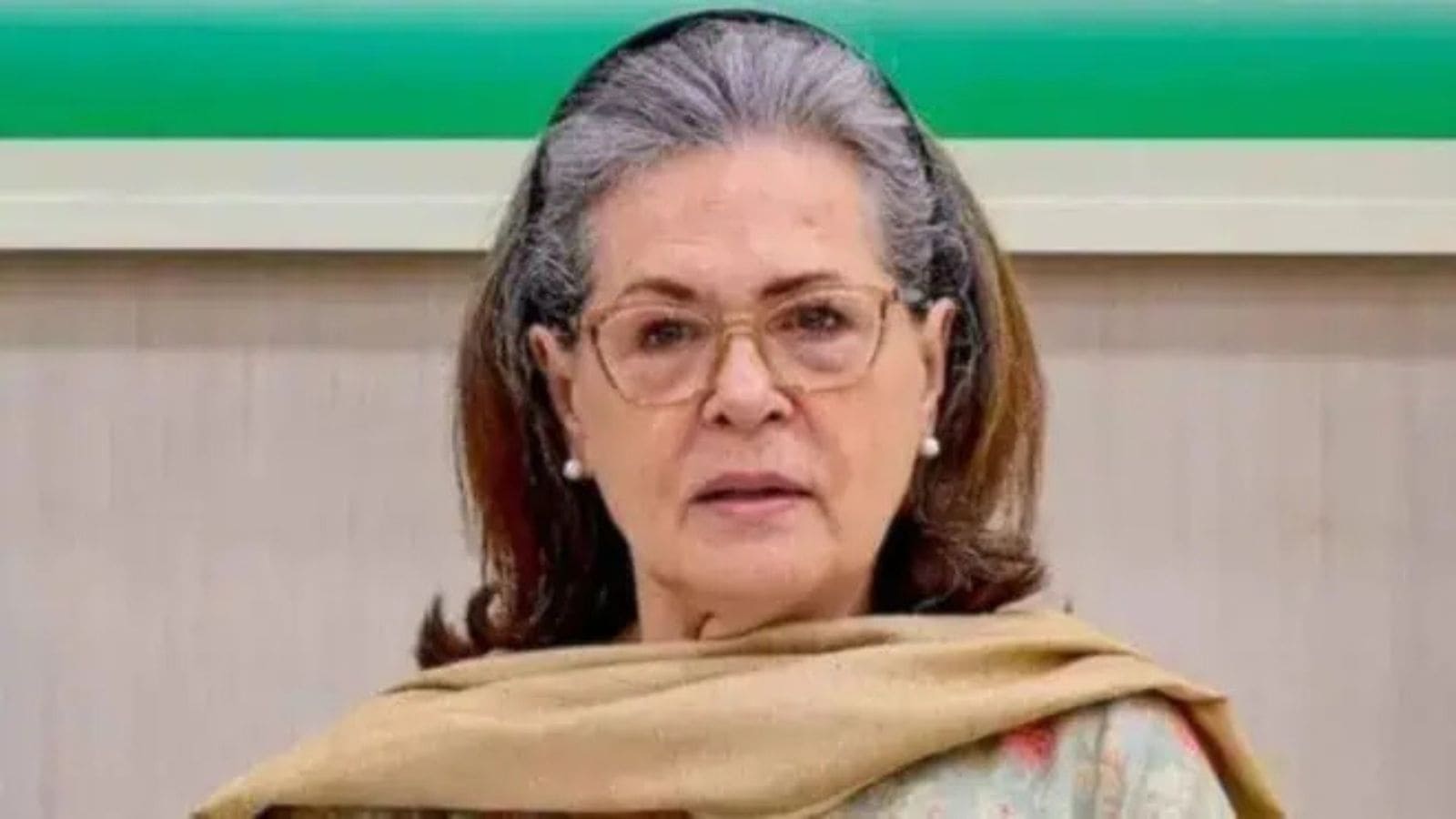
Many elections stolen, great damage to India’s fabric: Sonia Gandhi
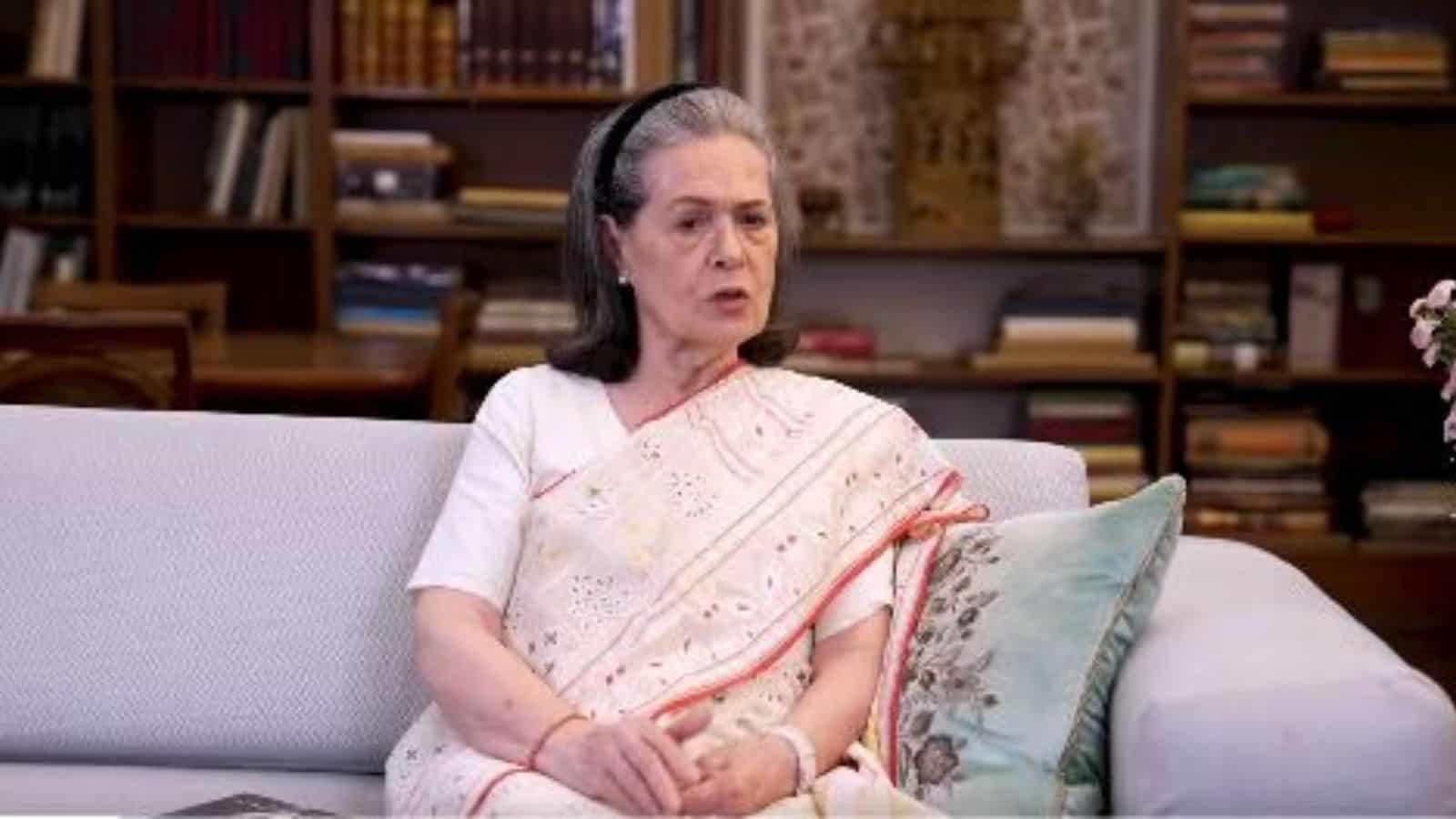
New Delhi: “Great damage” has been done over the last 12 years to the fabric of India, democracy and institutions, Congress Parliamentary Party Chairperson Sonia Gandhi has alleged, asserting that even after the Modi government goes, it will take time to restore the country’s systems back to health.
In an interview with The Hindu ahead of the launch of her book, ‘Belonging: A Journey of Love’, she also pointed out that people are now beginning to be restless and recognising the damage.
“But I am optimistic and I know that the people of India will welcome a return to proper governance,” the former Congress chief said.
“Over the last twelve years great damage has been done to the fabric of our country, our democracy and our institutions. Even after this government goes, it will take time to restore our systems back to health and great effort from political parties,” she said.
Congress and its prospects
Asked about the decline of the Congress and her assessment of its present condition and prospects, Gandhi said, “I am not so pessimistic. Consider that the Congress party and other opposition parties have not had a level playing field since this government came to power.
“Take into account the complete stranglehold they have on all institutions, especially the Election Commission, their control of mainstream media, their money power and their exploitation of religion.”
“Yet, our party is fighting and making progress; in fact, it is the only party that has had the resilience to withstand this onslaught,” Gandhi said.
She alleged that Congress workers and leaders “have faced persecution of all kinds”.
“And yet, in every village and every district, Congressmen and women are still fighting for the values enshrined in our Constitution,” she said.
“What is more, it has been amply proved in recent months that many elections have been stolen, and people are now more aware of it,” she alleged. “The Congress is working with like-minded parties, and our prospects are improving day by day,” she said.
On Modi and the 2004 decision
‘Belonging: A Journey of Love’, published by HarperCollins India, is a personal memoir, with politics providing the background or “a kind of framework”, as she puts it in the book.
On Prime Minister Narendra Modi and what lessons the Congress should draw from his rise, Gandhi said, “It’s true that he comes from a very different ideological world. But there are many ways that people succeed in politics within the Congress party, take for example Dr. Manmohan Singh and Congress President Mallikarjun Kharge. I don’t think we have much to learn from the RSS.”
On whether she wonders how UPA policies and Congress strategy might have differed had she accepted to become prime minister in 2004, Gandhi said, “No, not at all. That has never crossed my mind. Our experience was by and large a very positive one. We worked as a team, and our roles were distinct, with him (Singh) leading the government and I leading the party.”
Publication row over the memoir
Last month, Sonia had said that others have spent decades telling her story and now it’s her turn. She had also said there is bound to be some “tamasha” when her memoir comes out on November 10.
HarperCollins India will publish Gandhi’s 544-page memoir “Belonging: A Journey of Love” in India on November 10, ending the uncertainty over the book’s domestic publication following an “impasse” between the author’s representatives and Penguin Random House India (PRHI).
PRHI, which was initially keen to publish the memoir, subsequently said it would not be the Indian publisher.
The controversy began amid reports of differences between the publisher and the author’s representatives over editorial changes to the manuscript.
Several Congress leaders had raised issues of governmental pressure and freedom of expression with some alleging that there was pressure on Penguin India to remove sections relating to Prime Minister Modi, the RSS and China’s “occupation” of Indian territory during the Modi regime.
PRHI clarified that they were “really keen” to publish the book, describing it as a “hard-won acquisition”, but ultimately decided to step away due to a “stalemate over a particular issue”.
While maintaining there was no external pressure whatsoever, PRHI declined to disclose the exact nature of the impasse, citing confidentiality clauses and their agreement with the author.
What the memoir covers
“Belonging” begins with Sonia Gandhi’s childhood in post-war Veneto, Italy and traces her journey to Cambridge, where in 1965 she met Rajiv Gandhi.
The memoir recounts her marriage to Rajiv Gandhi and her introduction to her mother-in-law, former prime minister Indira Gandhi, as well as her efforts to adjust to life in India, including learning Hindi, wearing saris and adapting to Indian food and culture.
It covers the major tragedies that transformed the Gandhi family, including the death of Sanjay Gandhi in a plane crash, Indira Gandhi’s assassination in 1984 and Rajiv Gandhi’s assassination in 1991.
The memoir also delves into political events surrounding the Congress-led alliance’s victory in the 2004 elections, when Sonia Gandhi declined to become prime minister and instead led the party and its alliance, which governed India for a decade.
Get the latest updates in Hyderabad City News, Technology, Entertainment, Sports, Politics and Top Stories on WhatsApp & Telegram by subscribing to our channels. You can also download our app for Android and iOS.
This content is published by The Siasat Daily and has not been created or edited by Hello Headlines. View original