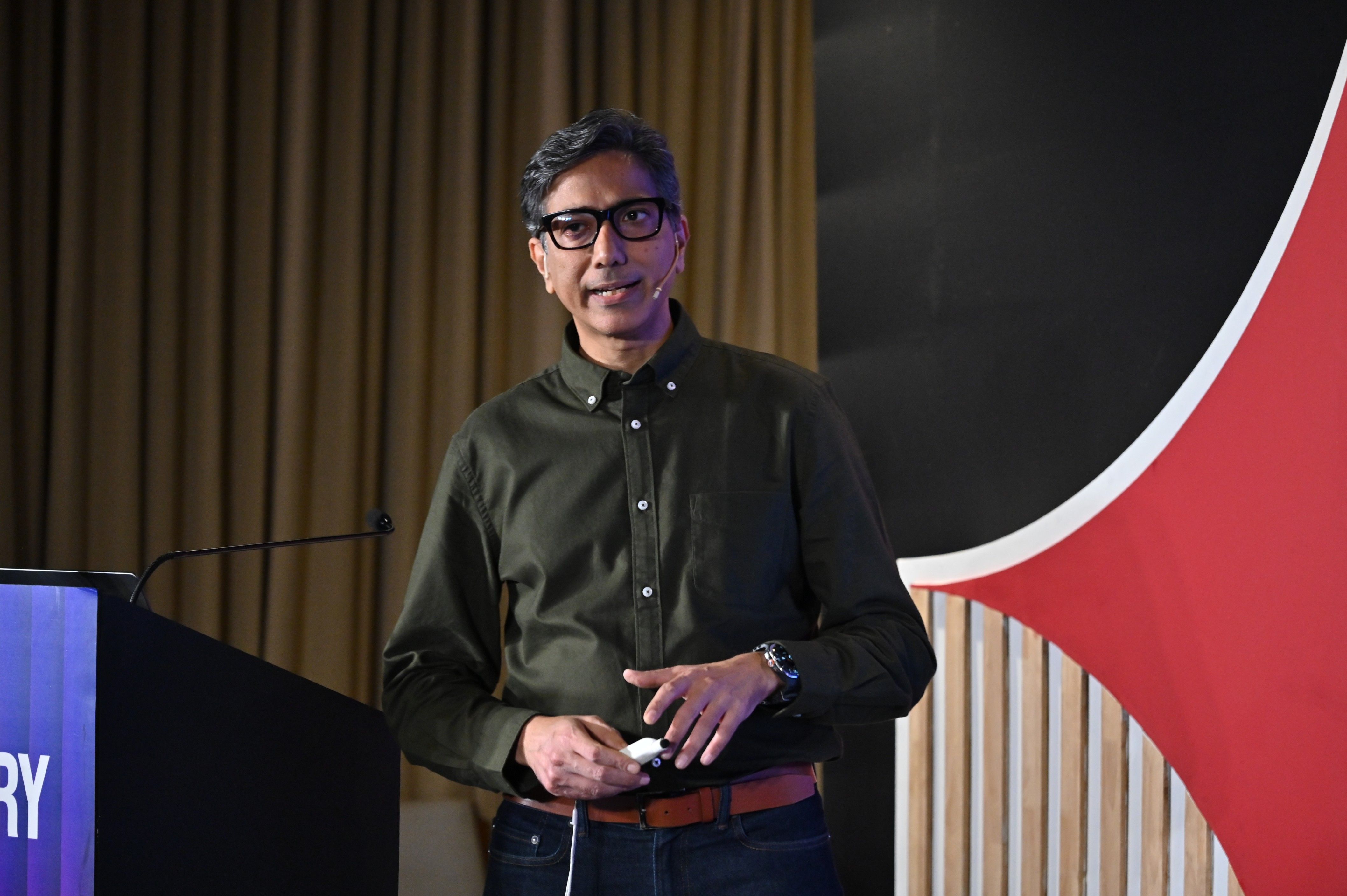
From multi-lingual AI agents to the future of voice: Google Cloud’s Naren Kachroo at TechSparks 2026
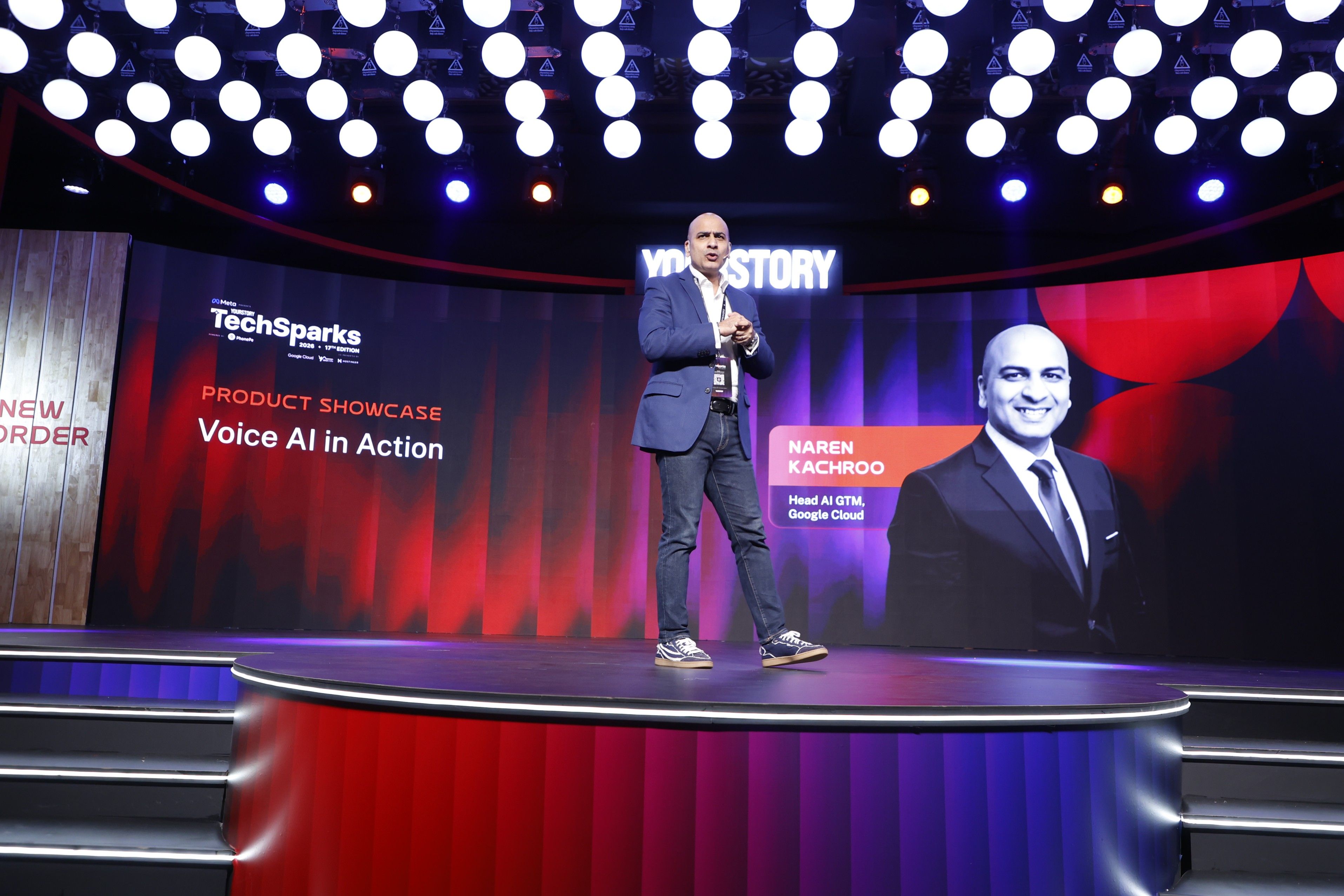
For Naren Kachroo, the most useful AI is the kind that finishes the job. “There is no value created without the task actually getting completed with AI,” said Kachroo, Head of Sales & GTM AI at Google Cloud. At TechSparks 2026, during a product showcase titled ‘Voice AI in action’, Kachroo walked through Google’s latest voice models, customer use cases, and a live demo built for small businesses. His argument was: voice is becoming the main way people will interact with AI, and in India, that shift will happen in local languages and accents.
Kachroo said the industry has moved past treating generative AI as a question-and-answer tool. “We have moved from thinking about generative AI as chatbots, as something that we ask questions of and we get answers from,” he said.
The focus now is AI that has access to tools, data, and capabilities, and can take actions on a person’s behalf.
“We are not building AI for the sake of AI,” he added. The goal, he said, is AI that improves how people live and work everyday.
Two voice models, two jobs
Google recently announced Gemini 3.8 Live and Gemini 3.8 Live Extended Thinking. Gemini 3.8 Live can detect and switch between 97 supported languages within the same conversation. Kachroo explained how businesses should choose between the two models.
Gemini 3.8 Live suits simpler conversational and agentic tasks, such as a live voice chat with basic tool calling. Extended Thinking suits conversations that need deeper reasoning, context switching, and multiple steps. Cost also matters, he noted: Extended Thinking costs more per token.
Both are voice-to-voice models, which handle speech as input and output in a single model. For developers who need only one part of that pipeline, Google also offers separate models for text-to-speech, speech-to-text, and live translation.
Kachroo said the latest Gemini text-to-speech model performed strongly in Google’s internal testing with Indian languages, accents, and tonality.
What the demos showed
Kachroo played a series of short demos to show the range of use cases.
In the first, Shopify’s assistant, Sidekick, guided a merchant step by step through connecting a domain in the Shopify admin. In the second, a voice agent booked a restaurant table for eight people. Midway, the caller asked whether a cake was allowed, shared a photo from Google reviews to ask whether a dish was vegetarian, and asked about other vegetarian options before confirming.
The second demo required the agent to track context across multiple turns, remember preferences, and make several tool calls. That kind of task, Kachroo said, is where Extended Thinking fits.
He also showed Live Avatar, which pairs Gemini’s live voice with real-time video generation and lip-syncing, so users see an animated face as well as hear a voice. Google made Live Avatar available to businesses through Gemini Enterprise recently, and marks the audio and video it generates with an invisible SynthID watermark. Citi was a pilot customer: its Citi Sky assistant, built with Google DeepMind’s real-time avatar technology and the Gemini Live API, walks US wealth clients through options, such as what to do with a maturing certificate of deposit.
Why the cost is lower
Kachroo said Gemini 3.8 Live has the lowest cost per turn of any comparable model, and that Extended Thinking tops industry benchmarks for speech-to-speech quality.
Google has said Extended Thinking scored 82.6 on Artificial Analysis’ speech-to-speech quality index, the highest overall score.
The low price is not a land grab, he said. Google runs the full stack itself, from its TPU chips and infrastructure to the models and applications, and passes the efficiency gains on to customers. That lets Google offer both a top-quality model and a lower-cost workhorse model.
He pointed to two customers as examples of voice AI in use: Autotrader, which uses the technology for buying and selling used cars, and Equal AI, an Indian startup whose assistant answers and handles phone calls before the user picks up.
A sales agent for small businesses
The centerpiece of the session was a live demo of an assistant for micro, small, and medium enterprises (MSMEs), which Kachroo said his team built in about a day. It is a large potential market: more than 7.8 crore enterprises were registered on the government’s Udyam portal as of February 2026, according to the MSME ministry. Kachroo flagged one risk upfront: he was running it on a mobile hotspot after failing to connect to the hotel network.
The demo featured a fictional safety gear company and its owner, Rajesh, who had just received about 500 helmets. Speaking to the assistant, Rajesh asked how many leads he had for helmets. The assistant found two: a construction firm in Mumbai that needed 500 helmets, and a hardware store in Agra that needed 50.
Rajesh told the assistant to drop the smaller lead, send a quotation to the Mumbai buyer, and call them to close the deal. He set one condition: the price had to stay above Rs 400 per helmet, and the assistant could book the order without coming back for approval.
The assistant then called the buyer and negotiated in Hindi. Kachroo said it carried context from the internal conversation with Rajesh into the external call, negotiated on the company’s behalf, and closed the deal.
That end-to-end flow is where Google wants voice AI to go, he said. With the 3.8 Live models, he believes businesses can now build voice agents into their processes that complete tasks on their own.
Built for how India speaks
Kachroo said the assistant could have held the same conversation in Tamil, Telugu, Malayalam, Kannada, Marathi, and other languages. That matters, he argued, because the Indian consumer is moving voice-first. Gemini Live itself now supports more than 25 Indian languages and dialects. According to the IAMAI-Kantar Internet in India 2024 report, 98% of India’s 886 million active internet users accessed content in Indic languages, and one in five used voice commands to go online.
“I believe that voice is the future,” he said. Voice AI in India, he added, will need to be native to the languages people speak, the accents they use, and what they are most comfortable with.
Kachroo said Google DeepMind has a team in Bengaluru researching voice, focused on Indian accents and cultural nuances. Google also funds Project Vaani, run by the Indian Institute of Science and ARTPARK, which has open-sourced more than 31,000 hours of speech in 105 languages from 165 districts.
Kachroo closed with an invitation for founders and developers to try the models, use the experiences, and share feedback, including what does not work, so that Google’s research and product teams can improve them. His larger point was that voice AI is ready to move beyond conversation into execution, and that India, with its range of languages and its voice-first users, is one of the markets where that shift will be tested first.
This content is published by YourStory and has not been created or edited by Hello Headlines. View original