From early traction to global scale: How AI is rewriting the cross-border playbook for Indian startups

India has spent two decades getting good at building for Indians. The bigger opportunity now is building from India for everyone else.
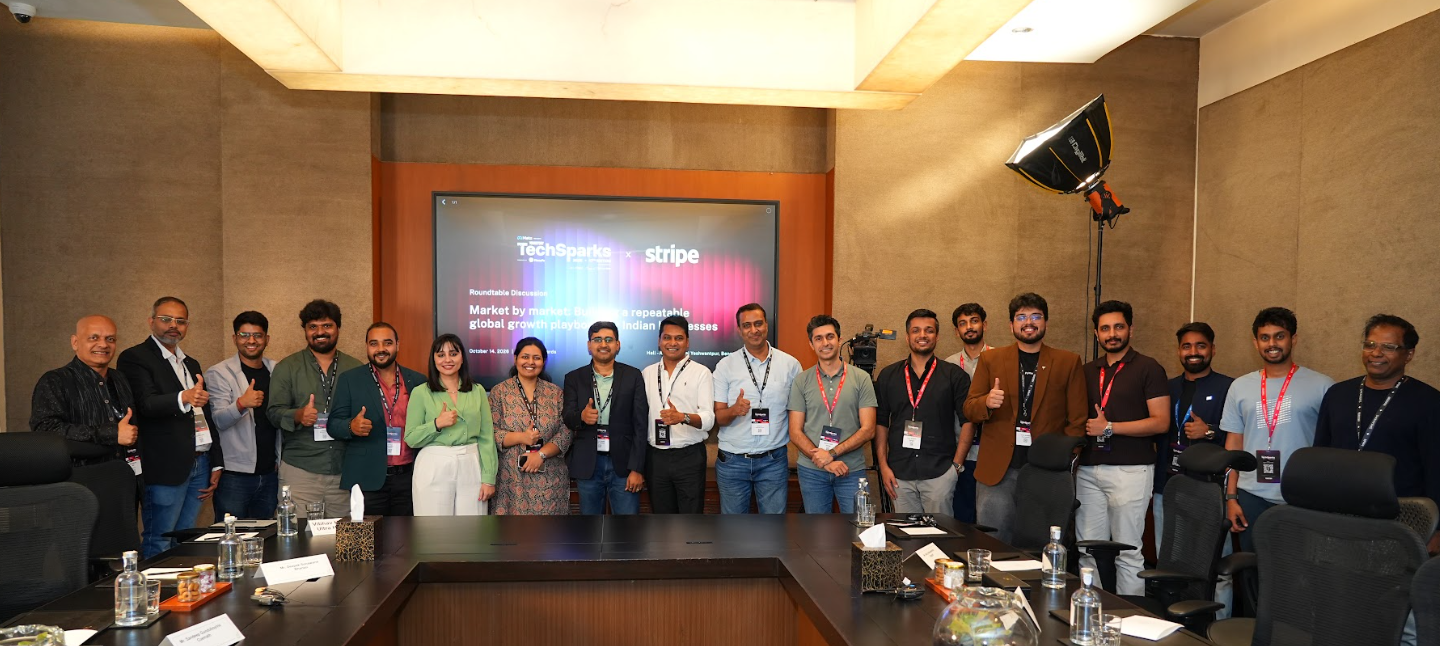
That shift took center stage at TechSparks 2026, YourStory’s flagship event, in a fireside chat titled ‘From early traction to global scale: Decoding cross-border commerce Manish Maheshwari, Managing Director, India, Stripe, spoke with Shradha Sharma, Founder and CEO of YourStory and The Bharat Project, about what it takes to turn overseas sales into lasting growth.
A new way to build a company
Sharma opened by asking where India stands in the AI race. Maheshwari was optimistic. AI, he said, is creating a new way of operating, the minimum viable company, which “can be a one-person company”. For Indian entrepreneurs, that means they “can think global and go global on day one”.
Maheshwari backed this up with examples. Emergent, a startup out of India, reached $100 million in annual recurring revenue (ARR) in just eight months, while Pocket FM recently crossed half a billion dollars in ARR. Stripe Data shows that the number of companies collecting money from more than 100 countries has quadrupled in five years. For businesses earning cross-border revenue, ~25% earn most of their revenue outside the top 10 markets. .
Letting infrastructure do the heavy lifting
Sharma raised the worry on many founders’ minds: compliance. Maheshwari said a founder in Koramangala or Pune should focus on the core product, while a partner handles checkout, tax compliance, banking relationships, and money movement through a handful of APIs. Stripe, he said, was built around the idea of making money programmable, and “our heart beats for the founder”.
Physical goods work too. Maheshwari said 76% of customers prefer to pay in their local currency, and that offering local payment methods beyond cards lifts revenue by about 12%. He pointed to Purely Copper, a D2C brand that makes copper bottles in India, collects payments through Stripe, and ships to buyers in the US. Logistics, he noted, remains the seller’s job.
Keeping costs in check
The conversation then turned to Stripe’s agreement to acquire OpenRouter. Maheshwari explained that token costs are climbing, and at some new-age companies they now exceed salaries.
OpenRouter helps route each query to the right model in real time, balancing cost and latency, so teams do not use a frontier model for every task. Stripe already supports the revenue side through subscriptions, usage-based billing, and invoicing. With OpenRouter, it will help founders manage the cost side and the full P&L.
Where the next wave is headed
Looking ahead, Maheshwari said India rode the SaaS wave and the next one will be AI applications with global reach.
“What you build in India could have customers in Brazil, could have customers in Colombia,” he said, adding that founders can find their ideal customer across dozens of countries at once.
His message on location was simple: “You can sit in India and sell to the world.”
Getting started with Stripe
For founders keen to act, Maheshwari outlined three routes. Startups backed by top VC firms and accelerators receive Stripe credits by default; Stripe’s startup team engages directly with the ecosystem and runs knowledge sessions and webinars, and founders can also reach out through the website, though access in India is currently invite-only.
The audience questions that followed stayed on the same theme of reach. Asked about China, Maheshwari said Stripe supports Chinese payment methods such as WeChat Pay and surfaces local options based on a customer’s location and the business’s eligibility, with no local office needed for payments. Asked about AI agents making purchases on a user’s behalf, he said Stripe Link can automate payments within a limit and authorization set by the user, and that retailers are redesigning their websites to be machine-readable.
The road ahead
The session made one thing clear: the barriers that once kept Indian startups tied to the home market are coming down. AI is lowering the cost of building, payment infrastructure is handling the complexity of compliance and currencies, and new tools are helping founders keep spending in check as they scale.
As Maheshwari put it, this is a great time to “think even bigger and think beyond India and think for the world”. For founders with a product that travels, the next step is no longer whether to go global, but how soon.
Watch the full discussion here:
This content is published by YourStory and has not been created or edited by Hello Headlines. View original